
via Silverstring Media Inc.
Greenhearth Necromancer finds beauty in death, even when its idle systems are not quite as relaxing as they first appear.
There is something immediately charming about the phrase “cozy necromancy.” It sounds contradictory at first, like a joke built from two genres that should not touch. Cozy games are about comfort, routine, and care. Necromancy is about death, decay, and disturbing the natural order.
Greenhearth Necromancer understands that tension, then gently argues that the two ideas are not as far apart as they seem. Gardening is already a game of life and death. Seeds sprout, plants wilt, pests arrive, and even attentive care cannot guarantee that everything survives. This game simply makes that cycle stranger, softer, and more literal.
This is a low-pressure, semi-idle gardening game about tending to plants, losing them, and discovering what can still grow from what remains. Its cozy necromancy premise is more than a gimmick, and its best moments find real warmth in decay. But when its systems become opaque or unexpectedly demanding, that same gentleness can start to feel misleading.
Key Details
- Release Date: May 11, 2026
- Developer: Silverstring Media Inc.
- Price: $10.99
- Platforms: PC (Steam)
- Review Code Provided: Yes, for PC
A Garden of Living Dead
The strongest thing about Greenhearth Necromancer is how naturally its theme fits into its mechanics. Necromancy is not just a cosmetic twist on a farming game. A dead plant is not a mistake to erase. They become part of the cycle, something to tend to, learn from, and potentially make useful again.
That gives the game a gentle melancholy that separates it from more traditional cozy gardening games. There is still pleasure in planting, watering, fertilizing, and watching things grow, but Greenhearth Necromancer is less interested in perfect optimization than it is in the emotional act of care. You are not building the most efficient farm or chasing an endless list of upgrades. You are mostly learning how much attention each plant can survive, and what to do when things inevitably fall apart.
That framing works because the game does not treat death with melodrama. A dead plant can be disappointing, but it is not the end of the world. In many cases, it is not even the end of that plant’s usefulness. The game’s title may promise necromancy, but its actual concern is grief: not the grand, devastating kind that stops everything, but the smaller, recurring kind that comes from caring about fragile things.
The writing supports that tone without overexplaining it. Greenhearth Necromancer is at its best when it lets its systems and atmosphere do the emotional work. The soft presentation, the slow accumulation of events, and the steady rhythm of tending plants all contribute to a game that feels thoughtful and sincere. It is a cozy game, but not because nothing bad happens. It is cozy because bad things happen, and the garden still gives you a reason to continue.
Soft, Strange, and Sincere

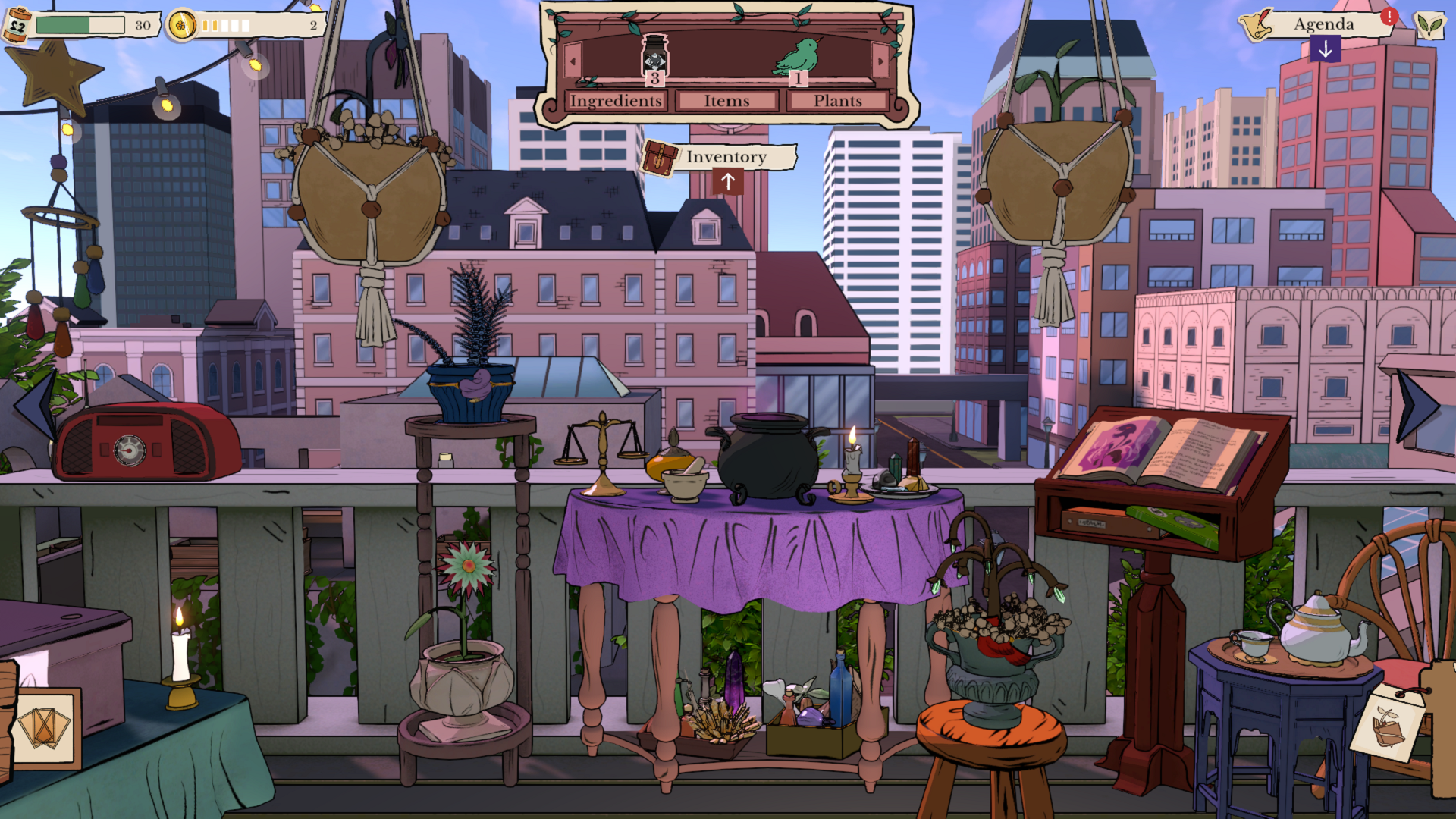
A lot of that emotional weight comes from the game’s presentation. Greenhearth Necromancer has the soft, welcoming texture I want from a cozy game, but with enough rot and weirdness around the edges to keep it from feeling generic. Its garden is pleasant without being sterile, melancholy without being miserable. The game knows how to make decay feel beautiful, not by ignoring the sadness of death, but by finding warmth in what comes after it.
Visually, it is modest, but it knows where to spend its detail. Plants are expressive enough that watching them change becomes part of the appeal, and the contrast between healthy growth, wilting, death, and necromantic transformation helps reinforce the game’s central idea without needing to explain it constantly. There is a tactile charm to the garden that makes checking in feel worthwhile, even when there is not much happening mechanically.
The writing supports that tone without overplaying it. Greenhearth Necromancer is at its best when it lets its systems and atmosphere do the emotional work, using small moments of flavor and reflection to suggest a wider world rather than forcing every idea into the foreground. It is gentle, sincere, and occasionally quite touching, especially when it frames care as something worthwhile even when it does not produce the outcome you wanted.
That restraint matters. A game about grief can easily become heavy-handed, and a cozy game about necromancy could just as easily flatten its premise into a cute joke. Greenhearth Necromancer avoids both extremes. It is cozy, but not because nothing bad happens. It is cozy because bad things happen and the garden still gives you a reason to continue.
Focus Time Does Not Always Feel Relaxing

That makes the game’s mechanical rough edges more interesting, but not always less frustrating. The clearest example is Focus Time, the game’s dedicated idle mode. While active, plants heal and event cards generate at an increased rate, suggesting that Greenhearth Necromancer wants to be the kind of game that can sit quietly beside you while you work, cook, or answer emails.
In practice, I found Focus Time less reassuring. As a test, I left the game idling for about an hour, expecting to return to a garden that was at least stable, if not flourishing. Instead, most of my plants were either dead or close to it.
The bigger issue was not just that my plants were dying; it was what saving them required. Because I was still early in the game, I did not have a deep stockpile of fertilizer, pesticides, or other recovery items, and crafting those resources takes real time. My hour away had left me with a triage problem I was not equipped to solve.
In theory, that kind of loss fits Greenhearth Necromancer’s worldview. Plants die. Care is imperfect. The garden moves on, and death can become part of the cycle rather than a hard fail state. But in practice, Focus Time made the game feel more demanding than its cozy, semi-idle framing suggests. I found myself babysitting my plants more than I expected, pulling my focus away from other real-world tasks to ensure my virtual vegetation wouldn’t be reduced to digital detritus.
When the Magic Gets Murky

The same issue appears in some of the game’s necromantic systems. I like that Greenhearth Necromancer encourages experimentation, and I like that its spells feel mysterious rather than clinical. A game about death, plant magic, and strange transformations should have some room for uncertainty.
Still, uncertainty can cross into opacity. It is not always clear what certain spells are doing, how they are affecting plant traits, or whether the result is worth the resources spent. That makes experimentation feel a little less like discovery and a little more like guesswork. When a system is this closely tied to the game’s emotional and mechanical identity, I wanted clearer feedback about what my choices meant.
The event card system has a similar unevenness. The cards help give the garden personality and provide moments of interruption, surprise, or decision-making, but the pacing can feel inconsistent. Sometimes, they provide a pleasant reason to check in. Other times, especially when paired with struggling plants and low resources, they add to the sense that the game wants more attention than its relaxed presentation implies.
None of this breaks Greenhearth Necromancer. If anything, the game’s forgiving attitude toward death keeps its rougher edges from becoming too severe. A dead plant can still matter. A failed experiment can still produce something useful. But there is a difference between a game embracing imperfection and a player feeling under-informed. Greenhearth Necromancer occasionally lands on the wrong side of that line.
Final Score: 7.5/10
Greenhearth Necromancer is a small, tender game with a strong central idea: care does not always prevent loss, and loss does not have to erase care. The game takes a morbid premise and turns it into something oddly comforting, finding warmth not by avoiding decay, but by making room for it.
At the same time, its semi-idle design is not always as gentle as advertised. Focus Time can make stepping away feel riskier than expected, early resource demands can turn recovery into stressful triage, and some of the spell and event systems could use clearer feedback.
Even so, Greenhearth Necromancer stuck with me. It is not the deepest gardening game or the most frictionless idle game, but it has a point of view that makes its garden worth tending. It understands that things die, even when you are paying attention. More importantly, it understands that death does not mean you stop living.
**Bonus Action was provided with a PC copy of Greenhearth Necromancer for the purpose of this review.**
About the Author

Discover more from Bonus Action
Subscribe to get the latest posts sent to your email.