via Metaphor Games, Shoreline Games
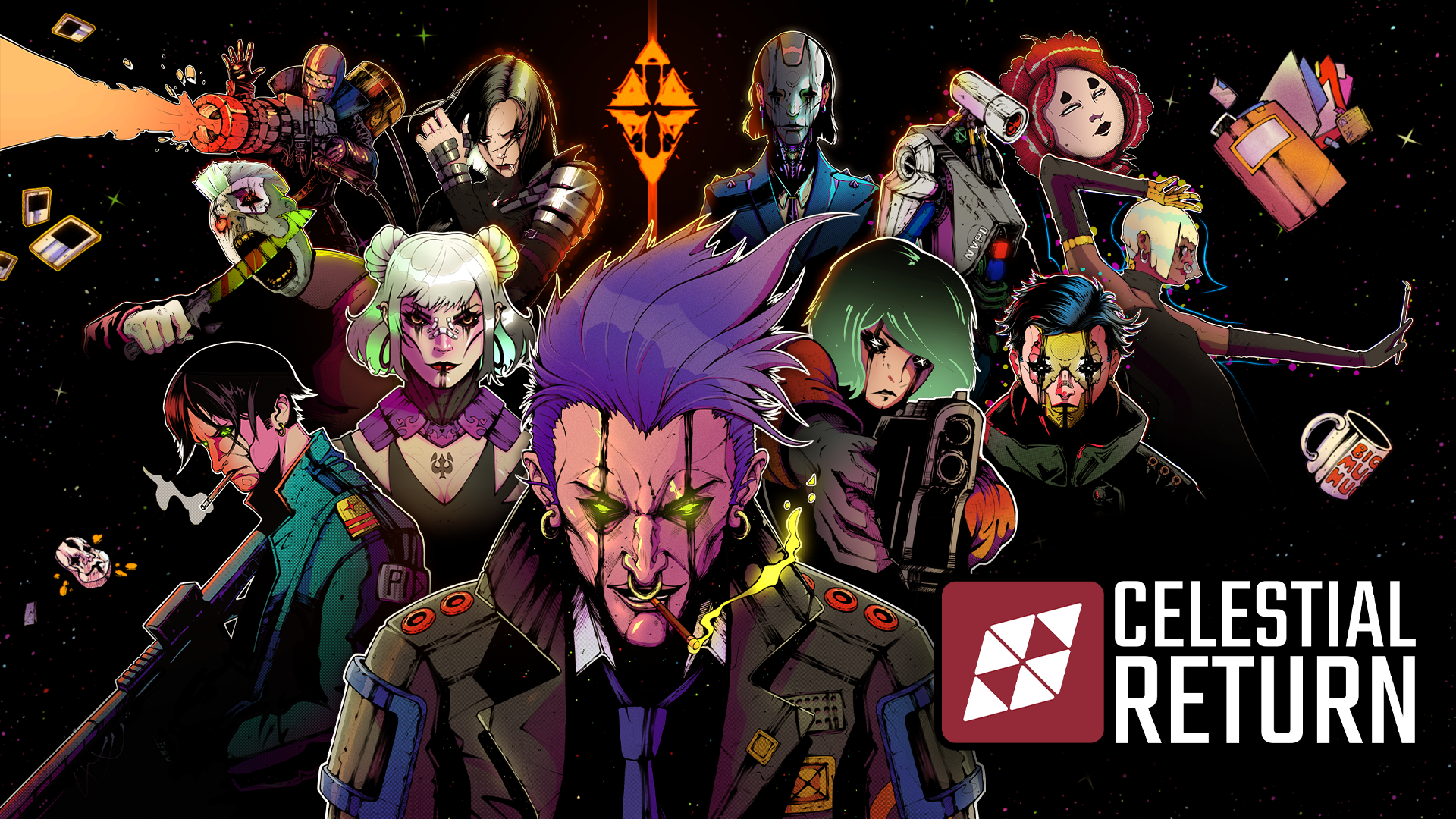
Celestial Return understands that a city can tell you exactly who matters by where it puts people.
Netherveil’s wealthy live above the working class in the most literal sense possible. They control its politics, erase its art, and build over the people whose labor keeps the city alive. Detective Howard knows what this kind of power does to a person. He has spent long enough around institutions to recognize cruelty even when it arrives with official paperwork.
A wave of mysterious crimes draws Howard into an investigation stretching across the city. What begins as detective work soon brings him into conflict with corrupt megacorporations, political authorities, and phenomena that do not fit comfortably within Netherveil’s understanding of reality. His only consistent tools are his instincts, the version of himself the player chooses to create, and a collection of dice that can be used to investigate, persuade, bribe, or gamble.
Celestial Return has a strong mystery, an interesting setting, and some excellent writing. It also has a final act that loses much of what made the investigation compelling, along with save issues that repeatedly forced me to reload earlier files.
Those problems are hard to ignore, but they did not stop me from enjoying my time in Netherveil.
Key Details
- Release Date: July 14, 2026
- Developer: Metaphor Games
- Publisher: Shoreline Games
- Price: $14.99
- Platform: PC
- Review Code Provided: Yes for PC via Steam
A Detective Worth Becoming
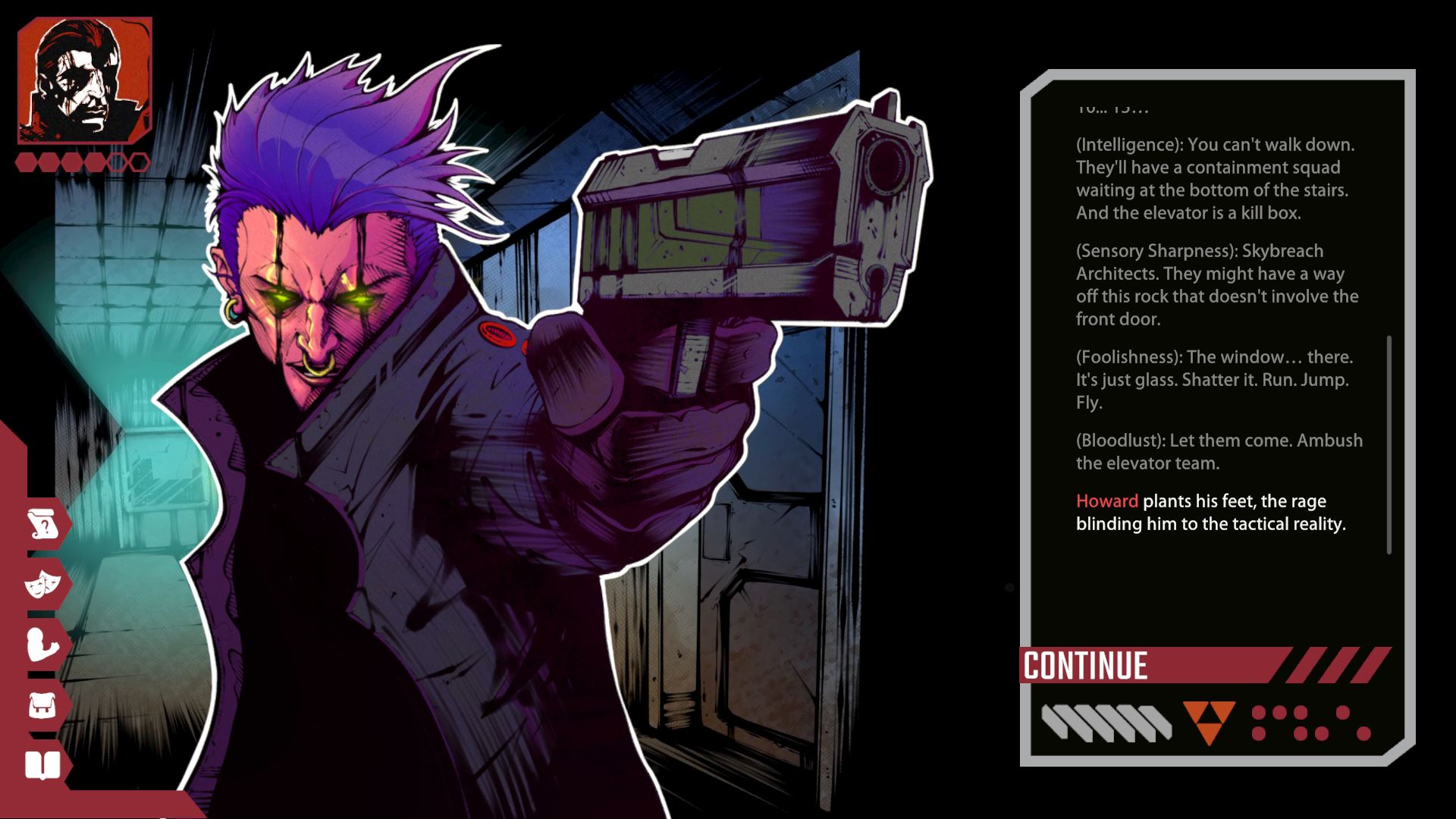
Howard is one of Celestial Return’s greatest strengths because he does not have a fixed moral center.
The player can shape him into a tired but empathetic detective who still sees people beneath Netherveil’s machinery. Virtuous choices reveal a man capable of patience and kindness despite everything the city has given him reason to hate. Other choices encourage his anger. That Howard is more aggressive, more willing to intimidate people, and much quicker to treat violence as a reasonable response.
The difference goes beyond choosing whether Howard is polite or rude.
An angry Howard can condemn Netherveil’s police while adopting many of their abusive methods. He recognizes the violence of the system but remains capable of excusing his own. That hypocrisy makes him unpleasant, but it also makes him interesting. The game allows Howard’s opposition to authority to become either an expression of empathy or another way for him to justify himself.
His flexibility is not limited to kindness and aggression. Other traits can make him impulsive, perceptive, foolish, or openly ridiculous. The same investigation can shift between bleak noir, political tragedy, and dark comedy depending on which parts of Howard the player encourages.
Howard’s relationship with Rose, a sentient Abstract residing in the breast pocket of Howard’s jacket, gives those choices additional weight. Their frequent banter has the comfortable irritation of an older and younger sibling. Rose experiences Netherveil with curiosity, while Howard helps her interpret what she sees. He tells her what the city is, who built it, and how she should understand the suffering around her.
Rose does not exist solely to agree with him. She has enough personality and curiosity to feel autonomous, and their conversations are often warm or funny. Still, Howard occupies the role of the older figure explaining the world. Depending on the player, Rose may learn compassion from him or inherit some of his bitterness.
The relationship itself is more satisfying than some of the narrative material surrounding it. Even so, Howard and Rose give Celestial Return an emotional center that survives the plot’s weaker stretches.
Investigating Netherveil
The detective work is where Celestial Return is at its best.
Howard searches locations, questions witnesses, examines evidence, and follows different leads across Netherveil. The areas are small, but many contain optional conversations, items, and details that are easy to miss.
These smaller interactions do a lot of the work when it comes to building the city.
Some of the best conversations are optional exchanges between Howard and Rose. They frequently discuss the wealthy, political leaders, policing, and the different ways the working class is kept under control. Art is removed. Neighborhoods are neglected. Entire sections of the city are built over the people below them.
The cyberpunk setting works because these ideas are exaggerated versions of familiar problems rather than random futuristic cruelty.
People are treated according to how useful they are. The same applies to the Abstracts.
They are poorly understood and assumed to be dangerous, even when some appear capable of thought, speech, and even compassion. Authorities either want them eliminated or placed under control. Their existence fits naturally into a city where anything unknown is treated as a threat until someone finds a way to profit from it.
I only wish the game did more with them.
Keeping the Abstracts mysterious makes sense, but they are not explored enough for that mystery to feel satisfying. The game raises questions about their sentience, their treatment, and what separates them from everyone else in Netherveil, then leaves many of those questions alone.
Every Stranger Has Something to Say
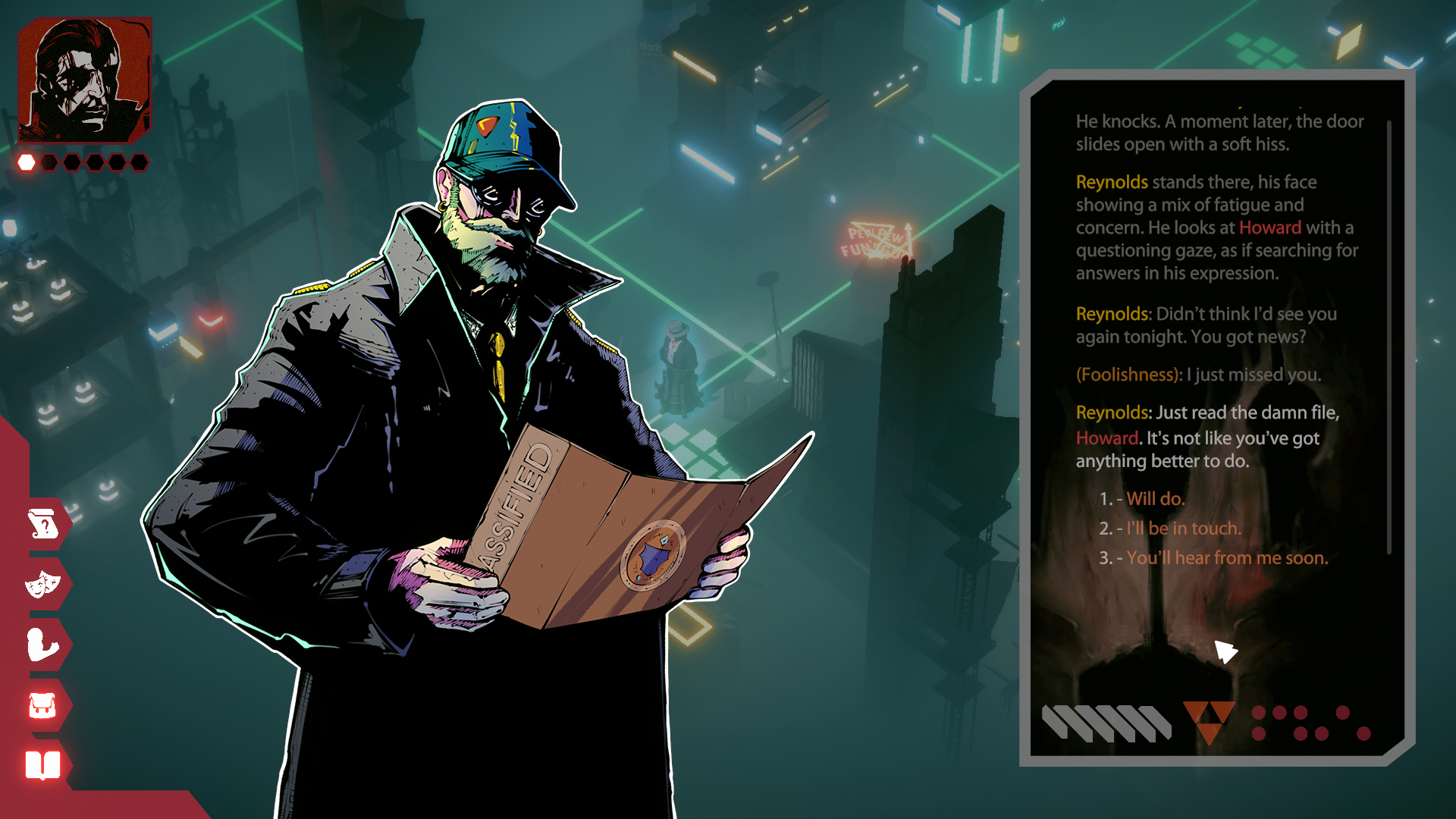
Celestial Return has a distinct narrative style that can move from political frustration to strange humor without making either feel out of place. Conversations are frequently philosophical, but the characters rarely sound like interchangeable delivery systems for the game’s ideas. They are bitter, frightened, amused, self-important, or simply tired of living in Netherveil.
That becomes a small problem in itself. Celestial Return is good at making someone interesting quickly, then moving on before doing much with them.
The shorter encounters still work because the dialogue has enough personality to carry them. Even minor characters often feel like they had a life before Howard arrived.
Failed checks can also lead to alternate scenes rather than stopping the investigation completely. Sometimes Howard’s mistakes become part of the scene, revealing something about the version of him being played.
Not every roll changes much, but failure is not always treated like punishment.
The main story is strongest during its first two-thirds. The investigation continues to grow, and each new lead seems to create more questions about Netherveil and the people controlling it.
The final third is where much of that starts to fall apart.
Without getting into major spoilers, the plot becomes less interesting as it gets closer to its conclusion. Several ideas that previously had room to breathe are flattened so the story can reach its ending.
One late-game sequence shows this problem particularly well.
Howard undergoes a drastic physical transformation that should force both him and the player to consider how much of himself remains. It is a familiar cyberpunk theme, but the moment initially works because of how severe it is.
Then the game repeats almost the same beat immediately afterward.
The second escalation happens so quickly that I briefly thought I had made a mistake or triggered a bad outcome. Instead of building on the first transformation, it makes the whole sequence feel rushed and almost comical.
Even when the larger story loses focus, the individual conversations remain strong enough to keep it moving.
Roll High, Explore Everything
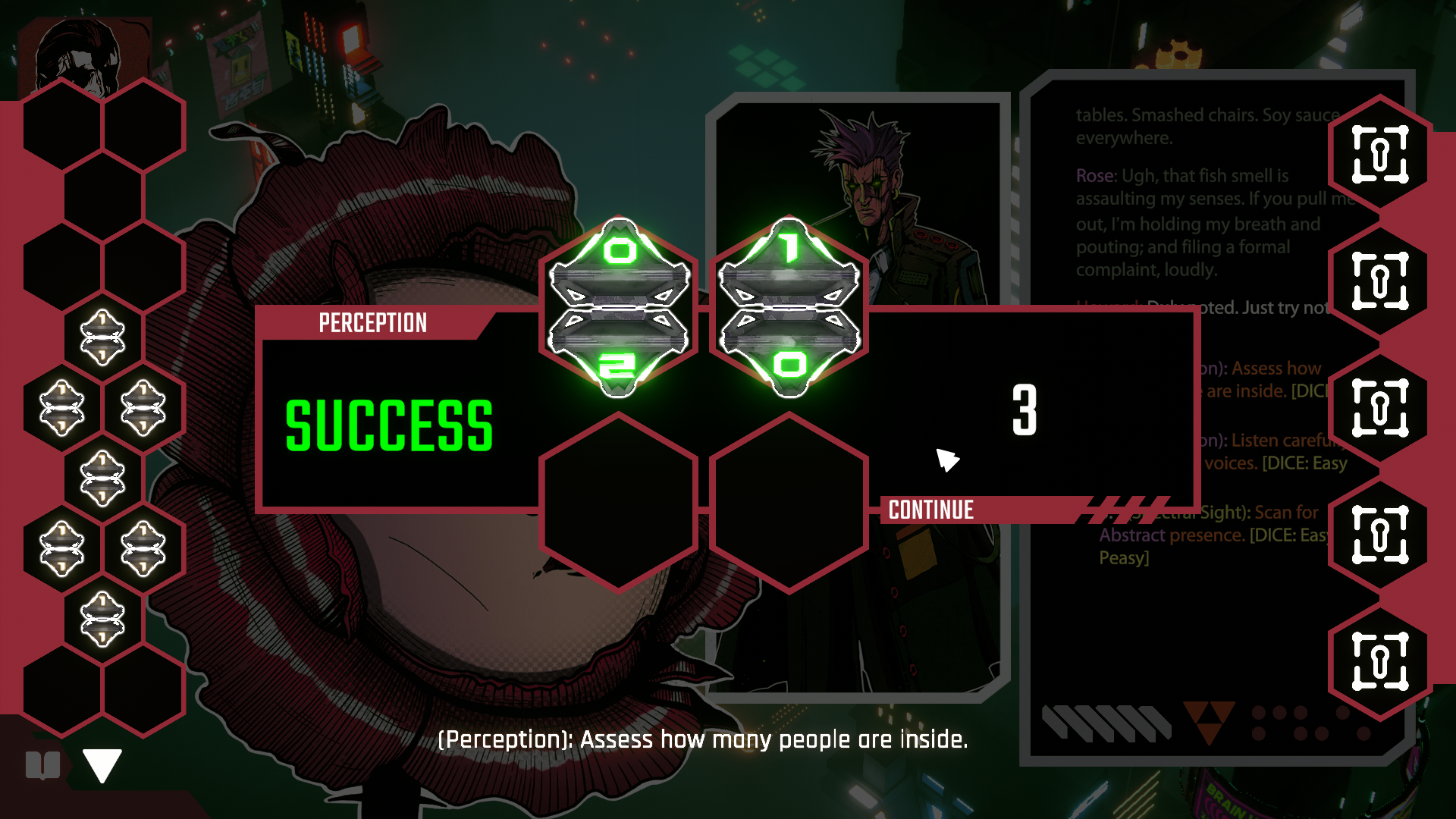
Dice, the primary resource in Celestial Return, are used throughout to influence conversations, investigations, and other actions.
Each die has its own range, bonuses, and drawbacks. Some provide useful advantages, while others are bad enough that trading them for items is the better choice.
The system is presented as though dice will always be in short supply. That was rarely true for me.
Players who thoroughly explore each area will find plenty of dice, and the right bonuses can make difficult checks surprisingly easy. I rarely felt pressure to save them.
That does not mean every player will have the same experience.
It is possible to miss optional locations and lose access to useful dice. The game makes this worse by failing to distinguish side areas from locations that advance the story. Choosing the wrong destination can close off earlier content without warning.
A player who explores everything may have more dice than they need. Someone who accidentally progresses too early may struggle later.
The problem is not just scarcity. It is that the game gives players very little information about when they are about to leave content behind.
There are also checks where the outcome cannot change regardless of the roll. The game warns the player when this happens, but selecting and rolling a die still creates the expectation that the result matters.
When the system works, choosing the right die is satisfying. The bonuses and drawbacks are easy to understand, and the physical presentation gives conversations and investigations a little more tension.
It just never felt as restrictive as the game seemed to expect.
Beautiful Things Beneath the City

Netherveil and its inhabitants look excellent. The game uses its illustrated presentation to give the city an identity beyond familiar cyberpunk neon. Character portraits are expressive and immediately communicate personality. Faces can be tired, grotesque, theatrical, or strangely inviting. Several characters tell you who they are before the conversation has properly started.
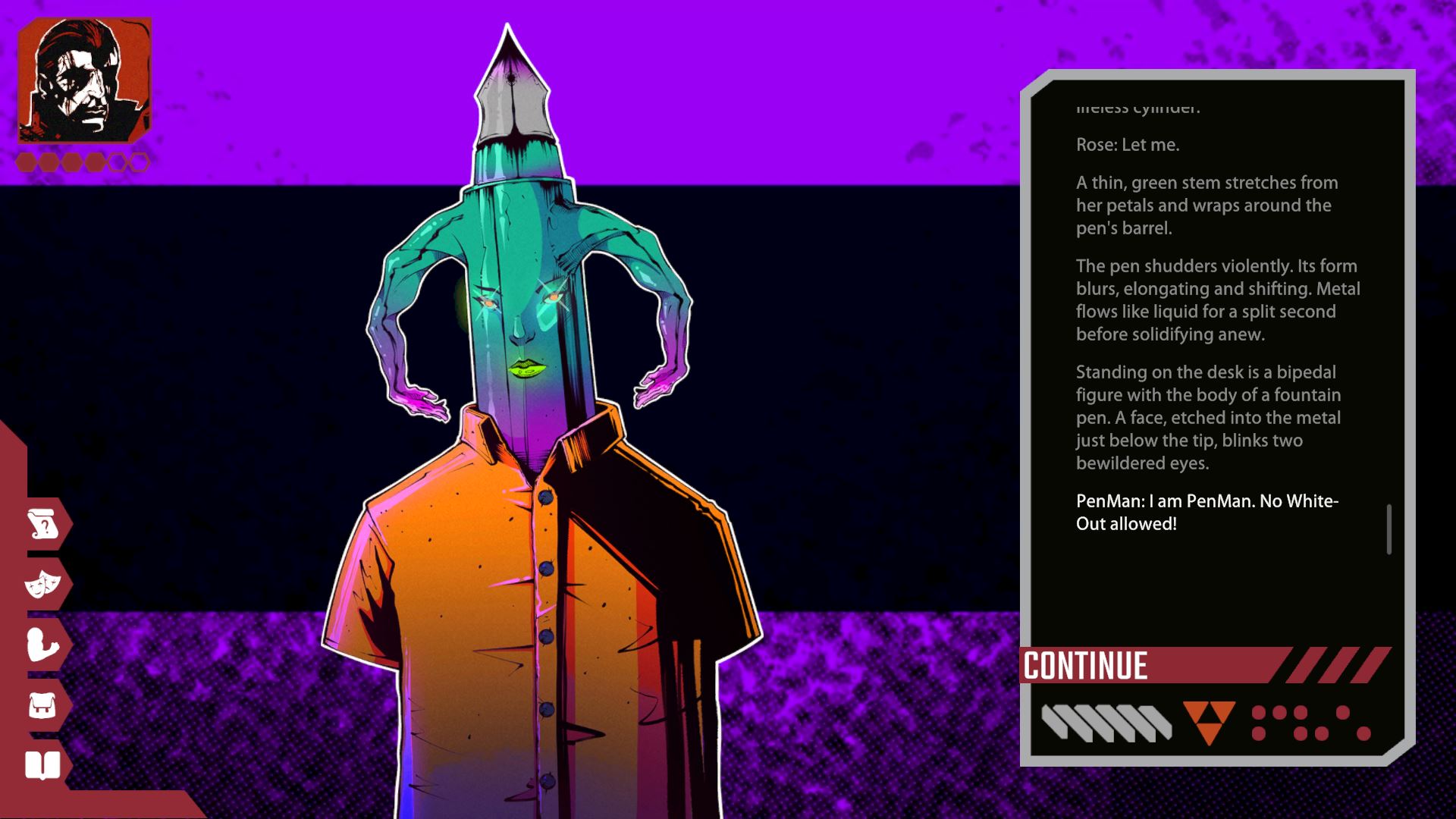
The Abstracts receive some of the game’s best artwork. Their designs feel detailed enough to study but strange enough to resist easy understanding. That uncertainty complements their place in the story, even when the writing does not explore them as thoroughly as their designs deserve.
The soundtrack is just as willing to experiment. Noir jazz, electronic tracks, and heavier music give different corners of Netherveil their own energy without making the city feel disconnected from itself. The shifts can be abrupt, but they suit a setting where political decay, detective fiction, and cosmic horror are constantly competing for attention.
There are unusual aesthetic decisions throughout Celestial Return, and not every visual or musical element fits seamlessly beside the others. None were disruptive enough to damage my experience, although there was a moment where the gameplay shifted so dramatically that I sat in place for what felt like five minutes before realizing I was still in control. The game’s strongest images and tracks easily outweigh its occasional inconsistencies.
Its presentation creates the kind of city I wanted to keep searching, even when I knew another street might be hiding nothing more than a conversation and one deeply inconvenient die.
Save Early, Save Often, Save Elsewhere
The most serious problem with Celestial Return is technical. I regularly encountered save and load glitches that left my game unable to progress. Loading an earlier file was often the only solution. This happened despite patches and occurred frequently enough that it became part of how I approached the game.
That is especially damaging in an RPG built around exploration and branching choices. Players should feel comfortable testing decisions or returning to previous points. Instead, I learned to distrust my saves.
Rotating between several save files is strongly recommended. Save often, and do not rely on a single slot.
The unclear map progression makes this even more important. A player may unknowingly advance the story, miss optional content, and discover that returning to an earlier point is either inconvenient or impossible. Technical instability turns a frustrating piece of map design into a potentially serious progression problem.
A six-hour game should not require this much defensive saving. The problem persisted throughout my experience despite multiple game updates, so hopefully Metaphor Games is able to figure out a solution soon.
Final Score – 8/10
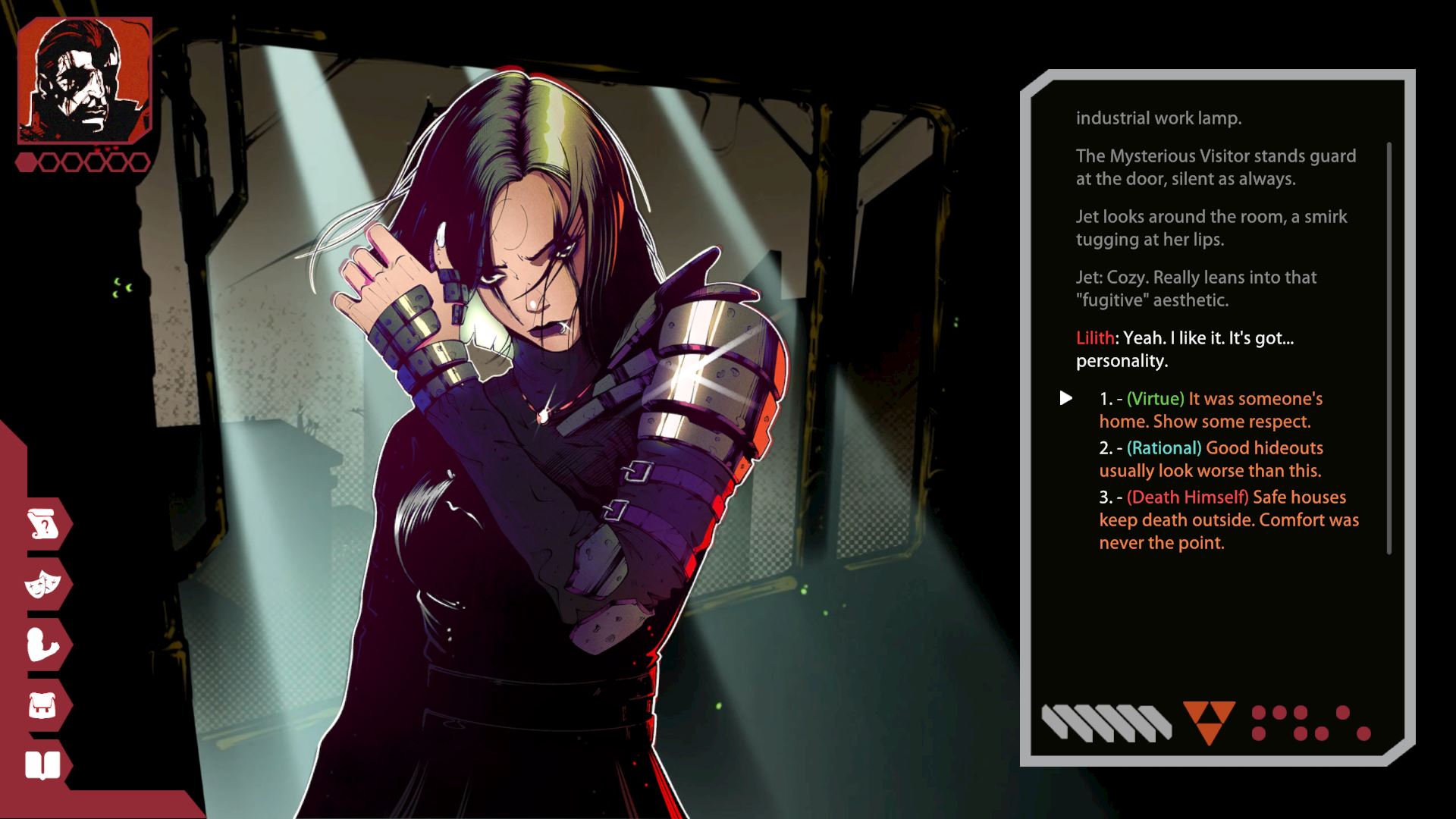
Celestial Return is a stylish detective RPG with excellent character writing, memorable art, a daring soundtrack, and a cyberpunk setting that understands class oppression as something built into daily life.
Howard is flexible enough to become a genuinely different protagonist depending on the player’s choices. His relationship with Rose gives the story warmth, while their optional conversations provide some of its strongest political and philosophical writing. Netherveil is filled with people who remain interesting even when the game gives them little time.
The investigation is at its best when it rewards curiosity. Its small environments are dense with conversations, unusual details, and discoveries that change how later scenes can be understood. Searching every corner also provides the resources needed to shape Howard’s approach.
That same generosity weakens the intended scarcity of its dice, while unclear points of no return can punish players who explore locations in the wrong order. Frequent save and load glitches are harder to forgive. Softlocks forced me to return to earlier saves several times, making rotating files practically mandatory.
The Abstracts are compelling, particularly as beings persecuted by institutions that fear and covet them in equal measure. They are also underexplored. The game introduces questions that its final third is not prepared to answer, then loses some of its narrative depth while trying to bring the mystery to a close.
At $14.99, the short runtime is easier to accept. A single playthrough lasts around six hours, but the branching paths and flexibility in Howard’s characterization give the game more value than that number suggests. Another playthrough could produce a substantially different protagonist, reveal missed conversations, and lead the investigation toward different outcomes.
For players interested in seeing how those choices reshape the story, Celestial Return is worth the price of entry. The investigation is worth seeing through, even when the answers are less interesting than the questions.
**Bonus Action was provided with a PC copy of Celestial Return for the purpose of this review.**
About the Author

Discover more from Bonus Action
Subscribe to get the latest posts sent to your email.