A quick note before we start: Mirella Díez Morán and Rubén Rincón, two of the three people in this piece, were among the ZA/UM staff affected by the studio’s layoffs this July, weeks after this conversation happened. This isn’t a piece about that, though. It’s about the work they made before it.
Oh, also, all quotes below were translated from the original Spanish.
What would a video game feel like with no sound at all?
“Half-made,” Sound Designer Mirella Díez Morán said. “Boring.”
Then she kept going. “Half-made in every sense. Not just boring for the player. There’d be things you simply couldn’t understand, because so much context comes through the audio.”
Somebody has to make sure that never happens. In this case, it’s Rubén Rincón, Mirella Díez Morán, and Fernando Cabrera, three fastidious, whip-smart noisemakers behind the thuds and patters, the whooshes and howls, the cracks and bangs, and a fictional pop star’s biggest single in Zero Parades: For Dead Spies but also so many other sounds in games you’ve probably played, or at least heard of: Control, Gris, RiME, Neva, Moonlighter, and Cataclismo.
Sound design is one of those jobs everyone benefits from, and almost nobody can describe, so I figured the people doing it might have something to say about it.
They did. A lot, actually.
Half-Made and Boring
“It’s everything, really,” Mirella added. “It also gives you emotion. A lot of the time, immersion and emotion come through the audio. It would be so much more static, so much flatter.”
Rubén framed it as storytelling with the volume physically ripped out. “Storytelling. Narrative. It comes through the sound, the music, the voiceover. That’s what we mean when we talk about sound,” he said.
Fernando put it more poetically: “If you cover your ears and watch something bad, you might feel better about it, because what you’re seeing looks nice. But if you close your eyes and listen, you’ll always feel something. I think that says a lot about what we do.”
How Three Separate Careers End Up in One Room
Rubén and Mirella have been friends for fourteen years, long before either of them ended up at the same studio.
Between Control, RiME, Moonlighter 2, and Cataclismo, Mirella’s credits alone could fill a panel. Rubén’s aren’t far off: Neva and Gris at Nomada Studio, Fall Guys, Rainbow Six: Siege, and a stretch at Ubisoft Barcelona.
The two of them had only actually worked together once before, years earlier, on a small hand-painted watercolor puzzler called Candle. “She was already further along in the industry than me,” Ruben told me, “and she’s basically the one who got me into game audio here in Spain.
After Candle, we spent years telling each other, damn, I wish we could work together again. That was kind of our mantra.”
It finally happened at ZA/UM, first on the mobile port of Disco Elysium, then on Zero Parades.
Somewhere in the middle of that story, Fernando turned out to have his own version of it. “I met them later, actually, but I’d already been following their work closely,” he said. “Mirella is the one who inspired me to get into games in the first place. We studied at the same school, just in different years, and she came to give a talk to my class about sound design. From that moment on, I thought, well, maybe this is what I’ll do.”
So the entire audio identity of a spy thriller that took years to build traces back, twice over, to one person: once through friendship and once through a guest lecture to a room of students who weren’t yet her colleagues. Mirella just happens to be the reason both of the men sitting next to her ended up in this line of work at all.
“A very obscure language”
If you’ve played Control, I’m sure you remember the sound Jesse makes when she triggers her telekinesis powers. It’s crunchy, loud… and just freaking impossible to describe.
Seriously, how do they do it? How do you get a sound that only exists in your head into the game itself? Or worse, into someone else’s understanding of it? Mirella’s answer: mouth noises.
Actual, literal sounds made with her own mouth, sometimes recorded, sometimes not, backed up with quick sketches built from stock sound libraries.
She and Rubén, she said, usually run on the same wavelength enough that two words do the job between them. Telepathy, I offered. “Yeah. A little,” she laughed.
But translating that same idea to somebody outside their heads is another story entirely. “It’s a very obscure language,” she said.
Fernando’s version of the problem is more literal. “With music, a lot of the time, just playing it on the piano is enough to get the vibe across,” he said. “And now we’ve got so many tools for making pretty realistic demos that turning a small idea into something close to final is a lot easier.”
Rubén’s job, as he described it, is knowing when a sound needs to step forward and say something, and when it needs to disappear, quietly gluing two other elements together. Fernando credited him with understanding an idea before a single note existed. “There have been times I hadn’t even composed a single note yet,” he said, “and I’d say, ‘Rubén, I think we need to focus on this angle here’. And he’d see it immediately and say, ‘go for it, it’s going to be great.’”
The Ideas That Didn’t Make the Cut
Scoring a branching, choice-driven RPG is a genuinely different problem from scoring a linear one, so I asked Fernando how you write music for a game that doesn’t know its own ending yet.
“You have to know which battles are worth fighting,” he said. “Trying to score every single outcome just isn’t viable. The scope and the budget of the project would explode. So you figure out which scenes actually matter for the player, focus hard on those, and work outward from there.”
Mirella’s version of the same tradeoff was more architectural. Narrative moments, she said, had to be built custom, one at a time, no shortcuts. Ambient sound got smarter treatment instead, a layered system designed to make a handful of packages sound like dozens of distinct spaces, “without spending three hundred thousand euros,” as she put it.
Rubén agreed: “We just didn’t have the resources for that. It was impossible to put sound behind literally all of it. There are a few parts that do have it, and when that happens, it feels like such a complete, satisfying experience. But there are very, very few of them, purely because of resources.”
He also had his own graveyard of good ideas that didn’t make it. “There were things we had to cut at the gameplay level,” he told me. “At one point we wanted Zero Parades to feel almost like an audiobook, because the dialogue describes so many sounds you’re supposedly hearing.”
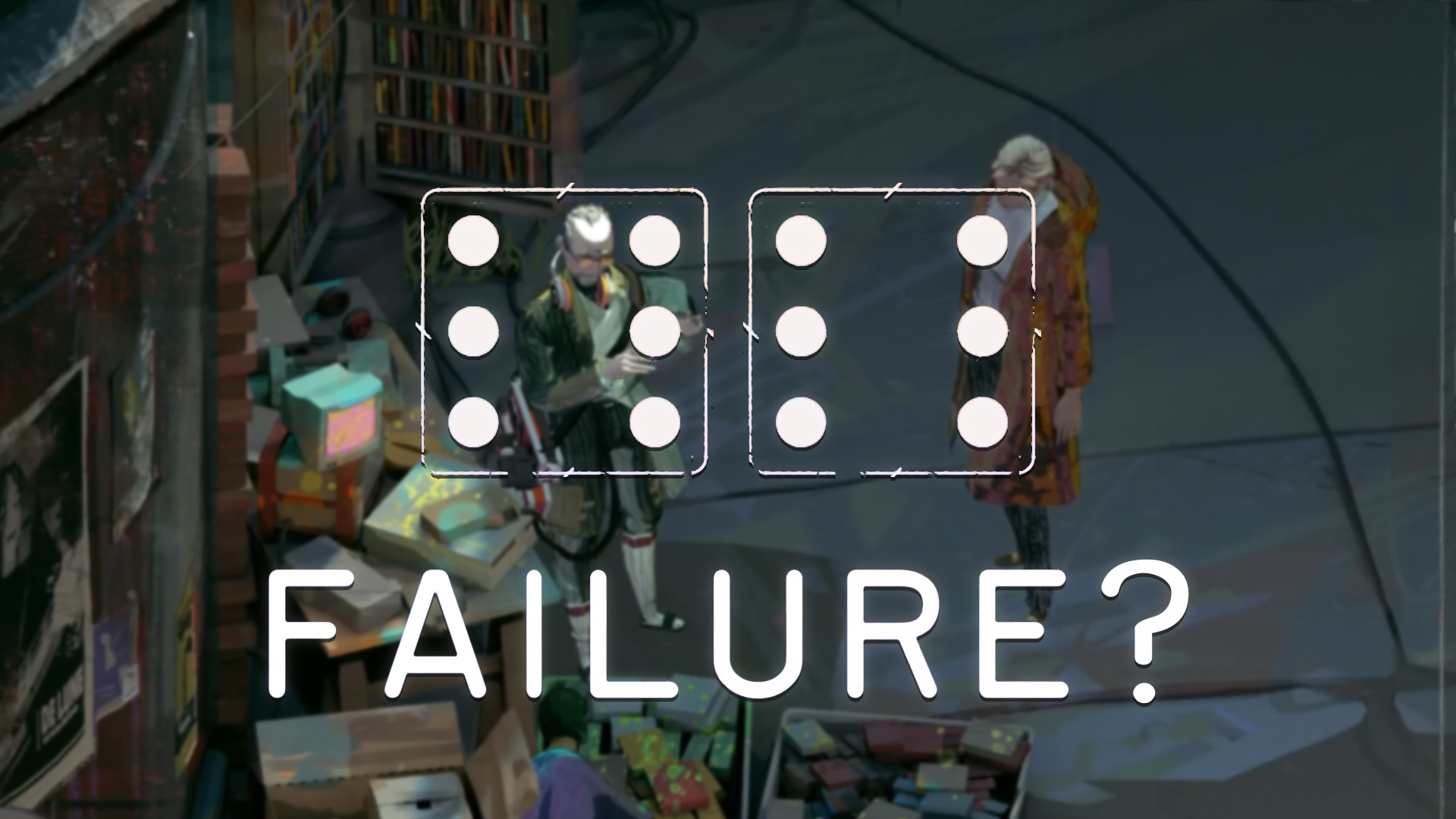
“We had an idea for when you rolled the dice: depending on whatever status effect is currently applied to you, we wanted the success or fail sounds to be different every time. So if your delirium meter is maxed out, the dice should sound more psychedelic.”
This idea not making the final game is a personal loss I have not processed, not gonna lie.
Thirty-Three Songs And a Pop Star Who Doesn’t Exist
The full soundtrack runs 33 songs, almost two hours, and it’s thematically cohesive without being remotely consistent in mood, which makes sense once you remember this is a game built entirely around choices.
I went out for a walk listening to the whole thing start to finish, and the vibe swung from something close to festive to something that felt, quite specifically, like bad news was coming, sometimes within the same ten minutes.
I asked Fernando how that actually gets built. Does he know exactly what’s happening on screen before he writes a note, or is he composing blind?
Neither, really. “We worked a lot through scripts rather than a locked gameplay build,” he told me. “Someone would hand me a script describing how a scene might play out, a description of the location, maybe a concept, and I’d compose from that, basically translating what I had in my head into how it might sound.”
Somewhere inside those 33 songs lives Ultravioleta, a pop star with no body, no birthday, no real voice, and a song called “Cover the Moon” that I have hummed against my own will in the shower, on the metro, and once during a work call I was supposed to be paying attention to.
I asked Fernando how you write for someone who technically isn’t there. They leaned hard on K-pop as a reference point, he said, the genre’s structure, and the sense of an artist the whole world is waiting on. Then they bent it. Ultravioleta, unlike most of her real-world equivalents, is “loaded with a lot of rage and a lot of resignation,” a pop star singing something considerably sadder than the beat underneath her lets on.
The Sound They’re Proudest Of
I asked each of them which piece of their own work they’re proudest of, half expecting a diplomatic non-answer. Instead, Mirella told me, unprompted, about a small mechanical miracle she built years ago for RiME, and I’m going to spoil it here and now UNLESS you skip to the next subheading.
Late in that game, small sentinel creatures open a door for you, and it turns out it sacrifices itself to do so. When that happens, you hear a sort of fusion of a creature merging with the door, followed by the ring of large bells. Only at the very end do you learn the sentinels were wind chimes all along, the same toy the game’s child protagonist once kept in his room.
So the sound design here foreshadows the game’s final plot twist. I gasped, actually gasped, which feels like an embarrassing thing to admit as a functioning adult.
Fernando’s answer was shorter and, frankly, sweeter. Zero Parades, he said, is the project he’s proudest of, mostly because it handed him the most creative freedom of his career, and something with a genuinely distinct fingerprint came out the other end.
Portofiro Sounds Like Home
Portofiro, the fictional Mediterranean city-state Zero Parades is set in, isn’t a real place. I sincerely hope that wasn’t a Genovia-isn’t-a-real-kingdom level shock to anyone reading this.
But a lot of the sounds in Portofiro are real! Mirella told me she built the ambient life of one of its neighborhoods out of her own hometown, a small village in the Sierra de Madrid.
Among the details she pulled from home: the afilador, a nearly vanished Spanish trade, who went door to door sharpening dulled blades and patching up whatever else needed patching along the way. “At different times of day, you can hear him going by,” she said, announcing himself the traditional way: a short melody on a chiflo, a little panpipe made of hollow cane, climbing through low notes and high ones.
Here’s an example of what that sounds like:
Fernando pointed to something similar on the music side: bringing in real Spanish jazz musicians who, left to improvise, naturally reach for scales that land closer to Mediterranean jazz than the colder, more northern European version of the genre. Neither of them set out to make a statement. They just built the thing out of what they actually know, and it happened to sound like home.
In Mild Defense of Being a Bit Lazy
Rubén’s leadership philosophy, once he actually spelled it out, amounted to this: hire people you trust, then get out of their way.
“I’m a bit lazy, that’s true,” he admitted, “but it’s also true that I do my job.” Giving people creative freedom, he said, is a safe space, something the whole team should have.
The direction doesn’t even come from him personally, he told me; it comes from the creative direction of the project itself: this is the game, this is the tone, this is what needs communicating, and everything else gets pointed toward a sound experience from there.
The actual hiring philosophy is where he got specific. “They’re creatives, they’re designers, they’re artists, they have their own sensibility toward what we’re making,” he said. “‘Who am I to come in and cut that off and say no, I want it to sound exactly like what’s in my head’? It doesn’t make sense to hire someone like Mirella or Fernando and then not let them do what Mirella or Fernando actually know how to do.”
Mirella, asked what it’s like being on her first team made up mostly of women, didn’t hesitate. “Everything,” she said. For the first time in many years, she told me, she feels heard without being judged, respected for her knowledge and her talent.
“It’s really different,” she said. She credited the diversity of the group itself for the shift in atmosphere. “The vibe ends up really calm, really chill, and pretty collaborative,” she said. “So yeah, I’m happy in this group.”
Before the Credits Roll

Zero Parades: For Dead Spies came out on PC in May, with a PlayStation 5 version still to come. With the help other sound devs whose positions have now been made redundant, these three people built its entire sonic identity: one long-running friendship, one guest lecture that quietly recruited its own future composer, an instrument borrowed from a childhood village, and a shared conviction that if you close your eyes, you will always, always feel it. Take any of that away, and you’re right back where we started. Half-made. Boring.
Still here? Good.
That means the article did its job! If you’d like to see more of them (and get first crack at what’s next) our Patreon’s the place.
About the Author

Discover more from Bonus Action
Subscribe to get the latest posts sent to your email.