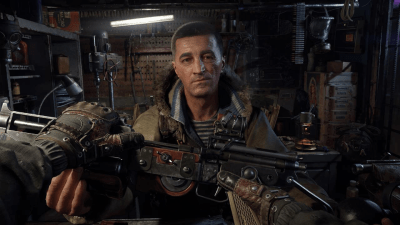
via ZA/UM Studio
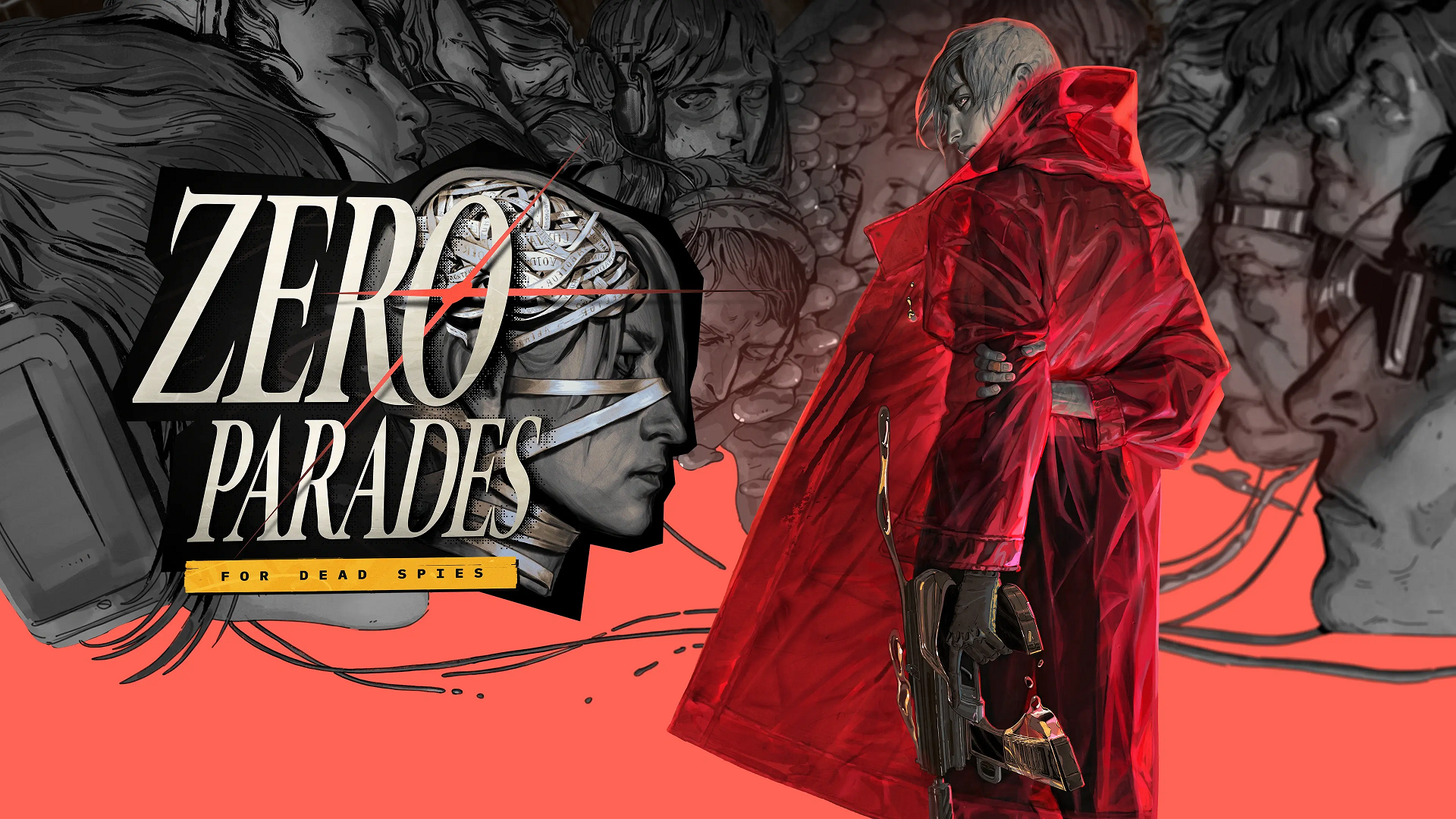
Zero Parades: For Dead Spies presents spy work as a profession that hollows people out.
Hershel Wilk, also known as CASCADE, comes back to the field already exhausted. She is professionally useful, personally compromised, and carrying enough history that even routine conversations feel contaminated. Her skill set does not make her feel powerful so much as overextended. She can read a room, manipulate a conversation, and improvise her way through danger, but every talent seems tied to something damaged.
That was the first thing that clicked for me. Zero Parades takes the language of spy fiction and uses it to discuss identity. Hershel has spent years becoming what other people needed her to be. By the time the game begins, it is hard to tell where the work ends, and the person begins.
That gives Zero Parades a strong identity even before the obvious comparison arrives. This is ZA/UM’s follow-up to Disco Elysium, and the family resemblance is impossible to miss. The best parts of Zero Parades, though, are not interesting simply because they recall a better-known game. They are interesting because they bend that familiar narrative RPG language toward something colder, more paranoid, and more professionally ruined.
Key Details
- Release Date: May 21, 2026
- Developer: ZA/UM
- Price: $39.99
- Platforms: PC, PlayStation 5
- Review Code Provided: Yes, For PC
A Spy Story About Ruined People
Zero Parades works best when it treats espionage less like a fantasy of competence and more like a long-term injury.
Hershel begins the game as someone who has already fallen apart. That immediately recalls Harry Du Bois in Disco Elysium, and the similarity is too significant to treat as a footnote. Both games center on a protagonist whose usefulness is tangled up with self-destruction, and both ask the player to shape a person after the damage has already happened.
Hershel’s damage has a different texture. Harry’s collapse was chemical, romantic, and apocalyptic; a man trying to reconstruct himself after the worst night of his life. Hershel’s is institutional. She has been trained to make herself adaptable, to weaponize instability, and to keep working long after the work has started to corrode her. The resemblance keeps Zero Parades close to Disco Elysium, but it also gives the game a sharper angle on the same basic wound.
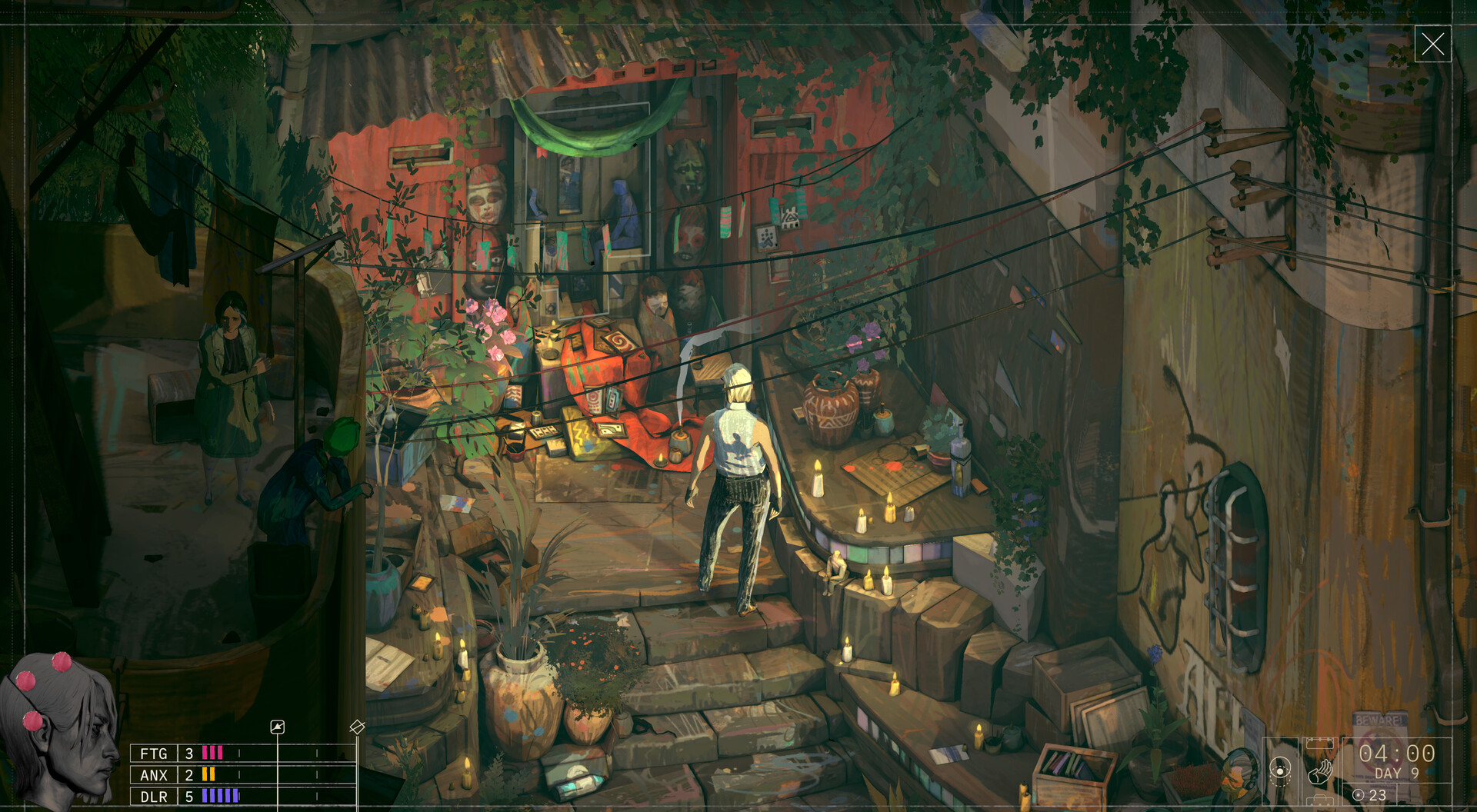
That angle suits the spy premise. Hershel’s job is ugly, paranoid, improvisational, and often humiliating. Gathering information means talking to people who do not trust her. Rebuilding old connections means facing relationships that were broken before the player arrived. Portofiro feels built for that kind of story: a city of old political wounds, private resentments, and public ideologies that people have had to live with for far too long.
The writing is strongest when it lets those histories press in from every side. A conversation can feel funny, pathetic, dangerous, and sad within the same exchange. Characters rarely sound like neutral sources of information. They sound like people who have spent years justifying their choices and are exhausted by how much those justifications still matter.
The Shadow of Disco Elysium
Zero Parades is stuck in Disco Elysium’s shadow. That’s just a fact, and while it does not ruin the game, it does shape almost every part of it.
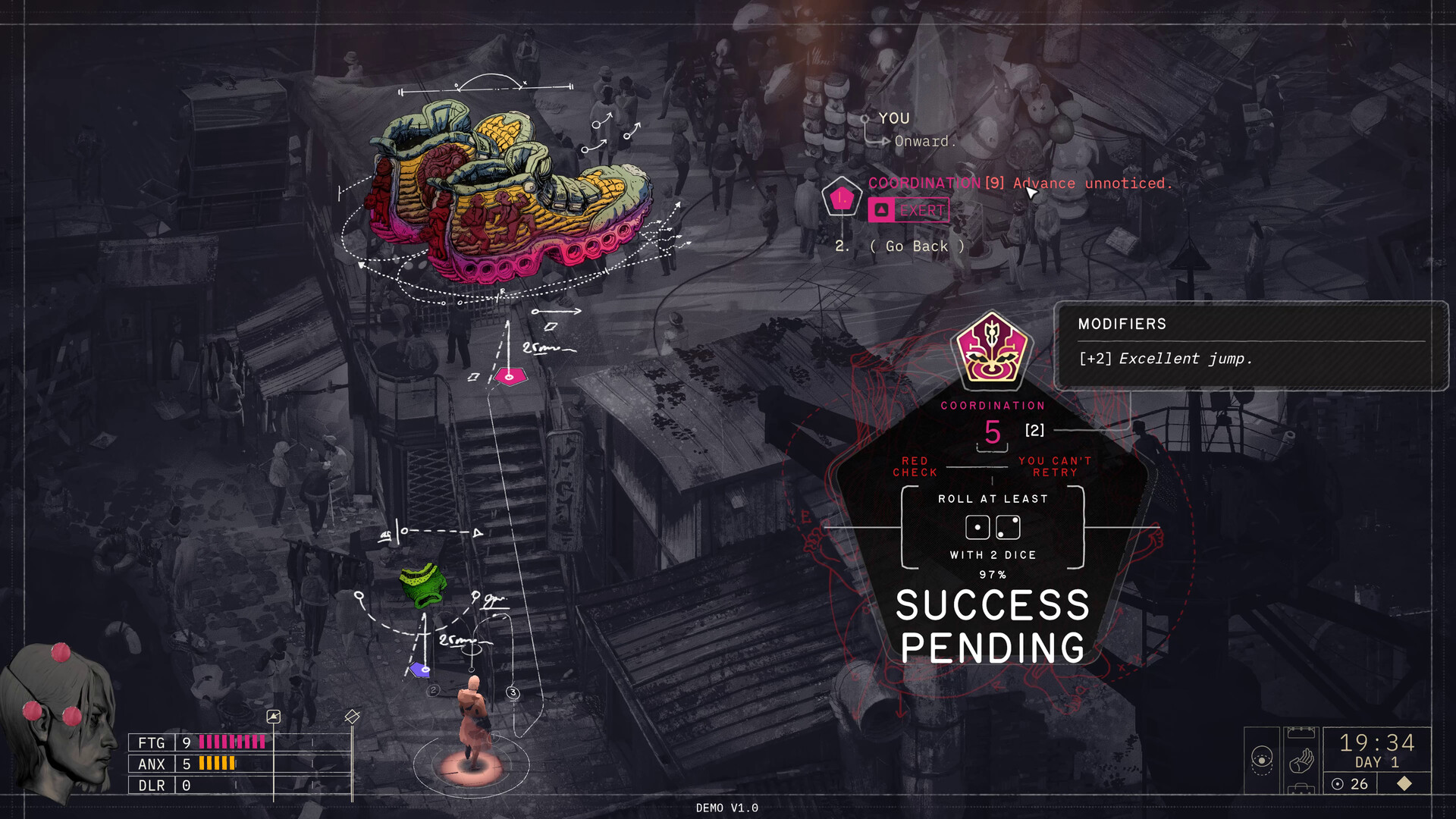
The basic structure is immediately familiar. You explore isometric environments, work through dense dialogue trees, make skill checks, listen to competing pieces of Hershel’s mind, and watch failure become part of the story instead of a simple dead end. Clothing, thoughts, and internal development all shape what kind of person Hershel becomes, or at least what kind of person she can perform well enough to survive.
Much of this still works. ZA/UM remains very good at making a conversation feel like a dangerous place. A single response can change the emotional temperature of a room. A failed check can become a better story than a successful one. Zero Parades understands that the best RPG choices are not always about getting what you want, but about revealing what kind of person was trying to get it.
The familiarity never fully fades. Sometimes Zero Parades feels like a fascinating mutation of Disco Elysium. Other times, it feels like the game is tracing the same outline. The internal voices, political digressions, theatrical failures, and damaged protagonist all have their own flavor, but they also keep pointing back to what came before.
Some of that burden comes with the name on the box. Mechanically and tonally, Zero Parades is in constant conversation with Disco Elysium. The conversation is usually worthwhile, and I was often glad to have more of this kind of RPG at all. Still, there were moments where I wanted the game to turn harder away from a template it understands almost too well.
That shadow is the main thing keeping Zero Parades from feeling truly revelatory. It is an excellent game, but rarely a surprising one.
Better Systems, Messier Fantasy

Zero Parades does find its own identity in some of its systems.
Conditioning is the smartest addition. Hershel’s internal development does not feel like a simple list of upgrades. It feels flexible and unstable, which fits a character trained to become whatever the situation requires. You are often choosing which version of Hershel is useful right now, and what that usefulness is going to cost later.
That gives the role-playing a sharper edge. A cover story becomes something you can wear, adjust, and discard. A personality trait can feel less like self-expression and more like professional equipment. The game keeps returning to the uncomfortable idea that Hershel’s adaptability may be one of the things destroying her.
The pressure systems help sell that. Fatigue, Anxiety, and Delirium are more than decorative meters. They make every push feel borrowed. Forcing yourself through a situation can open up new possibilities, but it also means gambling with Hershel’s body and mind. Success rarely feels clean when the method is self-exploitation.
Dramatic Encounters give major confrontations a stronger shape. Since Zero Parades is not built around traditional combat, these sequences create escalation without abandoning the dialogue-driven structure. They feel closer to tense tabletop scenes than boss fights, which suits the game well.
The spy fantasy is less consistent. Hershel is supposed to be a trained covert operative, but the game sometimes makes her feel like another ZA/UM disaster-person wandering through a politically loaded city and saying strange things until something breaks. Sometimes that works. Her instability is part of the premise. Even so, espionage depends on subtlety, misdirection, and control, and Zero Parades does not always make the player feel especially subtle or controlled.
The game is very good at portraying a broken person doing spy work. It is less reliable as a game about the craft of spying.
Portofiro Is Beautifully Miserable
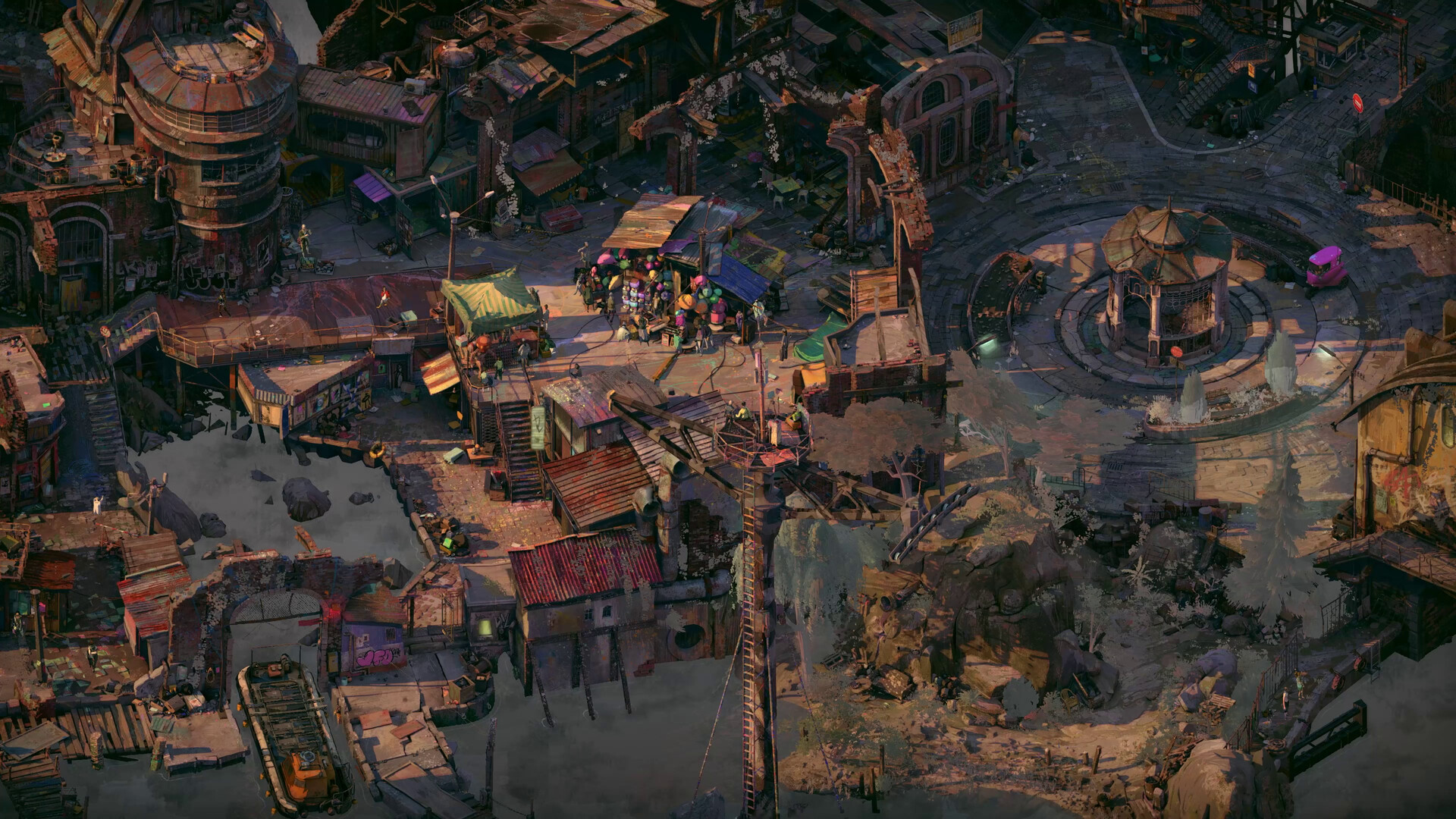
Portofiro gives Zero Parades one of its clearest strengths.
The city has the painterly grime I wanted from a ZA/UM RPG, but it is not just Revachol in a different coat. It has a coastal, decayed, theatrical quality that sets it apart. Beauty and rot sit close together. Interiors feel cluttered with history. Streets look shaped by conflicting interests. Even small environmental details suggest institutions, movements, betrayals, and personal failures that existed long before Hershel returned to the field.
The character art carries a lot of the same personality. Faces are exaggerated without becoming cartoonish, expressive in a way that matches the writing’s tendency to make people funny, pathetic, dangerous, and sad all at once. A lot of characters communicate who they are before they say much of anything.
The voice acting also helps, though I found myself reading ahead at times. That is almost unavoidable in a game this text-heavy. Still, the performances give many scenes texture, especially when the writing gets strange or politically tangled. At its best, the voice work makes Portofiro feel less like a setting document and more like a city full of people trying to survive their own convictions.
Dense Writing Is Still Dense Writing
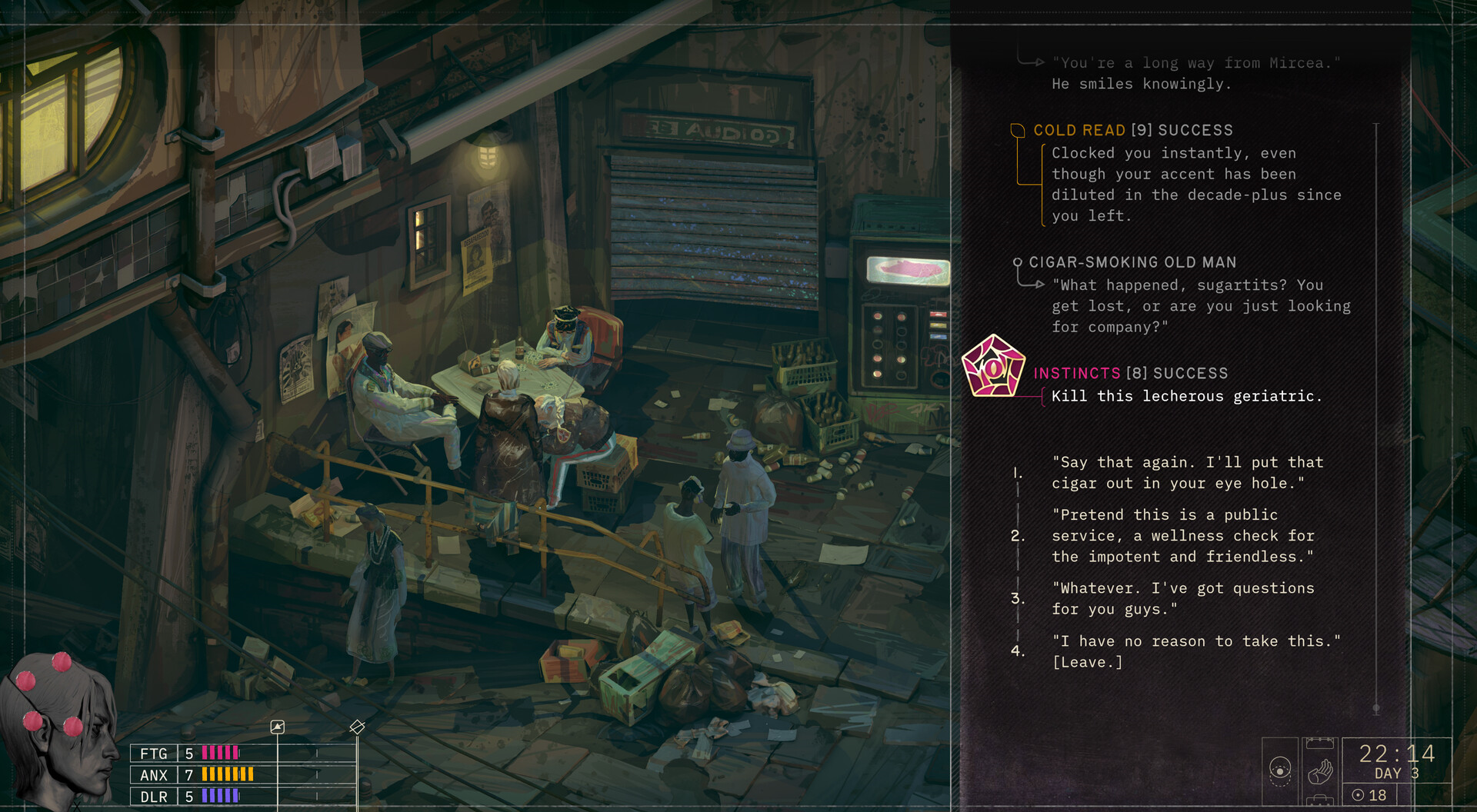
Zero Parades can be exhausting.
Conversations wander. Political ideas fold into personal histories. Jokes turn into ideological detours. Minor characters sometimes speak with the density of someone who has been waiting years to explain exactly how the world betrayed them.
I usually like that kind of writing, and Zero Parades often does it well. The problem is rhythm. So many interactions ask for the same level of attention that even strong scenes can start to blur together. I had plenty of moments where I admired the sentence-level craft while still wishing the game would let a thought land and move on.
This is another place where Disco Elysium’s shadow becomes overbearing. Disco Elysium could also be verbose and self-indulgent, but its best writing had a frightening ability to turn absurdity into revelation. Zero Parades reaches for similar highs and sometimes finds them. It just does not find them as consistently.
Even so, I would rather play a game with too much to say than one with nothing on its mind. Zero Parades overextends itself, but the excess comes from ambition rather than emptiness. That matters. The weaker stretches are frustrating because the best parts are strong enough to make them feel like missed opportunities.
Final Score – 8/10

Zero Parades: For Dead Spies is a brilliant, stylish, and emotionally charged narrative RPG. It turns espionage into a story about identity, exhaustion, ideology, and the quiet horror of becoming useful to powerful people.
Hershel Wilk is a tremendous protagonist, even if she carries the unmistakable shape of a ZA/UM disaster-person. Her similarities to Harry Du Bois are impossible to ignore, but her story has a colder and more institutional edge. She is not rebuilding herself from less-than-nothing; she is trying to figure out what remains after years of being shaped into a tool.
That tension runs through the whole game. Zero Parades is excellent, but not effortless. Its writing is dense, funny, sad, and politically alive. Its systems turn stress, conditioning, and failure into meaningful role-playing tools. Portofiro is a beautifully miserable setting full of people trapped between history and self-preservation.
The structure, internal voices, political digressions, theatrical failures, and broken protagonist are familiar enough that Zero Parades rarely feels as startling as its predecessor once did.
Zero Parades is ambitious, memorable, and often beautifully written, but it spends more time refining an existing language than inventing a new one.
The highs are exceptional. When Zero Parades is working, few games feel as intellectually alive or emotionally precise. It understands failure as characterization. It understands politics as something people have to live inside rather than merely discuss, although it does not often start conversations that haven’t already been spurred by its predecessor. Most importantly, it understands that being useful can become its own kind of prison.
**Bonus Action was provided with a PC copy of Zero Parades: For Dead Spies for the purpose of this review.**
All content on Bonus Action is provided without ads. If this guide was helpful to you, consider checking out our Patreon to help support independent, advertisement-free journalism and get access to exclusive, Patreon-only extras.
About the Author

Discover more from Bonus Action
Subscribe to get the latest posts sent to your email.