
via Kwalee, FLYOS
I wanted to be more excited about Vampire: The Masquerade – Bloodlines 2 than I was.
That disappointment has been hard to shake, partly because I wasn’t looking for a perfect sequel to the original Bloodlines. The true nightmare there was the development cycle. After a decade, I had little hope that the game I was waiting for would ever materialize. What I wanted was a Vampire: The Masquerade game that understood why the setting still has a hold on people after all these years. The politics. The hunger. The way a supposed apex predator can survive the night and still come out of it worse than they were before.
Vampire: The Masquerade – Eternal Whispers has me interested because it seems to be approaching the setting from a different angle. Indie developer FLYOS is pitching it as a narrative-driven CRPG set in modern Montreal, where Gabe, an older Kindred waking from decades of torpor, gets pulled into a conspiracy involving the Sabbat, a rogue ghoul, a Thin-Blood named Sam, and the Temple of Eternal Whispers.
I like that setup. A vampire waking up after the city’s power structure has changed has been done before, but for good reason. It’s an excellent excuse to make the player feel out of step, which is often where Vampire is at its best. You’re powerful, but not comfortable. You have history, but not enough memory. You belong to the night, but the night has kept moving without you.
After Bloodlines 2, that sounds like a healthier place for the series to be.
The Tabletop Game Was Never Really About Action

My favorite Vampire: The Masquerade stories at the table have rarely centered on combat.
Violence is always part of the setting. It has to be. These are vampires, and the threat of what they can do to people should never fully leave the room. But the scenes I remember from Vampire are usually conversations that got too quiet, favors that sounded harmless until they weren’t, and feeding choices that left everyone at the table sitting with the consequences for a little too long.
A bad conversation can do more damage than a weapon. A favor can become a leash. Hunger can turn a simple interaction into a crisis before anyone has time to prepare for it.
The tabletop game works so well because it makes power feel uncomfortable. You can live forever and still lose ground every night. You can gain status at the cost of becoming more dependent on people you hate. You can make the practical choice and know it made you worse. Combat can absolutely belong in that, but I’ve always thought of Vampire: The Masquerade as a social game.
Similar to Disco Elysium and other CRPGs that have spawned in its wake, Eternal Whispers won’t have traditional combat encounters. Players can still be violent, manipulative, or ruthless, but those approaches come through choices and paths rather than a standard combat loop. For Bloodlines fans, the lack of dynamic combat encounters might sound about as appealing as the morning sun. For me, it sounds like FLYOS is at least asking the right question about what conflict looks like in a Vampire game.
For Kindred, a room full of monsters with perfect manners can be a hell of a lot more dangerous than a thug with a gun.
A CRPG Could Fill A Gap Vampire Has Had For Years

Vampire: The Masquerade has had a strange life in video games.
There’s Redemption, the original Bloodlines, and now Bloodlines 2 on the traditional RPG side. There are visual novels, text-based interactive novels like Night Road, Parliament of Knives, Sins of the Sires, and Out for Blood. There’s Swansong, Justice, and somehow, for a while, there was also a Vampire battle royale.
I’m glad the license has been allowed to get weird. In my opinion, some of the smaller narrative games understand the mood of Vampire better than larger projects do.
Still, after so many visual novels and interactive fiction entries, I’ve wanted something with more RPG texture again. Not necessarily a giant open world, or another game trying to stand directly in Bloodlines’ shadow. Just something with customizable attributes, dice, investigation, and enough systems for my character to feel like more than a set of dialogue choices.
A narrative CRPG has a ton of potential. Done right, it could keep the sociopolitical focus that Vampire needs while giving players more room to build, fail, investigate, and live with the consequences of the kind of monster they’ve made.
Failure Should Leave Scars

The fail-forward design might be the part of Eternal Whispers I keep thinking about most.
At the table, failure doesn’t always mean the story stops. A failed roll can make everything more interesting. You fail to lie convincingly, and now someone powerful knows you’re hiding something. You miss a clue, and another faction gets there first. You keep the Beast under control, but only barely, and the people around you notice how close you came to slipping.
That rhythm fits Vampire beautifully.
FLYOS describes botched negotiations, broken promises, missed clues, and reckless decisions as things that transform the narrative instead of blocking progress. I want that kind of structure from a VTM game. Success should cost something. Failure should linger. The city should remember what you did, and it should remember what you failed to do.
The announced Final Death mode also feels right for the setting, although we don’t know much about it yet. Permanent consequences can become frustrating in the wrong game, but Vampire is already a world built on old mistakes, survival instincts, and terrible decisions made in the name of seeing another night.
I don’t need every choice to destroy me, but I do want the game to make me nervous before I make one.
The Dice Rolls Could Matter More Than They Seem

One detail in the trailer jumped out at me: Eternal Whispers appears to show dice rolls in a way that resembles the tabletop game’s basic structure.
That could make the game useful for more than existing Vampire fans. Baldur’s Gate 3 became an entry point for a lot of people who had never played Dungeons & Dragons. It didn’t teach every rule exactly as it appears in a table, and it didn’t need to. It taught the shape of the thing. Ability checks. Saving throws. Dialogue rolls. The little moment of panic before the die lands, and the conversation goes somewhere you didn’t plan for.
Eternal Whispers could do something similar for Vampire: The Masquerade.
The tabletop game can look intimidating from the outside. Clans, Disciplines, Hunger, Humanity, sect politics, dice pools, decades of lore. It’s a lot before you’ve even decided what kind of vampire you want to be.
Eternal Whispers has the potential to serve as an entry point for the TTRPG. If Eternal Whispers uses dice rolls for dialogue, investigation, temptation, and social pressure, new players could start to understand how Vampire is played. It isn’t about clearing dungeons or collecting better gear. It’s about managing your appetite (literally and figuratively), social pressures, bad instincts, and the moment where the dice force your character to become a little more honest than they wanted to be.
I don’t expect a video game to teach the entire tabletop system, but if it can be the push people need to organize a table, Eternal Whispers will have this Storyteller’s eternal gratitude.
I Still Have Questions About The RPG Part

This is where my optimism starts to slow down a bit.
From what FLYOS has shown, we know players can customize Gabe’s appearance and attributes. That’s a good start, but it leaves a lot of space around some pretty important questions. We suspect that Gabe was part of the Sabbat, but we don’t know if players can choose a clan. We don’t know how Disciplines work. We don’t know whether Gabe’s name, pronouns, or identity can be changed. We don’t know how much the attribute system will actually affect the way the story unfolds.
For a Vampire game, those details matter.
Clan choice is not just a class picker in this setting. A Toreador, Nosferatu, Brujah, Ventrue, and Malkavian should not move through undead society in the same way. Clan affects powers, politics, assumptions, prejudice, and the kind of monster people expect you to be before you’ve said a word.
Gabe being a named protagonist also gives me pause. The name doesn’t read as especially androgynous to me, and a preset protagonist can sometimes mean the game is leaning more toward an authored narrative than a player-shaped RPG. That isn’t automatically a problem, although a lack of control over the protagonist’s story was a huge complaint I had about Bloodlines 2.
But Vampire is a game about identity from the first step. Who made you? What did they turn you into? What part of yourself did the Embrace sharpen, and what part did it ruin? I want Eternal Whispers to care about those questions mechanically, not only in dialogue.
If the customization only goes as far as appearance, attributes, and a handful of branching choices, I may still enjoy the game. I just might not get the tabletop adaptation RPG I’m hoping for.
Cautious Optimism Is Where I Settle For The Night
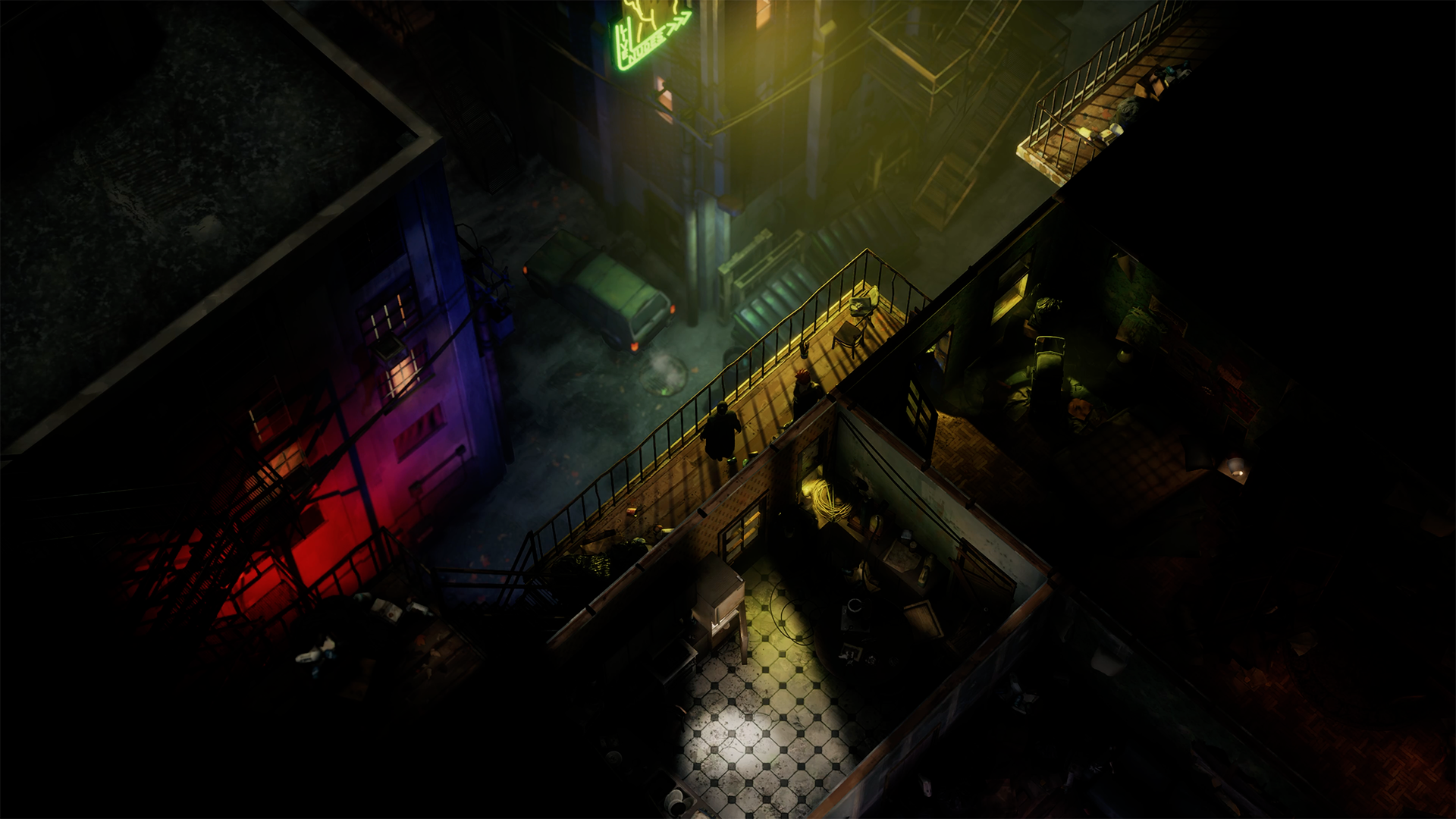
I’m not ready to decide what Eternal Whispers is yet. There are too many open questions, and Vampire fans have spent far too many nights getting excited about promises.
After Bloodlines 2, I don’t need Vampire to go bigger. I’d rather see it get sharper. I want a game that understands how a polite conversation can become a threat, how a failed roll can follow you home, and how surviving the night can still feel like losing.
Eternal Whispers might not be that game. The RPG systems may end up thinner than I want. Gabe may feel more fixed than flexible. The tabletop influence may live more in the language of the pitch than in the actual structure of the game.
For now, I’m interested because Eternal Whispers seems to be looking at the part of Vampire: The Masquerade I care about most: the space between power and regret.
Being a vampire should feel seductive. You should feel stronger than the people around you, sharper than you used to be, and dangerous in ways the living can’t fully understand. But Vampire loses something when it stops there. The fear comes from realizing that every advantage has a cost, and every night asks you to give up a little more of the person you were.
If Eternal Whispers can make humanity feel like something fragile instead of a morality meter, I’ll be more than willing to follow it into the dark.
About the Author

Discover more from Bonus Action
Subscribe to get the latest posts sent to your email.