Somewhere in your Pokémon PC (that’s the in-game storage system where every creature that doesn’t fit in your party of six gets boxed up and forgotten, by the way) there is a box you haven’t opened since roughly the Obama administration, and in it a Bidoof is waiting forlornly for you to come back.
But if we’re being honest with each other, you are not coming back, and because we’re complacent, unempathetic pieces of trash, most of us have made our peace with that.
David Fernández Molina, lead designer at Wayward Games, however, decided that’s not okay, actually, and built a game partly around it instead.
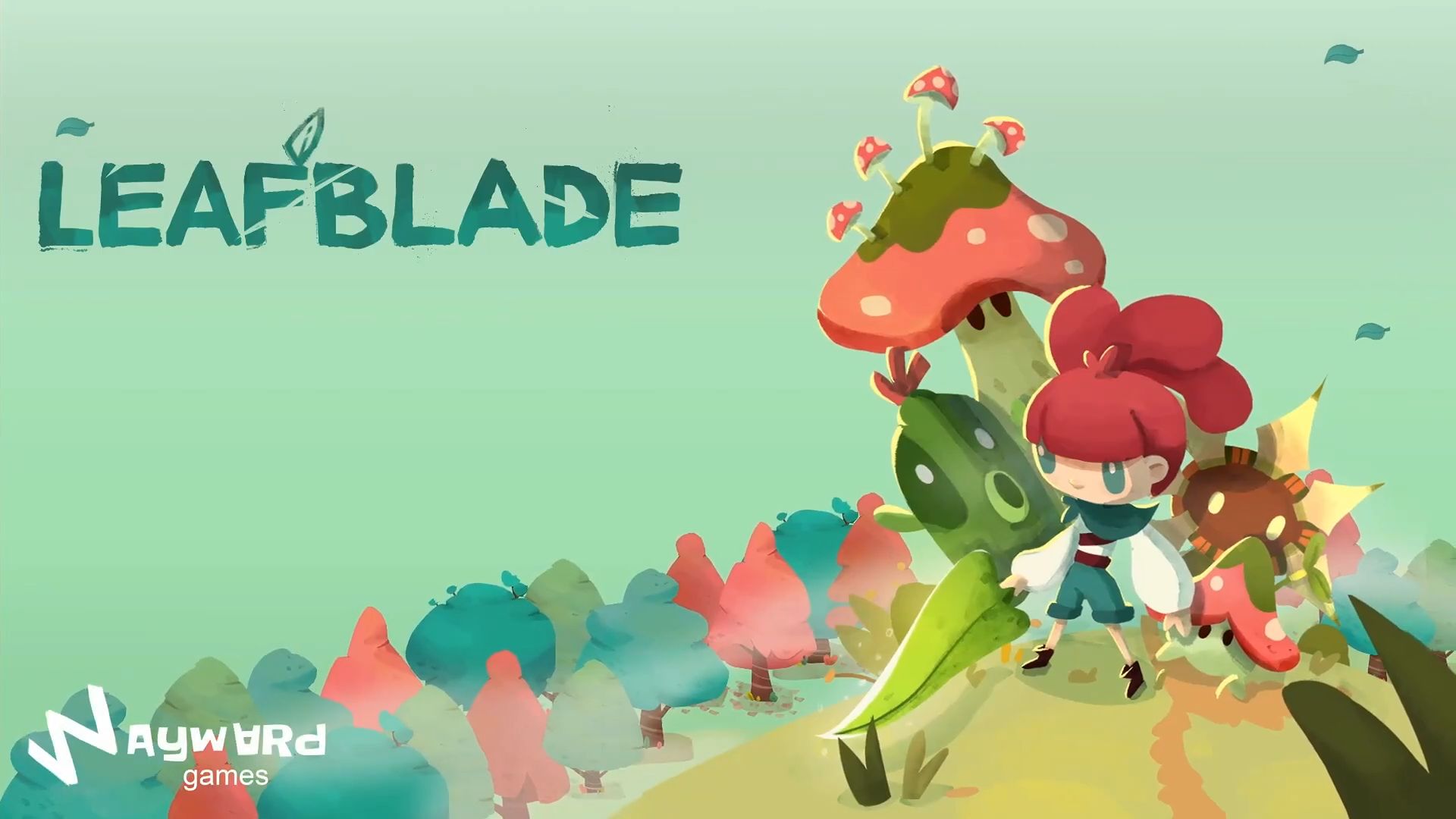
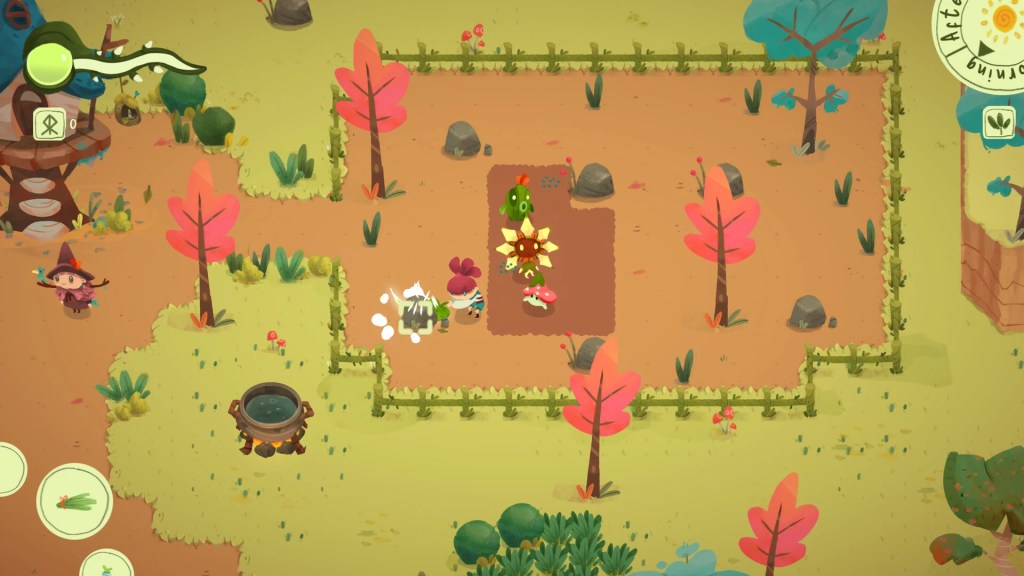
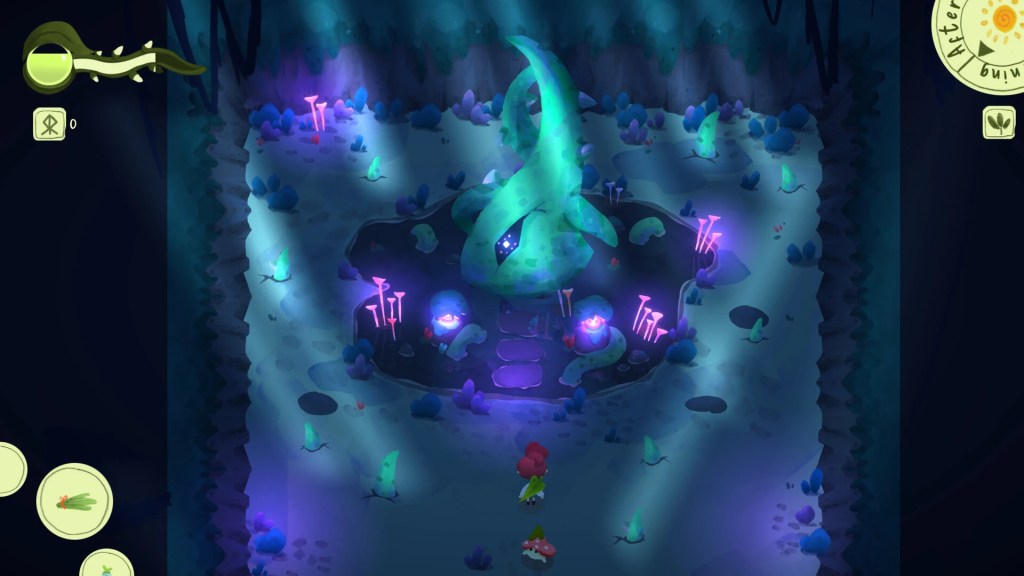
Leafblade is a cozy action RPG in which you play as Rain, the human chosen to carry a magic Leaf, befriending wild creatures called Mons to mend the severed bond between humans and monsters before bringing them home to live, work and, ideally, cavort on your farm.
His studio is, in his words, “really tiny, two or three people, although right now there are four of us anyway,” which might be the most indie sentence I have ever heard. Before Leafblade, he spent years at Digital Sun working on Moonlighter.
When I asked for the elevator pitch, he gave me this: “It’s an adventure, or an action RPG, where you befriend monsters to gain allies in combat and on the farm.”
This interview was conducted in Spanish. Quotes have been translated and condensed for clarity.
Side Quest: But What About the Shopkeeper?
Before he was designing games, David was programming other people’s. “I started in the industry making games for other people,” he told me. “I worked at an outsourcing company called Brave Zebra, making games for others: the programming, the art, and so on.”
According to David, it was there that he pitched an idea of his own, and it came from the kind of question you only start asking after a few hundred hours of RPGs. “We always tell the story of the hero, the hero who goes and buys weapons… saving the world,” he said. “But what about that shopkeeper? What about that shopkeeper? Where do they get their materials? How do they do it?”
That question became Moonlighter, and as someone who once spent an entire RPG (FF12, if you must know) flogging monster parts instead of saving anybody, I took it personally. David’s reasoning was that every action RPG is already a shopkeeping game masquerading as a hero’s journey.
“In the end, what you do is that loot loop: looting, getting loot, selling it or upgrading your weapons or whatever. It’s a loop that’s in every action RPG,” he said. “And I said: ‘Well, this loop feeds really well into the idea of being a shopkeeper.'”
Moonlighter’s credits list him as creative director, programmer, and the writer of its story, and when I suggested that the job involves wearing a lot of hats, he replied, “We wear lots of hats, exactly,” before explaining that while the programmer turns ideas into game logic, the designer builds “the structure of the game: those ideas, those mechanics, those dynamics,” and still ends up programming now and then anyway.
The other thing that has followed him from project to project is Zelda. “I’ve always loved Zelda, always loved Zelda,” he said, and Moonlighter was his shot at “a very Zelda-like game. With combat like Zelda, but with other mechanics.” Leafblade runs on the same formula with a different add-on: “Always that idea of making a Zelda but adding something. In this case it’s the monsters and the farm.”
After Moonlighter and work on its sequel, David went on to Hytale, the Riot-owned sandbox game that was cancelled in June 2025 when Hypixel Studios closed. (In true video game fashion, its original creator bought it back that November and launched it in early access in January 2026.)
That closure is what pushed the team to take their side project seriously, a prototype they had been tinkering with for about three years in the most cozy-game way imaginable, which is to say on weekends and for fun.
“Like: ‘Well, it’s Saturday afternoon, I’ve got nothing to do, I’ll spend a couple of hours on this prototype,'” he said. “And it was a prototype.” It has since accrued a farm, a bestiary and a release year, so I think we can stop calling it that.
Nobody Gets Left in the PC Box
If Moonlighter came from wondering about shopkeepers, Leafblade came partly from wondering about something every Pokémon player has quietly made their peace with.
“When we were brainstorming ideas for the next game, Leafblade came partly from that,” David said. “Because you’d think: ‘What about the Pokémon? You leave them there, in the PC, and they spend 45 hours of play, 100 hours of play there, and nobody thinks about them.'”
I fully wish I had his level of empathy, to be honest. Even if I spent 20 minutes pondering which starter to pick in the early game, that Chikorita never ONCE crossed my mind after the 10-hour mark.
The closest the series has come to fixing it, in his view, is Pokémon Legends: Arceus, which swapped the PC for pastures, although even there “you can have 100 and only five show up, they’re random, and it’s like: ‘What a shame they don’t show more.'” Leafblade‘s philosophy is a lot simpler: “Let them go free. Don’t keep them shut in there.”
It’s also why Wayward Games has started describing Leafblade with its own label, “monster caretaker,” a tag that, as far as David knows, doesn’t even exist on Steam. “It’s what defines us best,” he said. “A lot of the game’s mechanics are there so you look after the monsters. Put up decorations, little houses so they’re happy. It’s not the Palworld way: whipping them, threatening them and making them work.”
That philosophy means that in a genre built on chucking spherical objects at wildlife, you never throw anything at a Mon to catch it, although that wasn’t always the plan.
“The original version of the game was that every monster was capturable,” David said. “What you had to do was give them food, then they stopped being aggressive, and then you watered them with your leaf, and that’s when you kind of transformed them.”
It sounds adorable, but playtesters struggled with it. “People really struggled with having to aim and throw an item in the middle of combat. They really struggled with it; they got nervous,” he said, before walking me through what that looked like from the player’s side: “It hits me, and the food landed way over there, I’m going to go get it, it’s not there, it’s not there… I threw it in the water.”
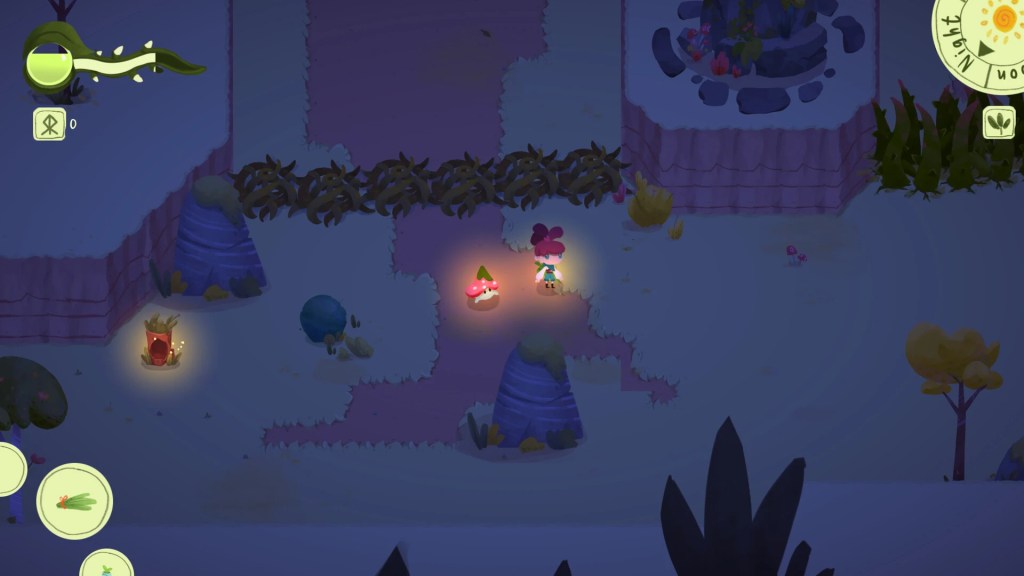
On top of that, working out which food each monster liked meant beating the same creature several times over, which David says “felt artificial”. So the team rebuilt the whole thing around statues that hold the original, uncorrupted idea of each monster, which means you defeat the corrupted, red-aura version near one and the statue hands you back the good one.
“That way you’re not whipping a monster you want to look after,” David said. There’s no catch rate either, so a rarer Mon simply means a tougher fight with more attacks and more mechanics rather than a slot machine with a ball in it. “There isn’t that gacha thing of trying several times, of throwing the ball at it several times,” he said. “If you beat it, you beat it, and it comes with you.”
Maslow Would Like a Word With Your Farmhands
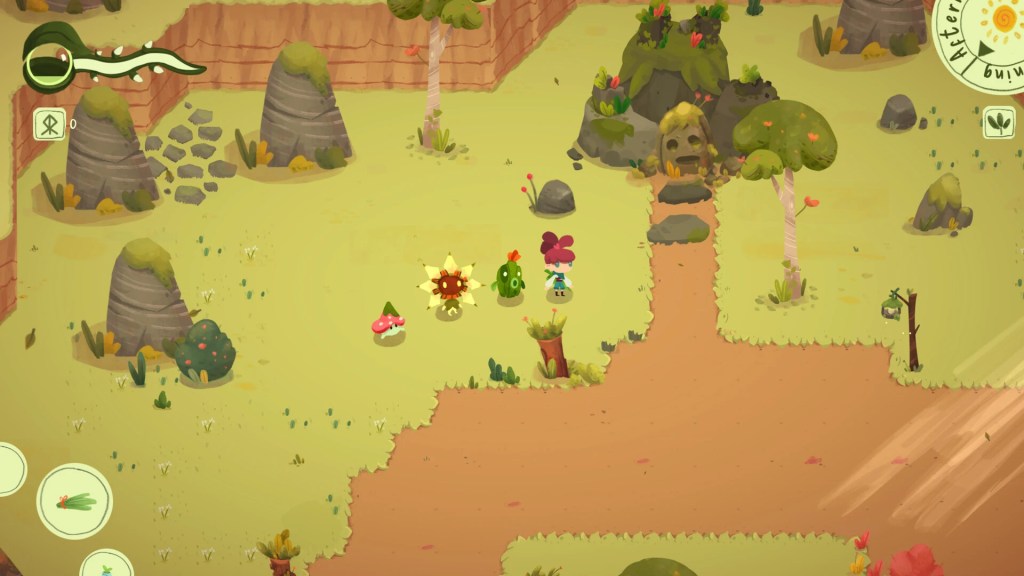
Once a Mon comes home with you, it gets a job, and Wayward Games built its roster around the jobs that need doing rather than a target number of creatures.
“One plants, another waters, another tills the soil,” David said, and while the first biome sticks to planters, a waterer and a rock-breaker, the later environs bring in monsters that fertilize and harvest. “They’re designed around saying: ‘We need these roles.’ Once those roles are covered, we can add more monsters.”
Your workforce, crucially, has opinions, and if you leave them toiling without meeting their basic needs, they’ll let you know in the tone of a coworker on their fourth unpaid overtime shift: “Hey, I’ve already worked enough, I’ve done a bunch of things, I have no energy left, sorry.” Inspect them, and the game tells you exactly how to placate them. “If you give this monster a house, it’ll have more energy. If you put up decorations it likes, it’ll also have more energy.”
When I asked whether there was a little meter for all this, he said it’s a checklist, and then he brought up Maslow, which I did not expect from a monster-farming interview but fully support.
“It’s also like Maslow’s pyramid, in the sense that if the needs at the bottom aren’t covered… if you haven’t fed it, even if it’s surrounded by decorations, it’s not happy.” Food comes first and interior design second, which, frankly, is also how I run my own life.
In the later biomes, your monsters start having opinions about their neighbors, too, and some will refuse to work next to the wrong one. “Come on, you can’t put me with one that’s my natural predator. That can’t be right,” David said, speaking as the monster.
Neglect won’t kill your Mons, either. An earlier version had unhappy monsters pack up and leave the farm, but the team cut it “because it was a bit frustrating that they left,” and I’d like to thank them personally for sparing me that particular abandonment arc.
What keeps you coming back to them is the bond, which is also the only way they grow. “They don’t evolve through experience; they evolve through the bond,” David said. “You’ll never see these in the wild, corrupted, never,” he said while showing me a mushroom creature and its grown-up form, and I made a noise I will not be transcribing.
For now, every interaction in Leafblade does something useful, and that’s deliberate. “So far we’ve put in only utilitarian interactions, so people feel their actions give them progress,” David said.
Softer, sillier interactions are on the wishlist, and one of them, hugging your monster to nudge the bond up a little, already exists and is simply switched off. “The hug is in,” he said. “You can’t access it, but it’s in. We need to bring it back.”
The hug’s fate came up when he explained why a team of four has to be ruthless about scope. “You have to be very practical when you’re an indie, you have to be very practical, because it’s really easy to go off on a tangent and drive up the cost of the project,” he said.
“And then you say: ‘Now we need to do something very basic and very necessary for the game, but we’ve eaten up time doing silly stuff.'” If the game does well, deeper care routines like bathing your monsters once a week could follow, but for now the basics come first, and the hug waits its turn.
Combat for People Who Would Rather Be Watering Things
Leafblade is an action RPG, so yes, there is fighting, and swathes of its audience will have opened Steam to grow turnips rather than to study enemy wind-up animations.
But David’s own taste sits somewhere in the middle. “I really like dual games,” he said. “It’s not about appealing to a bigger audience, but because when I play games that are pure combat, I get tired, I get tired, I can’t.” That includes the ones he loves, since “even Dark Souls tires me out, and I love it,” and it cuts both ways: “With all due respect, I love Animal Crossing, but I can’t play three months straight of Animal Crossing. I get bored.”
His influences are a smorgasbord to match, with Zelda for the adventure, Rune Factory (Harvest Moon’s monster-farming spin-off) for the farm, and Cult of the Lamb for the way it “combines the combat side with the side of looking after the cult.” The trick, as he describes it, is getting each half to fuel the other.
“The ideal thing when you make a dual game is that one part makes you think about the other,” he said. “You’re out fighting, and you see a monster, and you think: ‘Ooh, I want that one for the farm.’ Because you see it shoots water, and you think: ‘Ooh, it’ll water the farm for me and I won’t have to do it myself.'”
Wherever they can, the team even reuses the same animation for a Mon’s farm chore and its combat move. “The one that waters in the first biome is like a little water dragon that shoots water upwards, like a fountain,” David said. “It waters the same way on the farm, or in combat it shoots a projectile at you.” He had a frame of it to show me and pointed out that it purses its little lips, and I need everyone to know that I would die for this dragon.
For players who flinch at boss fights, the team also wants to borrow one of Cult of the Lamb’s smartest tricks, which is telegraphing attacks with “a kind of preview, a kind of indicator that tells you: ‘I’m going to shoot over here.'”
Farm-first players, David explained, “are not really reading the enemy, whether the enemy is doing a wind-up or whatever. They want to see a red indicator and be able to dodge. That’s it.” The rest of the combat is tuned with them in mind.
“Our combat is, in big air quotes, more relaxed than other action RPGs,” he said. “The timings aren’t as tight, the monsters have quite a long delay between attacks, they’re not very relentless,” and players who want more of a challenge will get difficulty settings to crank it up.
I confessed that I once played Celeste with the assist options switched on and still feel faintly guilty about it, and his answer is one I’m considering getting framed. “I get it, I get it,” he said. “But in the end, what you want is to enjoy the game.”
Living Next Door to Pokémon
We can’t ignore the big elephant in the room: Pokopia exists. So, naturally, I had to ask whether everyone at Wayward Games wanted to lie down in a dark room when Pokémon Pokopia came out.
“Well, actually, I’ve bought it, but I haven’t played it yet,” David said, and the team had already had its existential crisis a while earlier anyway: “We wanted to shoot ourselves earlier, with Palworld.”
Pokopia, he said, is “a bit more Animal Crossing. It doesn’t have combat as such,” although “there’s always that little scare, your heart skips a beat,” which is followed by the healthiest possible response from someone making a monster game in Pokémon’s shadow: “The thought I have right after is: I’ll buy it, play it and learn.”
What Leafblade offers someone with a Switch full of Pokémon, according to David, starts with a proper adventure. “It’s not so much about visiting the neighbors and coming back,” he said. “It’s more: ‘I have to explore this region, I have to see what’s going on, and figure out why the bond was broken.'”
Each region has its own ruling monster to meet and its own Zelda-style puzzles to solve. Seeing how the word “Zelda” came up in the interview just as often as Pokémon, I asked which Zelda inspired him most. He picked The Minish Cap, which I then had to admit I couldn’t place, as my gamer credentials fell out of my pockets and made their way outside the room.
Breath of the Wild is special too, he said, but it’s the point where the series “stopped being so much an adventure and became more sandbox.”
He also isn’t trying to pander to Pokémon fans by copying the turn-based battles they already love. “Turn-based players want Pokémon’s turns. They don’t like other games’ turns as much,” he said, so Leafblade goes real-time and offers “a way to really look after your Pokémon” instead. For the Stardew Valley crowd, the selling point is the farm: “You have to look after them, and they can automate a big part of the farm.”
Wayward Games is self-publishing, and the plan is an early access launch with three biomes and roughly 40 monsters, all of which are already in the bestiary, with a fourth biome and shinies to follow during early access.
David wants the shinies to land “without it becoming a gacha,” and he knows the territory, since he has more shinies in Pokémon Legends: Z-A than in any other game and liked the way it keeps a shiny in place once it spawns.
When I asked about timing, he told me that “2027 is the year.”
The Mons Are Alright
The look, by the way, comes straight out of a picture book. “The visual style comes more from children’s books,” David said, because the game’s artist, Rocío, has wanted to make them for a while and has a book of her own that she hasn’t published yet, which makes Leafblade, in his words, “like a little bridge” between the two.
“That feeling of going back to the farm and seeing the monsters and feeding them. Above all, the feeling of when a new day starts. The first thing you do, before going off on the adventure, is feed them. You see they’re happy and you think: ‘Okay, they’re going to do their thing, now I can go do mine.’ They’re happy, they’re fine.”
When I said it sounded like dropping the kids off at school, he said, “Exactly,” and added: “I really like that feeling. I really like how it’s turned out, and yes, I’m very proud.”
Leafblade’s free demo is playable on Steam right now as part of Steam Next Fest, which runs until October 26, and you can wishlist the full game while you’re there.
Still here? Good.
That means the article did its job! If you’d like to see more of them (and get first crack at what’s next) our Patreon’s the place.
About the Author

Discover more from Bonus Action
Subscribe to get the latest posts sent to your email.