
Image via Kylyk Games
Conversations around burnout and expectations dominate many personal stories in 2025, and my journey through Urban Jungle was a mixture of grief and sympathy for the main character as she navigated these struggles. While the game wasn’t what I’d been anticipating, it has charms that will delight fans of narrative adventures.
When I first sat down to play Urban Jungle, I was prepared for a game that would function more like a sandbox with light narrative elements. I was ready to unlock maps, organize plants to my liking, and spend hours creating rooms with every type of pottable greenery that I could get.
However, Urban Jungle functions more similarly to Unpacking than a cozy management sim, and this fact threw me hard as I settled into a game more focused on propelling a plot forward. While I enjoyed my time in Urban Jungle, there were some elements that felt awkward.
Key Details
- Developer: Kylyk Games
- Publisher: Assemble Entertainment
- Platforms: PC via Steam
- Price: $11.99
- Review Code Recieved: Yes
Just Be Like Your Brother
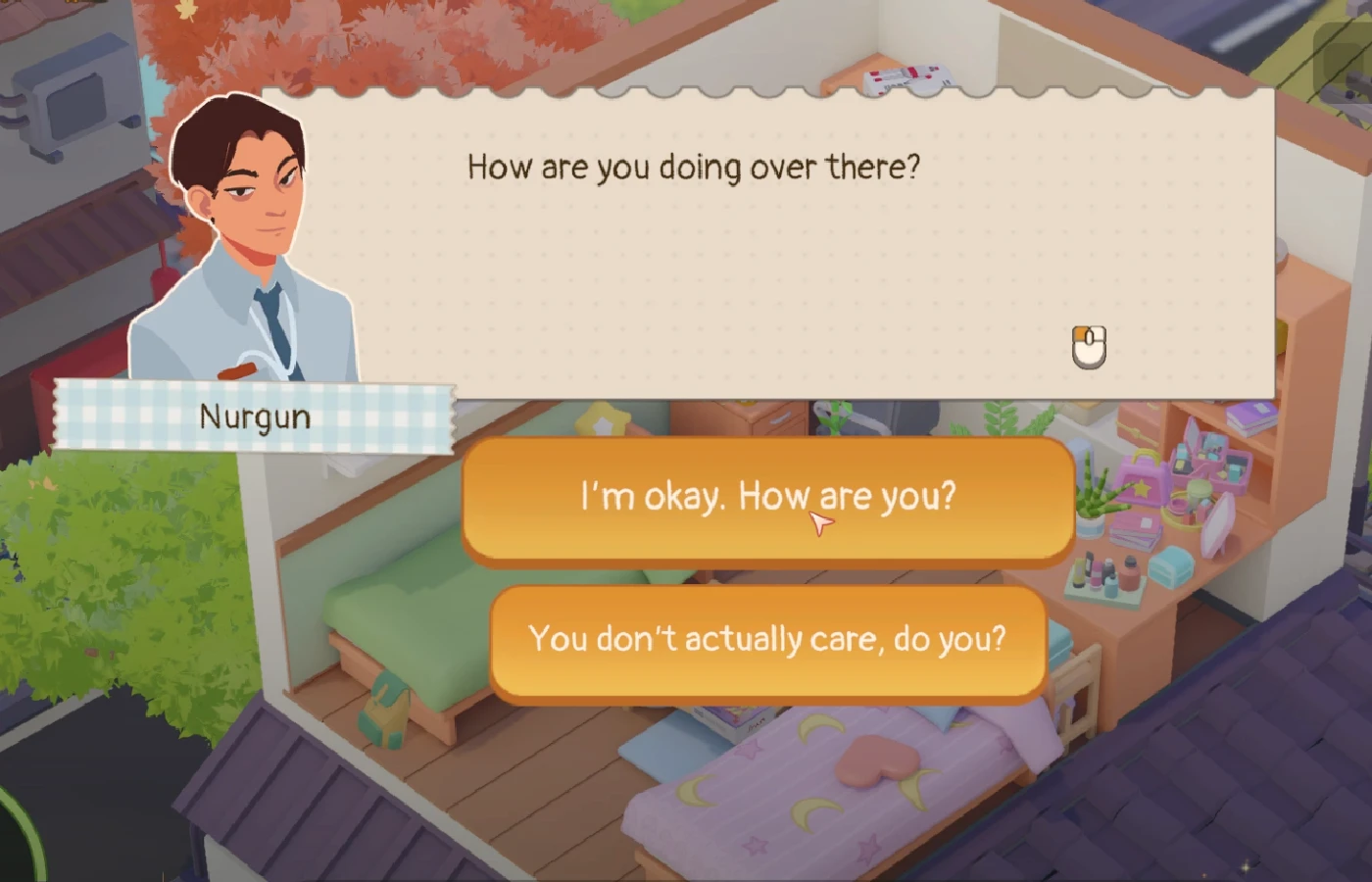
From the beginning of the story, we learn that Ayta’s life is not an easy one. After their mom gets a job that can support them, Ayta and her brother are moved away from her childhood home and family to live abroad. As kids, big brother Nurgun is good at everything, with trophies lining his bedroom wall and a big attitude to go with them. Unfortunately, Ayta’s skills aren’t as academic, and her cute “hobby” of plants isn’t seen as a productive option for her future.
The story explores difficult topics like family expectations, the effects of burnout, the consequences of living for a job and not for the people you care about or for yourself, and when it’s okay to say no. Music, environment lighting, and map sizes are all used to tell Ayta’s story as she goes from a miserable desk worker to a flourishing plant business owner.
Gameplay in Urban Jungle takes place in chapters that encompass critical years of Ayta’s life. She was born in the early ninties, and the story completes around the time she is in her mid thirties in 2024/2025. In each chapter, players will unpack boxes, organize items, and put down plants to advance the story meter.
Plant Puzzles, Not Meditative Freedom
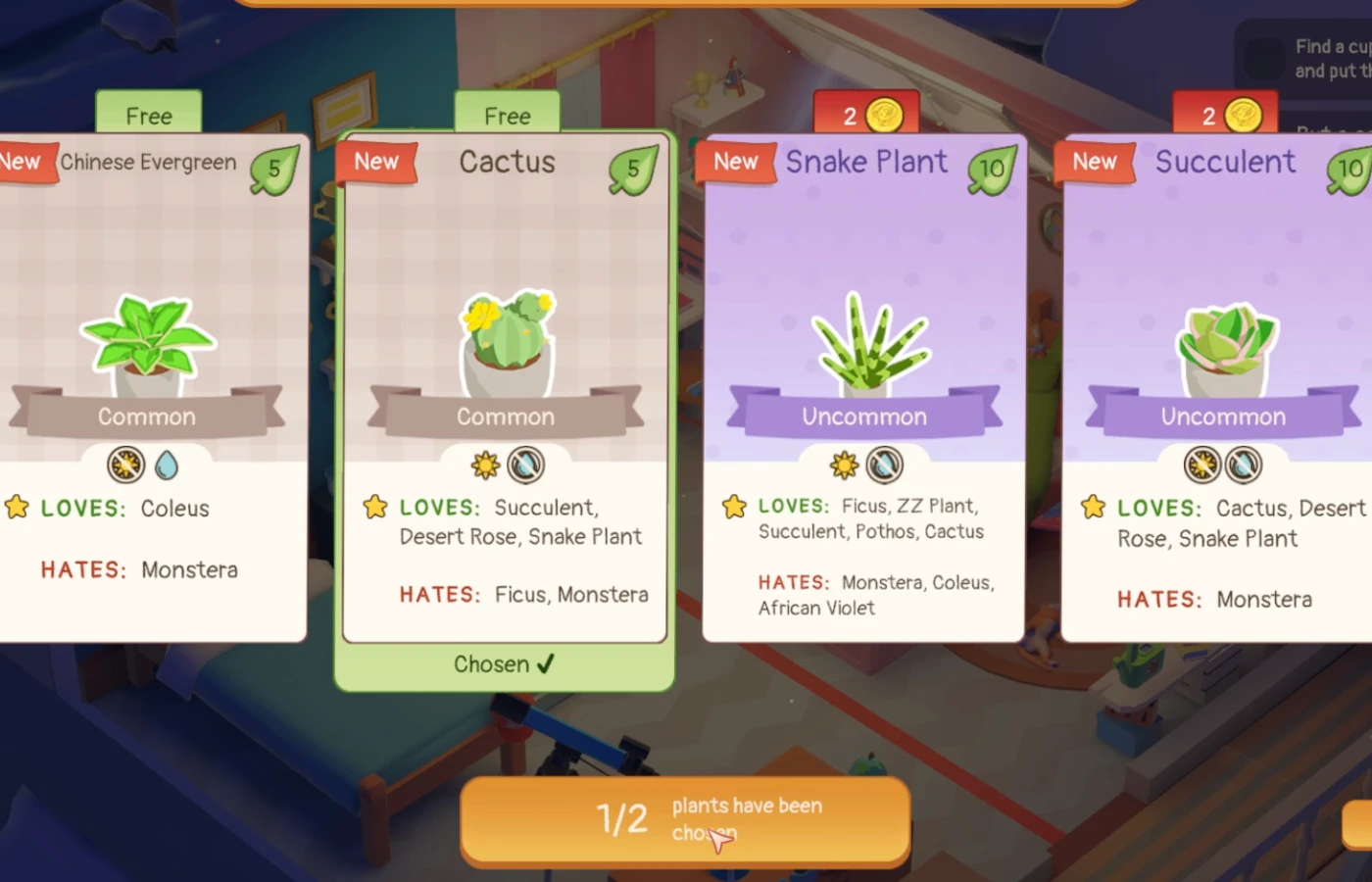
Plants are the big pain in this game, ironically. Instead of placing them from a menu with a wide selection, players will be brought to a store page that provides a handful of randomly generated options. You can only pick two at a time, and then you’ll need to get enough points by placing the plants correctly to re-roll the shop. Some plants cost coins, which are earned by completing objectives at the start of each chapter.
To get story points, players must look at the plants’ needs, and boy howdy, these potted companions demanding. Players will need to provide them with the correct humidity and light requirements while sitting them next to other greenery they like and avoiding the ones they hate.
For me, the plant placement became particularly tedious in the later chapters, when my shop continuously loaded me down with options that all had similar needs, leading to foliage pileups in certain parts of each map.
Oftentimes, I would just unload as many plants as possible in one location and hope it would be enough to trigger the next chapter.
Unpack, Unpack, Unpack

Urban Jungle takes a lot of inspiration from Unpacking, but not all of it is good for the story. Each chapter starts with a pile of boxes that players will need to sort through, and the contents are an odd mixture.
It was fun to see items from Ayta’s childhood bedroom travel with her from home to home. It was also interesting to see what items she chose to keep from her adult chapters and how they evolved in the new spaces. However, for every nostalgic action figure, there are six bags of soil.
Urban Jungle has you placing so many items that do nothing other than take up space. Spray bottles, bags of fertilizer, stacks of pots, and more have to be set in areas that could be holding plants. I couldn’t figure out how this unpacking element was meant to make the game more interesting, and I began to dread the start of chapters because I didn’t want to have to organize the same six items in every shop space.
I think the unpacking element of the game was clever and cute, but honestly, I could have done without it. I was much more interested in working with the plants, and the only purpose of the boxes seemed to be for grinding the coins needed to buy rare plants from the shop.
A Beautiful Story With A Rushed Ending
While the story presented in Urban Jungle is relatable and emotionally relevant for most players, I found myself unsatisfied when I completed the game.
So much emphasis was put on following your dreams and going against the “traditional” expectations of the world, but Ayta’s love of plants was only deemed “worth it” after she became a successful business owner. The last three chapters of the game didn’t carry the same weight as the depression of the earlier chapters, and while I believe it was meant to convey hope, what I took from it was that she just wasn’t depressed anymore.
Why is that a problem? Because getting married and having a big house don’t mean she’s worked through the pain of her beginning. Becoming “better” than her burned out brother also didn’t feel right. I wanted to see more of her personal growth. I wanted to see her putting her action figure collection on display in the plant shop, not throwing her brother’s trophies in a box. I wanted to see her finally having time for her friends, not getting married between chapter transitions. I wanted to see her opening up to her partner, not just becoming a successful business owner.
I felt like there was a lot of telling instead of showing, and I think the story would have been much more impactful with three more chapters following her choice to leave her job so we could have seen the process of rebuilding herself free of all the expectations she had been crushed by.
Because this game chose to take on the narrative it did, instead of just allowing players to place plants in cute rooms, Urban Jungle is the story, and you wanted Ayta to triumph. At the end, she didn’t seem happy; she just seemed busy in a different way, and that felt unsatisfying to me as a player.
Final Score – 7.5/10
Urban Jungle is a beautiful indie game, but it isn’t what I was prepared for when jumping in. If you are looking for a simulation title where you get to organize pretty plants in a variety of locations, this weirdly isn’t the game for it. However, if you want to explore a story, solve puzzles, and challenge yourself in limited spaces, you will have a ton of fun working out what every plant needs.
While Urban Jungle didn’t give me the same emotional catharsis as Unpacking, it is a very intense and relatable story. It’s a struggle many of us are facing, and despite my own personal thoughts on how it played out, I think it is important for others to go through it as well. If you want to think deeply, feel the feels, and connect with uncomfortable elements of society, this is a fantastic way to do that. It made me think hard about everything, and I loved it.
Urban Jungle is beautiful, hard, and contemplative, and that makes it worth picking up.
**Bonus Action was provided with a PC code of Urban Jungle for the purpose of this review**
About the Author

Discover more from Bonus Action
Subscribe to get the latest posts sent to your email.