I want to talk about the summer of 1999, except I was two years old and have absolutely no business feeling nostalgic for it, which is something Mixtape made me feel anyway.
This is a game set in the last days before August tips into September, before three teenagers from a small Northern California town called Blue Moon scatter off into their separate futures, and it does something I did not expect a video game to do: it made me ache for a decade I only know through my parents’ record collections and whatever the algorithm decided I needed to hear at 2 a.m.
Beethoven & Dinosaur, a small Melbourne-based studio that previously made The Artful Escape, has somehow reverse-engineered the specific texture of being seventeen, of standing on the edge of everything changing, and turned it into something you can hold in your hands for an evening.
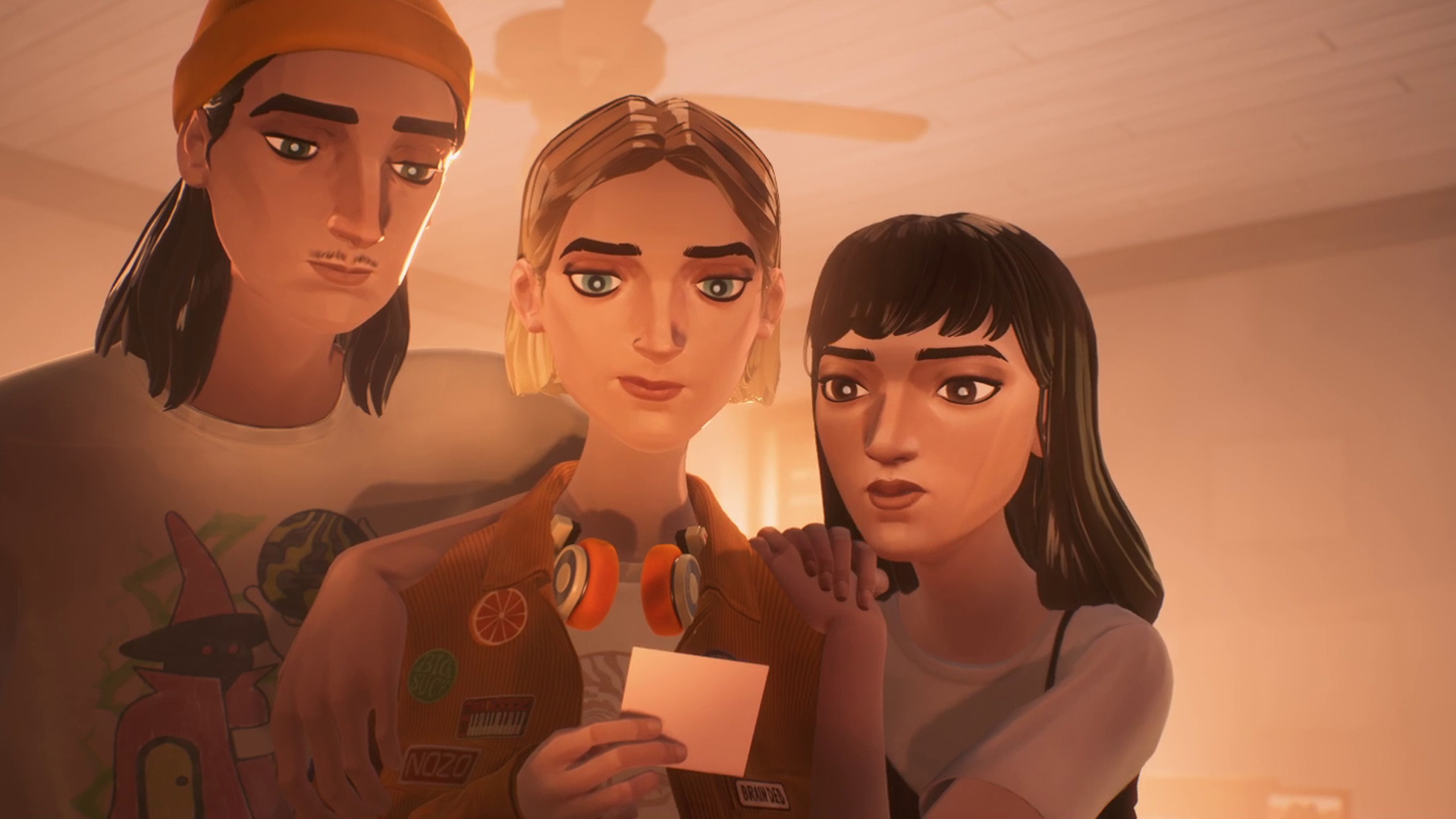
You play as Stacy Rockford, music obsessive, fourth-wall-breaker, aspiring music supervisor, and the kind of teenager who won’t leave the house without the perfect song queued up for every possible moment of the day.
The morning after the game’s events, she’s flying to New York to turn that obsession into a career. Tonight, though, she has a mixtape to finish, a legendary party to crash, and her two best friends, Van Slater and Cassandra, to say goodbye to, whether she’s ready or not.
Key Details
- Developer: Beethoven and Dinosaur
- Publisher: Annapurna Interactive
- Platform: PC via Steam, Xbox, PlayStation
- Price: $19.99
- Code Received: No
A Trip Down Memory Lane
Mixtape takes place over the course of a single night, during which you are trying to get to Camille Coles’ annual end-of-summer party. The mission is sacred, the stakes are historic, the night demands nothing less than total commitment: you need to find booze.

You stop at each other’s houses, you root through bedrooms, and peel back layers of shared history buried under band posters, polaroids, and old cassette tapes.
If you’ve spent time in Life is Strange or Lost Records, you’ll know exactly what to do here: snoop through everything, read every note, hover over every record player. The difference is that Mixtape gives you no dialogue options, no branching paths, no choices to agonize over. Someone already curated this night, and you’re just living it.
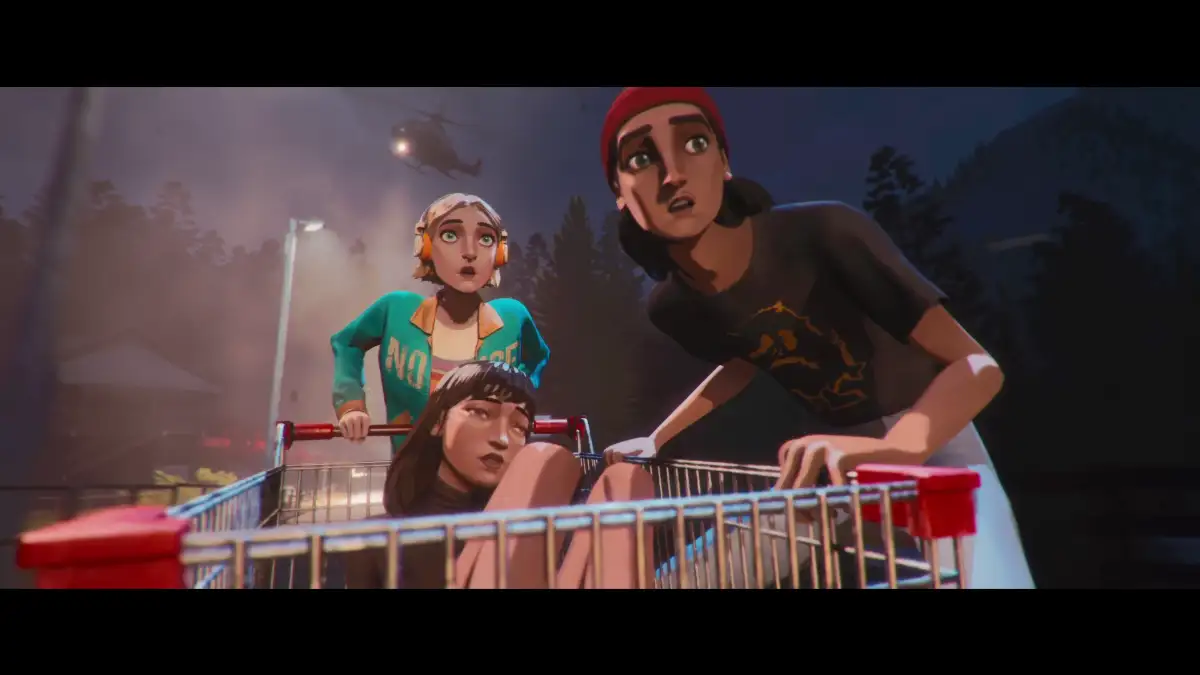
Each relic yanks you into a memory rendered as a minigame, scored to something from Stacy’s meticulously curated tracklist. One memory is a shopping cart chase from the cops through bridges and highways, sirens wailing, red and blue lights smearing across your plaid shirts and stamped jackets while Rainbow’s Sensitive to Light tears through the speakers. Another is Silverchair’s Freak, a metal song so inevitably right for the moment that the only sane response is for everyone in the car to headbang in unison, toggling the lights, shaking the takeout to the beat.
A polaroid of the three of them looking slightly wasted spirals into something gloriously surreal. A found mixtape becomes a full-blown cinematic event. The memories are singular, since you never revisit a mechanic. Each one exists once, earns its song completely, and disappears.
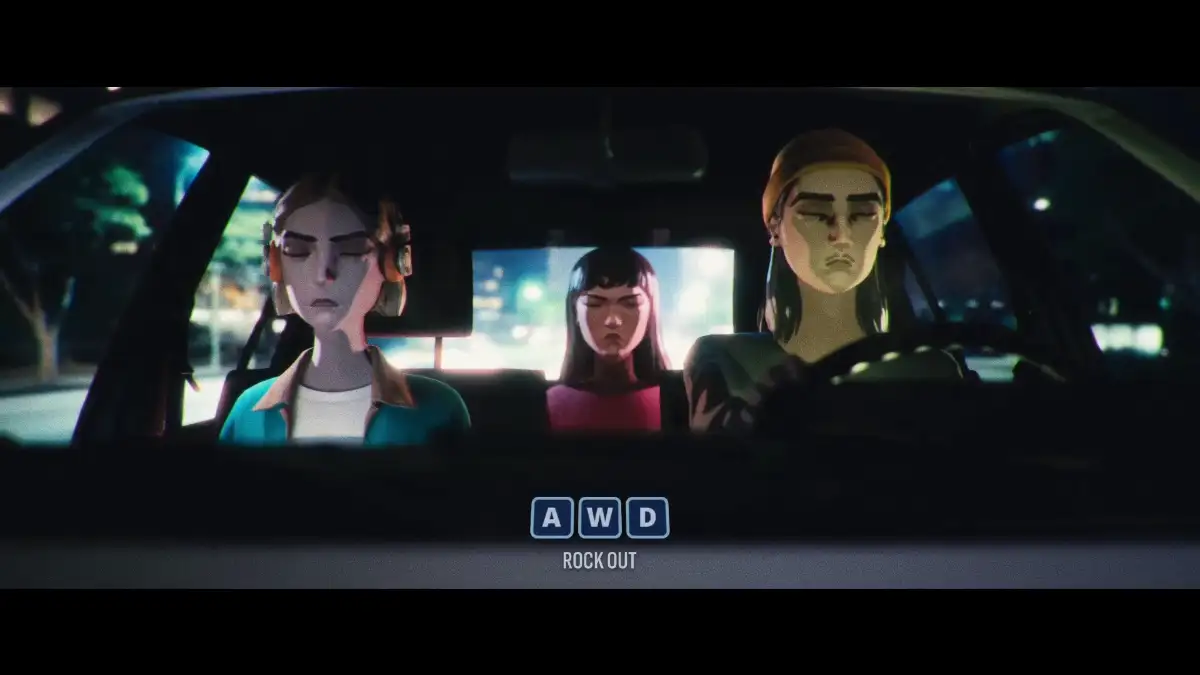
The genius of this structure is that it replicates exactly what a memory actually does. Something triggers it, it plays out in full, and then it’s gone. The game understands, at a structural level, what it is pretending to be about at a thematic one, and that coherence is rarer than it has any right to be.
The Kids Aren’t Alright, And That’s the Whole Point
Before anything else, let me introduce you to the three people you’re about to spend the best night of your life with.
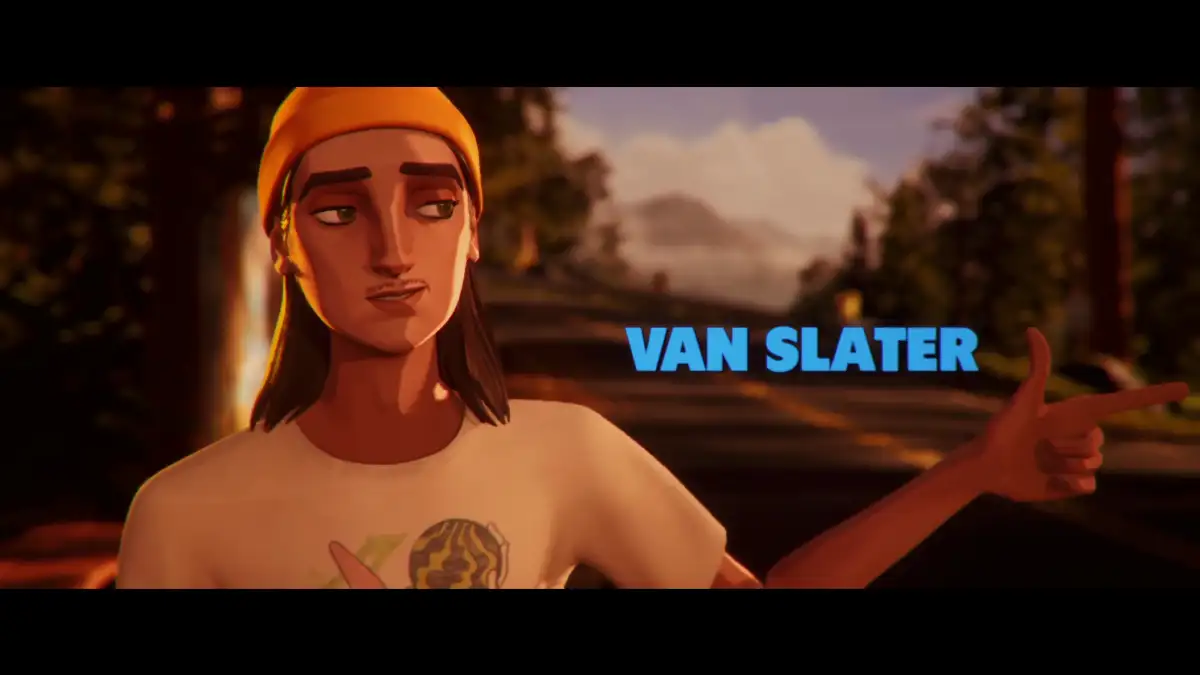
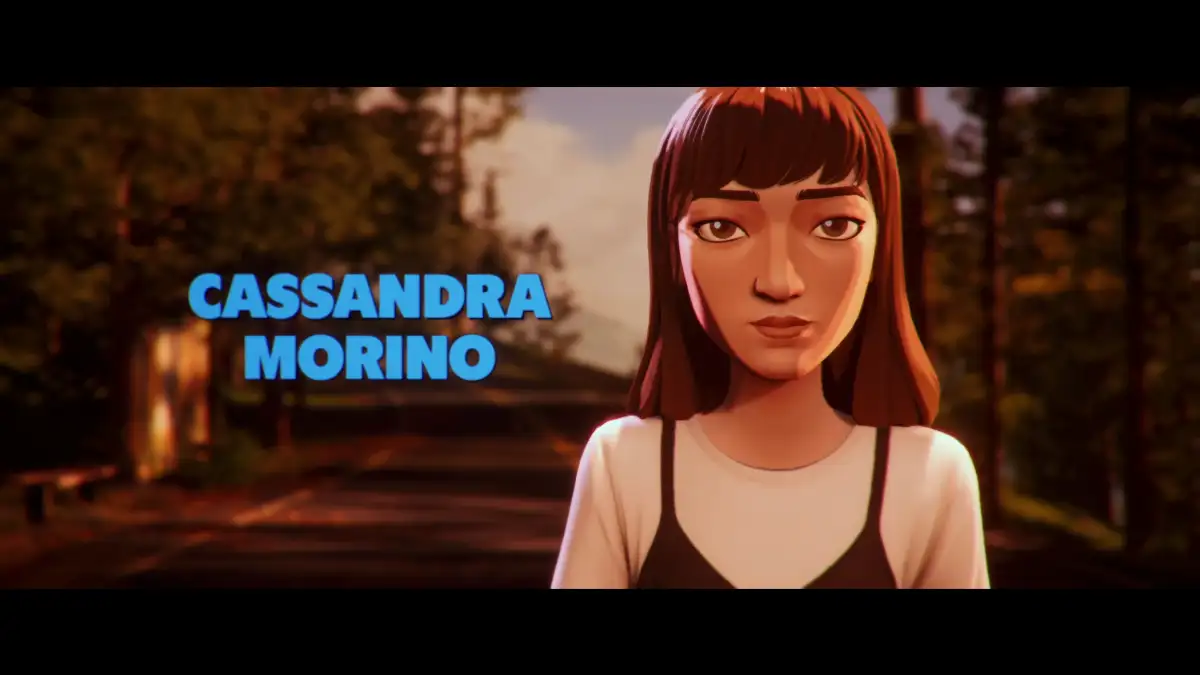
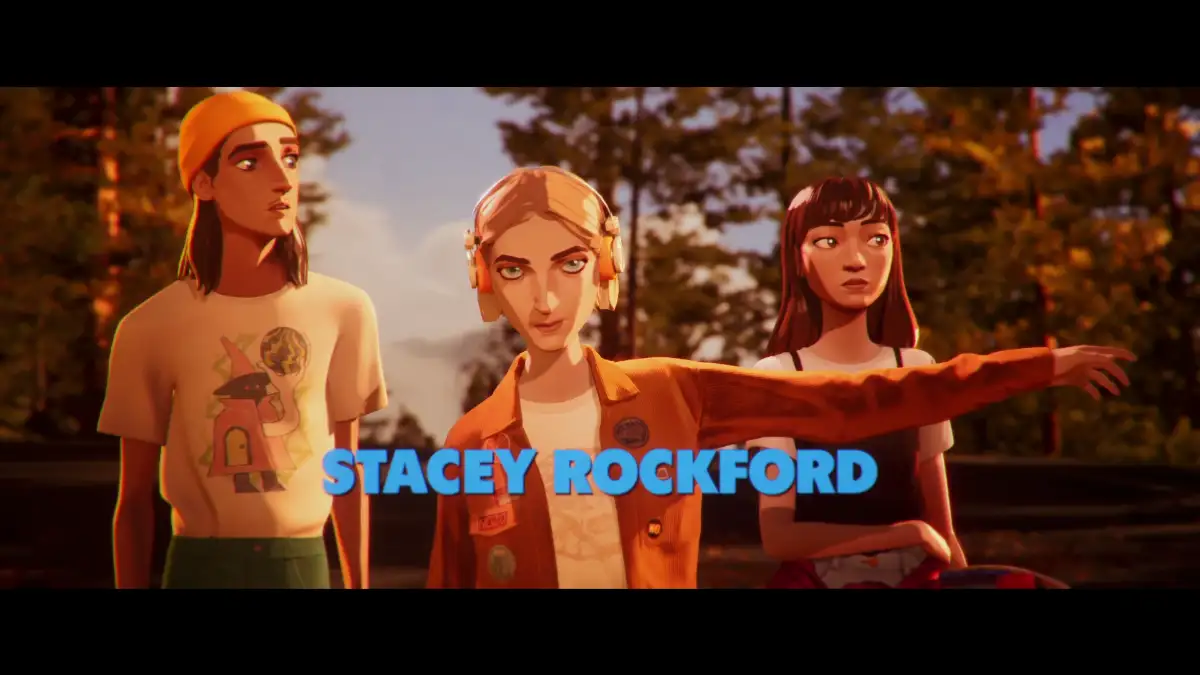
Stacy Rockford knows exactly who she is, and she will absolutely not shut up about it, which turns out to be the right call. She has made a unilateral decision about the road trip her friends were counting on, scrapping their plans to deliver Cassandra to college so she can fly to New York and chase her dream instead.
She breaks the fourth wall like Fleabag, delivers her musical annotations with just enough deadpan exasperation to be charming, and underneath all of it, she is desperately, visibly terrified of what tomorrow means.
Van Slater is the group’s soft center, the one who holds the other two together without making a production of it, and the game captures something true about that particular kind of friend: the one who is always there, always warm, always slightly less legible than the others.
Cassandra, who joined the trio last and has the most to push against, gets an arc that quietly builds into something genuinely affecting. Her father looms over the whole night like a bass note you feel before you hear, and her desire to slip out from under him is what gives the story its teeth.
Beethoven & Dinosaur understand something true about the kind of friendship that gets forged in a small town with nowhere to go and everything to feel, which is that it is combative and tender and occasionally infuriating and completely irreplaceable, sometimes all in the same conversation. Stacy, Slater, and Cassandra bicker and needle and crack each other up, and when the night demands honesty, they just say it, straight, mid-conversation, no build-up required. There is a line Cassandra delivers toward the end: “Everything feels huge. Everything’s heavy. Everything’s the end of the world.” She says it like she’s reading off a grocery list, and it absolutely wrecks you.
Side A: The Music Didn’t Have to Do All That
The soundtrack is not decoration. I want to be very clear about this because it is easy to hear “licensed indie game with classic tracks” and picture something tasteful and inert playing politely in the background while you do other things, but Mixtape does not do that.

The music is structural; it is the architecture. Stacy curates each track to fit the moment, and then breaks the fourth wall to tell you exactly why she chose it, delivering a tiny music history lesson while running from the law or skateboarding downhill into a gorgeous Northern California suburb, slightly out of breath, completely in love with the song she is explaining.
Devo, Iggy Pop, Roxy Music, Siouxsie and the Banshees, The Cure, Joy Division, Portishead, Silverchair, and a handful of tracks I had never heard before that went directly into my own playlists before the credits finished rolling.
The game knows exactly when to let a song breathe and when to let it rupture into something bigger. It knows which moment calls for something propulsive and which calls for something that settles into your chest and stays there. It is, in the most literal sense, a game about a person who is good at this, made by people who are also good at this, and the alignment between subject and craft is one of the most satisfying things about it.
The Look of a Memory
Visually, Mixtape is doing several things at once and making all of them look effortless. The characters are painted and slightly stop-motion in their movement, deliberately standing out from their environments, as they exist at a slightly different frequency from the world around them.
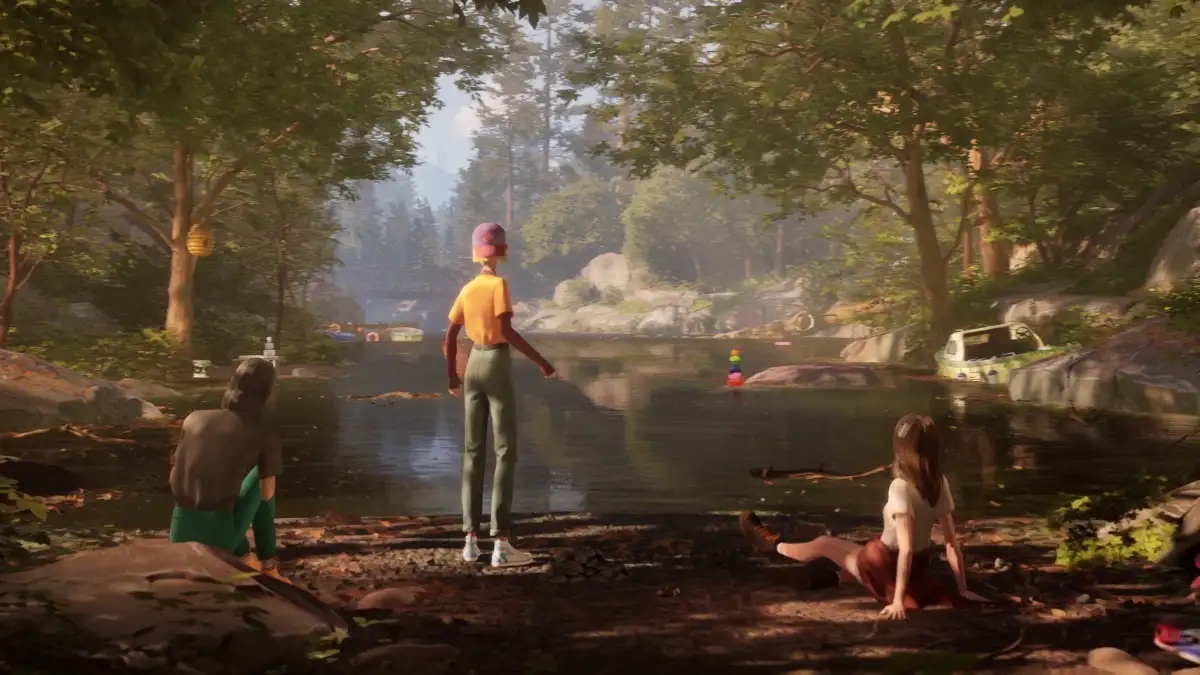
The game bleeds real footage into animation without announcing itself, cutting between the two the way actual memory cuts between feeling and image. It is the right formal choice, and it is executed with the kind of confidence that comes from a team that knew exactly what they were building.
The environments earn their time: a teenage bedroom detailed enough to spend twenty minutes in before you’ve clocked everything, a secret cabin in the woods the trio has christened the Ritz, a lake at the exact right hour of the night, and a fireworks show from the backseat of a car that made me put down my controller for a second just to watch it.
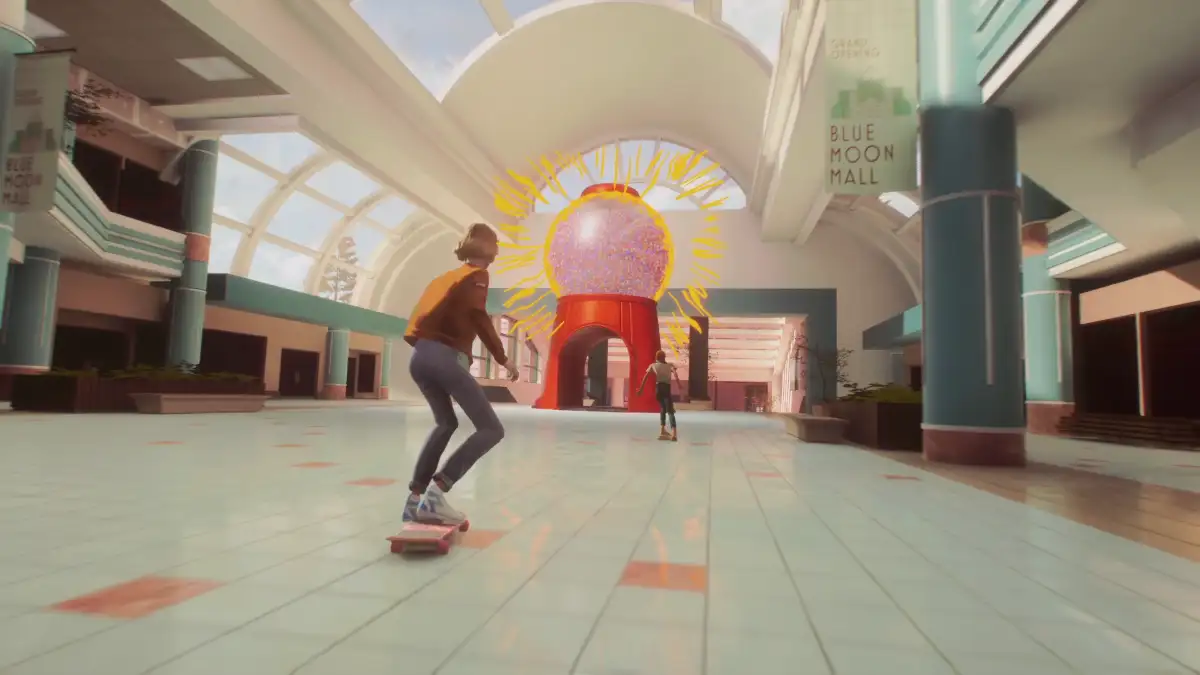
Beethoven & Dinosaur is an Australian studio making a distinctly American 1990s story set in a town that doesn’t exist, and the fact that Blue Moon feels completely real, completely specific, is an achievement worth naming.
Final Score: 10/10 – Nothing But the Hits
I am not going to pretend that a three-to-four-hour game about teenagers in 1999 did not have me grinning at my screen until my cheeks hurt, and then crying, sometimes in the same five minutes.
It did. I’m telling you anyway.
When Mixtape ended, I sat with it for a moment, trying to figure out what it did and how. The best I can work out is this: Beethoven & Dinosaur made a game about the specific grief of a night you know is ending, scored it to the music that generation used to make the unbearable feel beautiful, and built it with enough craft and enough love that even someone who was a literal toddler in 1999 felt the full weight of it. That is a remarkable thing to pull off. That is, in fact, everything.
About the Author

Discover more from Bonus Action
Subscribe to get the latest posts sent to your email.