I almost didn’t play Kingdom Come: Deliverance 2. I want to be upfront about that, because it matters to what comes next. I stood in front of it the way you stand in front of a meal you’ve been told is good for you, nodding along, already planning what I’d eat instead.
I like magic. I like casting fireballs at things. I like being, if not the chosen one, then at least someone a prophecy has strong feelings about. KCD2 promised me none of that, and I nearly took it at its word.
I started it, hated the combat, and almost refunded it within thirty minutes. This is not something I’m proud of. Then I went back, because someone whose opinion I respect told me I was wrong, and I have a complicated relationship with being wrong. I picked it up again, and I did something I almost never do: I surrendered to the mud.
I surrendered to the bleeding and the hunger and the very specific indignity of losing a fistfight to a peasant outside a tavern at two in the morning. I told myself, firmly, that this was the point at which I was not going to be special here. The medieval Bohemia of 1403 had no interest in my fireball fantasies, and I had no business bringing them.
And for a while, KCD2 let me believe that.
A Contract is a Contract
Then Chamberlain Ulrich at Trosky Castle told me the fortress was infested with demons, handed me a flask of holy water, and sent me to exorcise them.
Let me tell you, I was ready to coat my Hunting Sword in Specter Oil.
I want you to understand that I took this contract seriously: I sprinkled fireplaces. I consulted the cook, the second cook, and the blacksmith. I moved through that castle with genuine purpose, which is to say I moved through it the way a person moves through a castle when they believe, on some level, that something supernatural might actually be at stake.
Then the blacksmith Osina sent me to investigate his demon hotspot, and I went with the full seriousness of a man who had surrendered his fireball fantasies and was now doing things properly, which is to say I went with holy water and genuine intent, and it was a latrine.
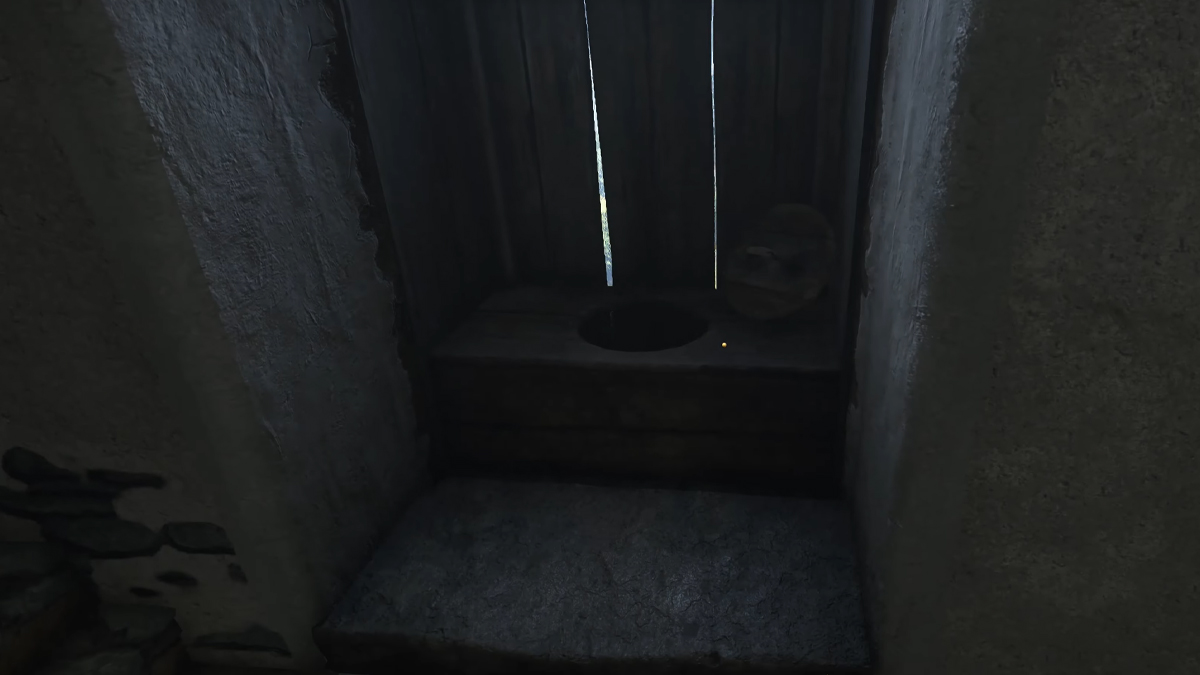
I stood in front of it for a moment, decided this was surely a misdirection, a setup for something larger, and went back to Osina, who sent me to another location with the same gravity and the same certainty, and that one was also a latrine.
By the third one I had started to understand what was happening, but I kept going anyway, because the part of me that had made peace with medieval Bohemia had apparently also made peace with the possibility that demons live in castle bathrooms, and it was only Henry who finally lost his temper, standing in front of that third toilet with holy water he was never going to use, that I recognized the joke Warhorse Studios had been playing on both of us from the beginning.
Geralt Would Have Charged More for This
This is the thing about KCD2: it builds a world of such extraordinary historical specificity, a world where you can get drunk and fall asleep in a ditch and wake up having forgotten your sword, where the weight of a real sword in a real fight has real consequences, and then, from inside that world, with a completely straight face, it asks if you want to dig up some dragon bones.
Dragon bones. Discovered near the village of Bylany, allegedly belonging to a mythical creature, coveted by an alchemist and the church simultaneously.

I dug them up. Of course, I dug them up. The game had me so thoroughly convinced of its own realism that the existence of dragon bones felt like something I needed to investigate personally, and as I crouched over that hole in the ground, shovel in hand, I could have sworn I saw a grey hair grow out of Henry’s head. I reached instinctively for my Witcher senses. I do not have Witcher senses. I have a shovel and a monk telling me to hurry.
Then there was Brother Morticius. I met him at the cemetery of Sedletz Monastery, a monk who needed help arranging bones in the crypt below the chapel into specific configurations, skulls here, thigh bones there, pyramids of cracked and uncracked remains, which I did, at three in the morning, with great care and personal investment.
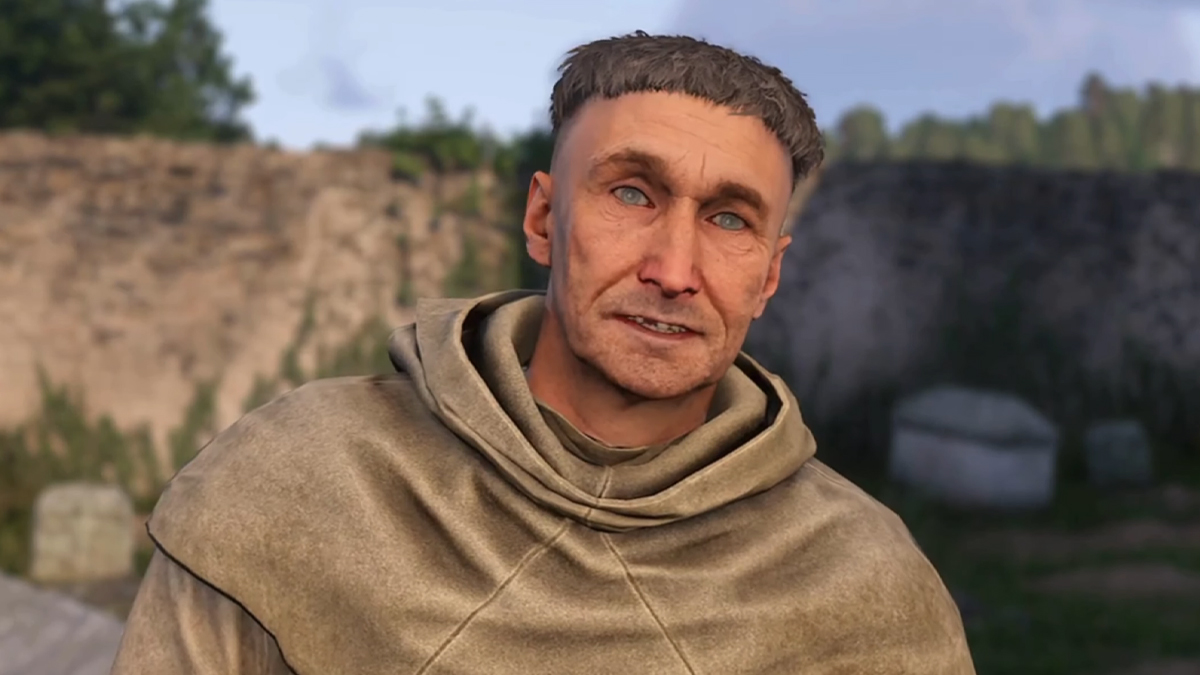
I climbed back up, went to find him, and he was gone. I asked the gravedigger, who looked at me the way people look at you when you have said something that cannot be unsaid, and told me that Brother Morticius had been dead for a very long time.
And so I stood there in a cemetery in 15th-century Bohemia, holding the information that I had spent the better part of an hour arranging a dead man’s colleagues into decorative piles at his request, and I want to be honest: my heart did flutter, just a little, before the part of my brain that had already blessed three latrines reminded me where I was.
In Which I Wait Twenty-Four Hours For a Toad
The worst one, the one that I think about, is the basilisk egg. In the Brushes with Death DLC, a painter named Voyta tells me he needs a basilisk egg to use as a paint binder. He explains, with complete sincerity, that basilisks don’t lay their own eggs: they hatch when a toad broods an egg laid by a black cockerel.
He has heard of such a cockerel in a nearby village. I nodded. I instinctively reached for my bestiary, the way Geralt would, to read up on what I was dealing with, and found instead codex entries on Water-Driven Sawmills, Tithes, and the Roman Catholic Church.
I went to find the cockerel anyway, but it was dead, killed by a farmer who thought its egg-laying was the devil’s work. I found the egg next to its body, placed it in a toad’s nest in a swamp, waited twenty-four hours, and retrieved what the game’s own item description called “perhaps a basilisk egg, or maybe just a slime shell.” I brought it back to Voyta, who would not let me see what he did with it.

I had spent forty-five minutes doing medieval folklore homework, in a game about 15th-century Bohemia, and I felt completely fine about it.
Here is what nobody told me when I almost refunded KCD2: it doesn’t give you magic. It gives you the inside of a medieval mind, which is so thoroughly saturated with the possibility of magic that the line between superstition and reality stops mattering.
A man in 1403 would have gone to find that cockerel egg. A man in 1403 would have blessed those latrines. A man in 1403 would have dug up the dragon bones and felt, briefly, like he was standing at the edge of something enormous and unknowable.
And so here I am, a hundred-plus hours into a game that promised me mud and hunger and the specific humiliation of medieval peasant life, having arranged bones for a ghost, dug up a dragon’s remains with a monk breathing down my neck, and having spent a night in a swamp waiting for toads to do their part, and I love Warhorse Studios for every second of it, because they looked at my savior complex and they have been gently, methodically, making fun of it since the opening hour.
And yet, if someone told me there was a DLC about a mysterious plague sweeping through a gothic monastery, a crypt full of religious dread, a conspiracy against the rightful king buried somewhere beneath the incense and the candlelight, I would be there before they finished the sentence.
In fact, I have already downloaded it.
About the Author

Discover more from Bonus Action
Subscribe to get the latest posts sent to your email.