Developed by ArtDock, the indie studio behind the cutesy restaurant-running sim Pao Pao and the upcoming gritty party game Hands Over, Lootbound is a dark tactical roguelite that utilizes the luck-based dice rolls of a tabletop RPG to give players an experience where every action is as unpredictable as the last. A playable demo was released on Steam back in February, giving players a taste of its grim sword-and-sorcery gameplay ahead of its full launch on August 14.
Lootbound literally begins with your character opening a mysterious board game with an ominous note attached, and from there you select your character and wake up in a dark Citadel with no memory of who you are or how you got there. At first, you can only choose the sword-wielding (and offense-focused) Warrior, but new classes unlock as you play through the game. These include the magic-using Witch, hulking Paladin, and healing Bard. Earning new characters requires at least one successful run, so be prepared for some serious grinding to start with.
Key Details
- Developer: ArtDock
- Publisher: Dreland Enterprises
- Platform: Steam, Xbox Series X/S
- Price: $14.99
- Review Code Provided: Yes, For Steam
Luck Favors The Bold

From the central hub world, you can choose to embark on a new run at the Gates. You can boost your character’s initial stats by spending Memory Shards in the Barracks, keep track of the new weapons you discover in the Reliquary, purchase new dice types in the Game Room, or study the monsters you have already fought in the Bestiary. New hub rooms are unlocked by completing a run or fulfilling some other condition.
Once you are out in the field, you move about the world from your map (or Biome, as the game calls it), which is marked with spots indicating a battle or treasure. Battles are turn-based, and you choose which attacks or abilities you will use in a given round by selecting them from icons in a menu at the bottom of the screen. Each character has an Armor, Health (which only starts draining once the Armor bar is fully depleted), and Mana bar (which is used for special abilities). Armor is fully restored for all party members at the end of each round, but only a fraction of used Mana is refilled.
However, if your main character dies in combat at any point, your run ends. Your stats and performance are tallied, new rooms are unlocked if you meet the conditions, and you will have to restart at the beginning of the run with your skills reset – though the stats you increase in the Barracks will remain.
The Right Equipment Makes All The Difference

At the end of the battle, you are rewarded with a Loot Card, which gives you a choice of different items to either equip or store in your inventory. Sometimes you will encounter an Elite enemy, a sort of mini-boss that grants even more powerful loot on defeat. Once you’ve made your decision, you drag the item in question into your loot grid, which requires you to fit everything in Tetris-style. You can rotate your equipment to make better use of the allotted space, as well as discard items you aren’t using anymore.
Some equipment has a special Aura, which grants additional bonuses to items that are right next to it on the grid, making it all the more crucial to manage your inventory space and placement. It can all be tricky to get the hang of at first, but stacking items against each other to boost their effects is quite satisfying.
There is a separate, smaller grid for Consumables, which are one-time-use potions and other items that can be used to restore a bar or damage the enemy. Usually there is only room for two, so you have to be considerate when choosing between a health potion and a bomb.
Regroup And Prepare To Return To The Fray

There are also Training and Treasure sections, in which you select a stat you want to increase or a new item you want to equip and roll for it. If your dice roll is greater than the difficulty number on the corresponding Loot Card, your stat is boosted. If your first roll falls short, you can roll another die and have that result added to your overall tally. Be advised that you only have a limited number of bonus dice to use at the start of each run, so you must choose whether the new item or stat boost is truly worth it.
Other noteworthy location types let you learn new Abilities, offer up some Mana in exchange for a gift item, choose new squadmates to join your party, select new Consumables, add stat-boosting gems to your equipment, and rest and restore health at a Camp – which might trigger an amusing conversation between your party members.
Beware The Sentinel
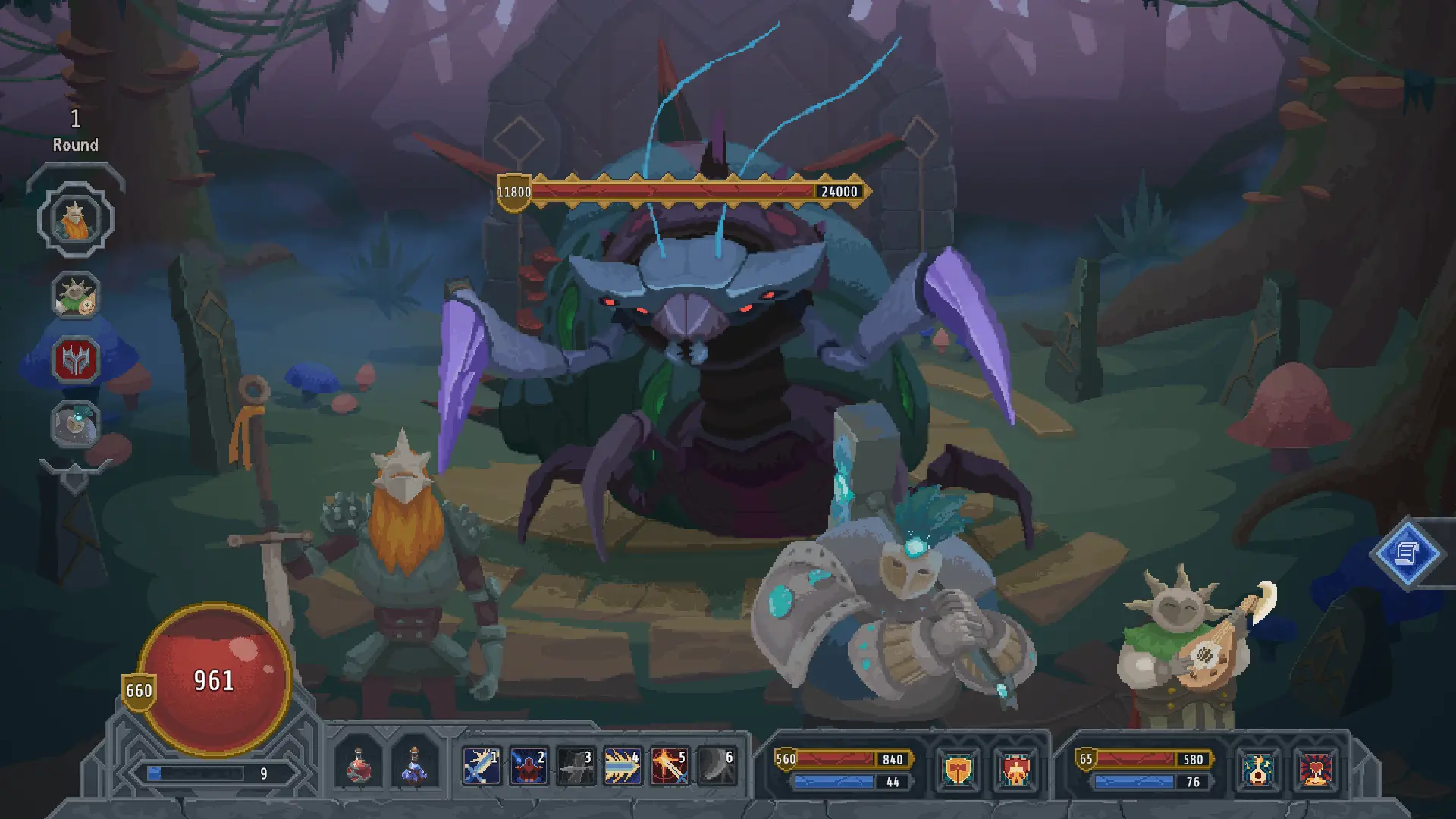
At the end of the Biome, you have to choose a part for the Sentinel, a powerful boss that waits at the end of your run. Your choices will shape the stats and abilities the Sentinel will have in the final encounter, making it a true culmination of your journey. Vanquish this mighty foe, and you’ll be rewarded with a brief cutscene ending featuring your player character and their backstory.
Lootbound’s hand-drawn graphics are pretty solid, capturing the feel of an old medieval painting with watercolor-like shading and stylized character designs. The surprisingly smooth dice animation that plays whenever you have to roll for something is especially neat. The music is pretty much the sort you’d expect from the genre, with old-style guitar riffs and the occasional humming.
Final Score – 8/10
Lootbound requires a considerable grind at first, but it still has a satisfying gameplay loop and plenty of visual charm to keep you diving back into the perils beyond the Citadel walls. If you are a fan of dark roguelites and tabletop RPGs, definitely give this one a look.
**Bonus Action was provided with a Steam Code of Lootbound for the purpose of this review**
Still here? Good.
That means the article did its job! If you’d like to see more of them (and get first crack at what’s next) our Patreon’s the place.
About the Author

Discover more from Bonus Action
Subscribe to get the latest posts sent to your email.