Every now and then, a game like Ten Bells comes along to remind me why and how I fell in love with this industry in the first place. Ten Bells is an “Anomaly Horror” game, and if you don’t know what that means, don’t worry, you aren’t alone. Anomaly horror is a relatively new sub-genre, one which originated with games like Exit 8 and, to put it as simply as possible, tasks players with revisiting the same location multiple times and looking to see if there is anything out of place (i.e. anomalous). Below is a video of me introducing the concept to one of my friends, for science.
Taken at face value, this feels relatively simple. However, the combination of a game’s ability to change reality at a moment’s notice and your brain’s natural tendency to gloss over seemingly unimportant details when scanning a room make for a delightful push-and-pull. This is something Hillfort Games & Acrylic Pixel, the developers of Ten Bells, utilized perfectly to create one of the most interesting horror experiences I’ve had in quite a while, and one I’ve been desperate to tell people about.
Ten Bells Developer Interview – Chris Jarvis of Acrylic Pixel

To assist with this, I reached out to developer Chris Jarvis (Acrylic Pixel) on Bluesky with some questions about the game’s concept, its development, and how player reactions influenced Ten Bells’ Nightmare Mode, which was added to the game post-launch and contains nearly double the amount of anomalies. Here’s what we discussed, edited slightly for clarity:
Christopher J. Teuton: How did the concept of Ten Bells, an anomaly hunt set in a pub during roughly the same era as Jack The Ripper, get decided on, and were there other settings/concepts that were considered?
Chris Jarvis: We were inspired by Exit 8 and tried to emulate what we considered to be one of its pillars. The setting of a Japanese train station is a cultural hook for Exit 8. So we thought about a cultural hook that we could do being Brits. Vin [Hill, Hillfort Games], the other main dev, was brought up in pubs, so we knew we could give it a good shot.
Regarding the Jack the Ripper time era – we originally were going to have time jumps in the pub, but it was too much scope and didn’t fit the anomaly hunt. We found old-style Unity packs and so we went with Victorian. We called it the 10 Bells after a couple of pubs we knew. One being in Norwich where we both went to Uni, and it wasn’t until the game was out that streamers pointed out The Ten Bells in London was where Jack the Ripper lurked. So then we leaned into it and updated the text elements to include Whitechapel, and we amended the dates to be in that time, too. The final version of the game came out about 2 months after launch with updates.
We have talked about other time periods and places, but we may make them into games in the future as a series.
Teuton: How much did playtesting influence the types and locations of anomalies?
Jarvis: We did hardly any playtesting before launch, as we were on a tight deadline, so most of it was guesswork. But streamers after launch helped loads, so we fine-tuned the anomalies after launch, and Nightmare mode was built on the areas most streamers went to but nothing happened.
Teuton: How much thought was given to making the player question their own memory when placing items in the world, such as the one blue-topped stool amidst all the other red ones?
Jarvis: We knew players would question their own memory because the game had more visual areas and elements than Exit 8. We placed things knowing they would be picked up on as “was that always there?” items. After launch some were removed, as they didn’t work as intended. The stools anomaly in Nightmare mode came about because people kept mentioning the stools. We found people tended to behave in similar ways with the game, so we leaned into it.

Teuton: While seemingly very basic (two rooms connected at one far end) the interior of The Ten Bells contains lots of areas you have to either crane your head or go out of your way to look at. How many different iterations of the actual gameplay area did you go through, and how did you settle on the final version?
Jarvis: The greybox stage only took a day or 2 and it was a very natural process that started off as one room. Then a U-shaped bar. Then a bar you walk around with a corridor. Then the basement was added at the end. We wanted tight and open spaces, a T-junction to slip your attention, and a corridor, to have another type of space where spooky things could happen. We were really lucky it came out well designed.
Teuton: What was the most difficult anomaly to implement from a coding perspective and why?
Jarvis: Vin (Hillfort Games) was very good at making sure we were efficient with our scripts, so we built a really comprehensive script that deals with all sorts of triggers and events for the anomalies. Most are just simple triggers. Code-wise, it was tricky to get the ‘stool pet’ sound to work at the right time. The scraping on the ground had to be fine-tuned to not give the anomaly away too soon. It’s still not perfect.
Teuton: Similarly, are there multiple types of triggers for anomalies (line of sight, stepping inside or out of a trigger box, proximity, etc.) depending on which anomaly it is, or is there an overarching system that decides when and where?
Jarvis: Most are simple trigger boxes and a few are based on if an object is visible within the viewport, and some are just on when the anomaly is turned on.
Teuton: Do you have a personal favorite anomaly?
Jarvis: My favourite is the Poltergeist, where the objects fly around the pub. It was my job to do all the physics recordings and by the time I did the Poltergeist anomaly I knew what I was doing.
Teuton: What excites you about the concept of anomaly hunt games in general?
Jarvis: I’m most excited about how different people’s playthroughs are of anomaly hunt games. No two runs are the same, so it creates [an] emergent narrative. I’m really into that.
Teuton: Are there any other new or upcoming sub-genres that make you similarly excited?
Jarvis: I’m excited about idler games. I think they will be the next genre worth making.
More Anomaly Horror Games Like Ten Bells, Please
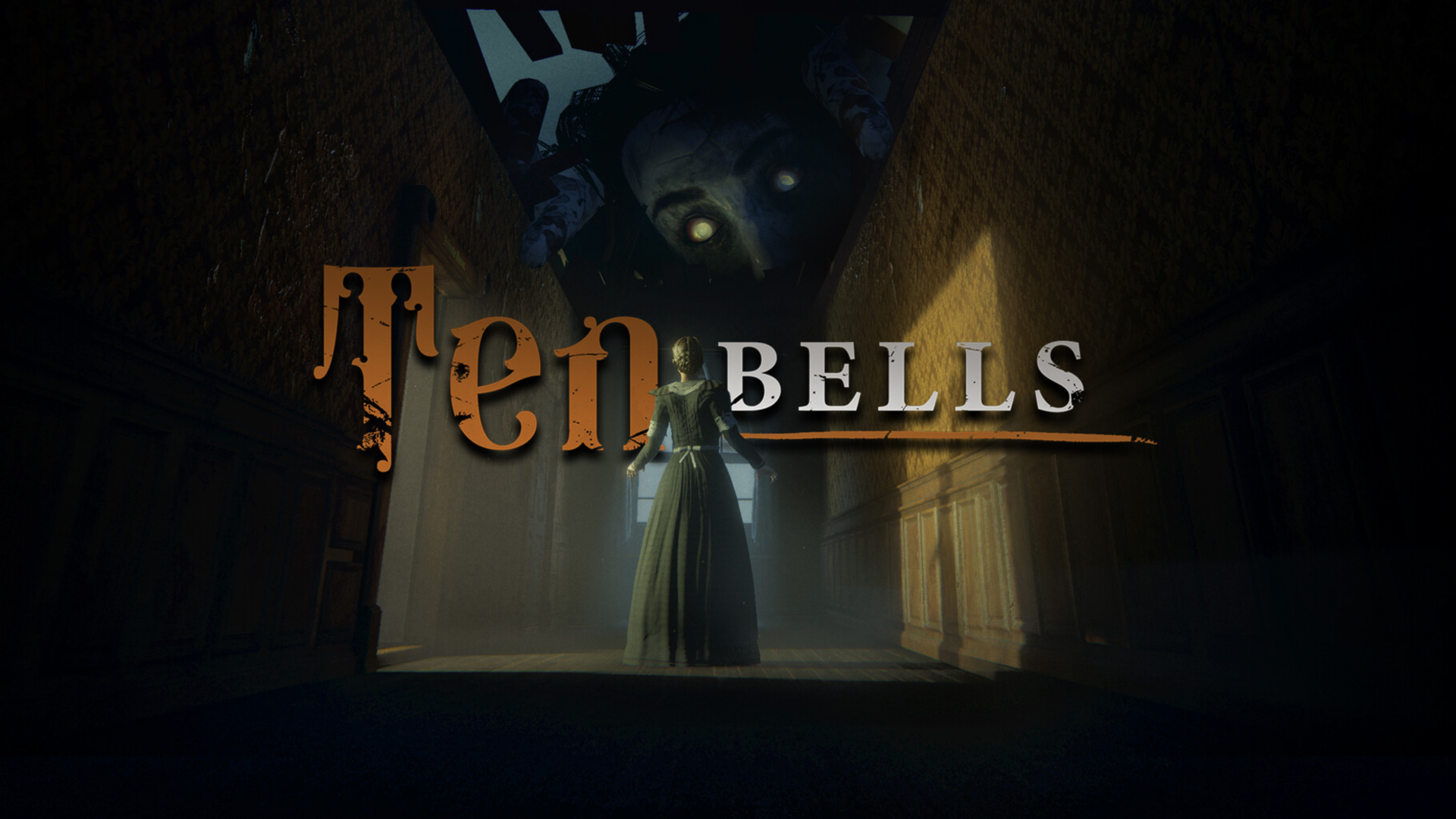
Hearing Chris Jarvis speak of the “stool pet” as being one of the most difficult anomalies to get right necessitates the following statement: The stool pet is perhaps my favorite moment out of all the anomalies in Ten Bells. For the unfamiliar, this is an event where you hear the sound of wood scraping against the floor, turn around, and suddenly notice that there is a barstool behind you. If you move again, the barstool follows you. It is silly, scary, and subtle all at the same time, and while Jarvis might think “It’s still not perfect,” I’d argue that one moment of interaction encompasses everything I love about anomaly horror games as a whole.
It’s also interesting to learn that time jumps were originally going to be part of the Ten Bells gameplay experience, and I’m looking forward to seeing another game from this team in a different setting. Personally, I’d love an anomaly horror game themed around an officer on a 17th-century sailing ship, perhaps a guard on watch duty that needs to patrol a certain portion of the ship every few minutes. There’s a lot of fun to be had with anomaly horror in general, which is probably why it’s such a blooming sub-genre these days.
Right now, I’ve only played Exit 8, The Cabin Factory, Ten Bells, Platform 8, and Anomaly Exit. Of all of these games, Ten Bells was the most enjoyable, but there’s plenty more I’ve seen that I haven’t had the chance to try yet. I’m sure there are dozens of good ones I have never heard of (such is the way of Steam these days) and I’m sure that, after the success of Ten Bells, there are hundreds more anomaly horror games currently in development. I’m excited to play those, to experience more takes on this gameplay loop.
Being around for the birth of a new genre is exciting, whether it’s playing Grand Theft Auto III in 2001, PUBG in 2017, or Ten Bells today. What will be less exciting, but equally interesting, is what kinds of experiences players will get once the AAA publishers start to take notice. That’s why now is a perfect time to play an anomaly horror like Ten Bells. I can’t begin to speculate what form these games will take on in the future, but that’s part of the fun of being on the ground floor – you never know how far up you’re going to go.
THIS WEEK’S RECOMMENDED MEDIA:
- [READ] This interview of Keita Takahashi (creator of Katamari Damacy and the upcoming game To a T) by Megan Farokhmanesh for Wired is absolutely excellent.
- [READ] A Discussion on the European Gaming Market in the 80s by Damiano Gerli for The Genesis Temple.
- [WATCH] Kriegsspiel! How Napoleon Accidentally Invented Strategy Games by Super Bunnyhop for Nebula (and YouTube).
- [WATCH] John Leguizamo Killed a Lot of Acting Teachers by Hasan Minhaj for YouTube.
- [WATCH] Why Do We Pet Dogs In Video Games? by Juniper Dev for YouTube.
About the Author

Discover more from Bonus Action
Subscribe to get the latest posts sent to your email.