

You may or may not be familiar with the book Unreasonable Hospitality by Will Guidara. The subtitle is “The remarkable power of giving people more than they expect,” and it’s part management/hospitality advice, part memoir from the former co-owner of Eleven Madison Park, which he helped to achieve recognition as, quite literally, the Best Restaurant in the World. The book details his journey from kitchens to accounting rooms to managing three star Michelin restaurants, and is focused around the idea of, unsurprisingly, “Unreasonable Hospitality,” which is exactly what it sounds like and also so much more.
If you’ve seen The Bear on FX, you are familiar with this kind of hospitality. Indeed, many of the stunts Richie pulls on The Bear are seemingly lifted directly from the page of Guidara’s book, like when a couple who missed the flight for their Caribbean vacation were surprised with a private table complete with beach chairs, sand, kiddie pools to dip their feet in, and daiquiris to enjoy. Or there’s the family whose only regret from their trip to New York was missing out on a classic NY treat, the hot dog stand hot dog, and so Guidara sneaks out, runs to the corner, buys one, and has the chef of Eleven Madison Park plate it appropriately. The Bear recreates this nearly shot for shot, with the New York staple replaced with (what else?) a Chicago Beef.

Unreasonable Hospitality is going out of your way to create a legend, a memory, a little bit of “magic in a world that desperately needs more of it,” Guidara says. It’s knowing a guest’s name by their face alone, picking a random table each night and refusing to send them a check at the end of the meal. It’s giving them not just good service, but unreasonably good service — and it’s not just for the customers, it’s for the staff too.
It’s been a few weeks since we talked about videogames here on Ludology Now!, and that’s mostly because I haven’t had anything nice to say. Between the inevitable death of physical disks, sudden and incredibly avoidable layoffs, blatant key-jangling from Microsoft, and just the general “ugh” of everything happening right now, I’ve preferred to just stay silent. I don’t want to complain without a solution, and I was quietly hoping one would present itself to me in due time. Enough people are already angry and I refuse to just project extra bad vibes into the world without offering some sort of balance.
I don’t know what finally spurred me on to purchase Unreasonable Hospitality (although I did just re-watch all five seasons of The Bear, so that probably was a strong influence) but I’m glad I did. It’s shown me that there is some way forward, there is a shining light at the edge of the stormcloud, and if enough people think the same way maybe we will all be okay. I just have to convince AAA game developers to behave more like the wait staff at the best restaurant in the world. Should be easy, right? Maybe I should start with some examples.
The Orange Box
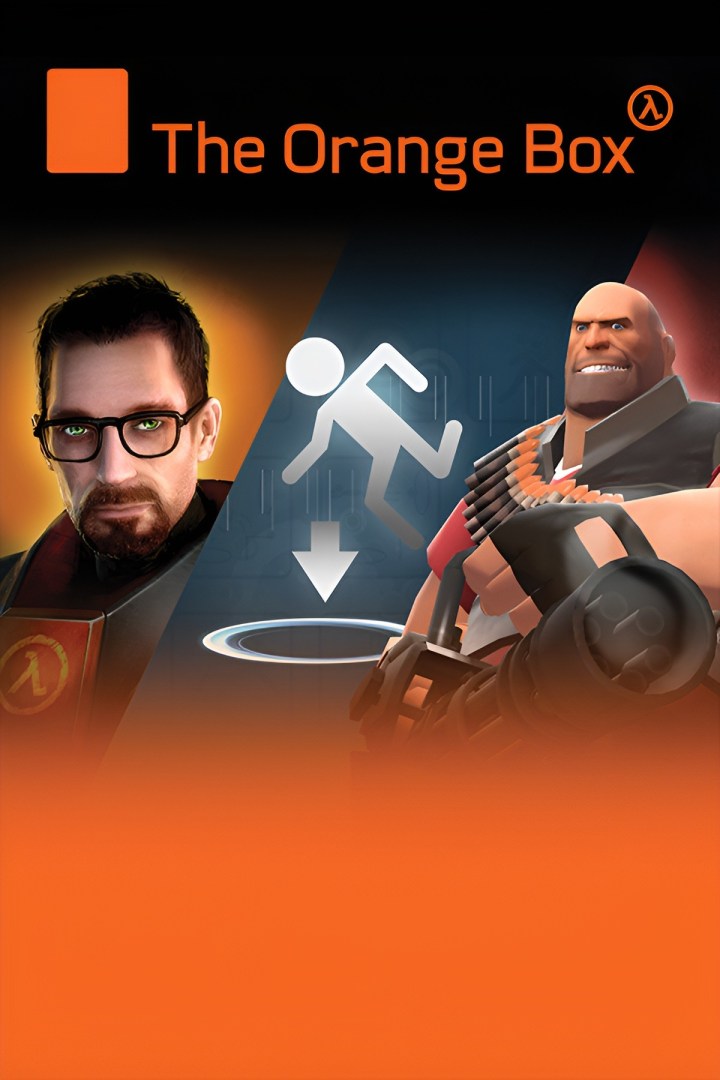
The Orange Box was a bit of an apology from Valve. It knew it had taken quite a long time after the release of Half-Life 2: Episode One to deliver on what that original release promised, and with the knowledge that Half-Life 2: Episode Two still didn’t offer a complete story, the company knew it needed to do something to ensure players felt satisfied with their purchase. To this end, they settled on the concept of The Orange Box, which not only included the newest Half-Life 2 episode but also the previous one, and also two other games: Team Fortress 2, which would go on to become one of the most iconic multiplayer shooters of all time, and Portal, possibly the most critically acclaimed and most well-designed two-hour videogame of all time. THAT is Unreasonable Hospitality.
Elden Ring

In 2021, the hype for Elden Ring was palpable. An open world Dark Souls game? For people like me, there was no easier sell. We were anxious to see what FromSoftware would come up with, and how many poison swamps longtime game director Hidetaka Miyazaki would include this time. In an interview with Famitsu, Miyazaki said (with some caveats) that Elden Ring would take around 30 hours to complete.
Now, a peek behind the curtain a bit, I reviewed Elden Ring in 2022 back when I was working as the Lead Gaming Editor for ScreenRant. This means I played the game before anyone else did (imagine playing a FromSoft game WITHOUT the community’s help) and it means I knew, a few days into the review process, that he was entirely full of crap. Elden Ring is a MASSIVE game, and it’s unlikely anyone will finish under 40-60 hours on their first playthrough. Miyazaki has since said he’s “not good at” judging these sorts of things, but I also had a copy of the review guidelines, and those told a different story.
These days (or those days, it’s been a bit since I’ve seen one so this practice may be falling out of favor) big game companies would send large PDF documents along with the review code and embargo details for any new release. The PDFs would be filled with details and information about the game, along with what the developer asks you not spoil for players in your final review. I could be remembering incorrectly (and I no longer have the document to check) but I’m pretty sure we were asked not to show or mention ANYTHING that happens in the game after the Radahn fight.
THAT’S HALF THE GAME! THAT’S WHERE THE THIRTY HOURS TURN TO SIXTY! It’s not Sean Murray promising the universe with No Man’s Sky and underdelivering, it’s an experienced leader setting a perfectly expectable standard of quality and then intentionally blowing past it to deliver awe and amazement. I had no idea what would happen when I took that elevator in Caelid and it never stopped going down. None of us did. That’s Miyazaki exercising Unreasonable Hospitality.
Compton’s Cook-Off

One of my favorite levels in Psychonauts 2 is Compton’s Cook-Off, a frantic cooking show-inspired experience which sees Raz collecting food, preparing it in a variety of esoteric and abstracted ways, and plating it for a court of judges made up of hand puppets (it makes sense in context, trust me). When I first played through the game I thought it was striking how tight and different this one level was from all the others, but it wasn’t until I watched the documentary PsychOdyssey I realized the reason why.
To put into a few words what is better experienced over the course of an hour-and-a-half (and itself better experienced inside the full 33-ish hour documentary series) the reason Compton’s Cook-Off doesn’t feel like the rest of Psychonauts 2 is that it was made by someone who wasn’t, previously, a game designer. Compton’s Cook-Off began as a project for developer DoubleFine’s yearly internal game jam Amnesia Fortnight, and it was spearheaded by Asif Siddiky, one of the cameramen and cinematographers of the documentary covering the development of Psychonauts 2 itself.
As I said previously, Unreasonable Hospitality is as focused on the treatment of your employees and coworkers as it is the treatment of your guests and, in this case, players. People who are treated well, who are encouraged in their creativity, can and will do great things. The evolution of Siddiky’s game jam project to actual level in Psychonauts 2, as well as his own transition from behind the camera to level designer and game developer, is in a sense Unreasonable Hospitality, but it shouldn’t be. It should be the norm.
The Idea of Giving More

There are so many more examples when you begin looking for them. Think of the epilogues of both Red Dead Redemption titles, which (especially in the case of RDR2) are basically separate games unto themselves, only available to those players who sit through the entire meal. The hidden story behind the scenes in UFO 50, even after you’ve already spent thirty hours on Rail Heist alone. That scene you get in Far Cry 4 if you just do what Pagan Min asks and wait patiently at the table for fifteen minutes during the intro. To briefly return to No Man’s Sky, the game as it exists today and the dozens of massive, free updates its gotten. All of those things are examples of Unreasonable Hospitality directly from developers to the players.
Whether it’s legally or culturally mandated, so is Satoru Iwata taking a pay cut and refusing to let staff go when the Wii U didn’t work. That is a form of hospitality that no western CEO has the courage to try. In this climate, I could think of no easier win. Imagine if Andrew Wilson, current CEO and Chairman of Electronic Arts, announced tomorrow he was taking a 30% pay cut this year in order to give all employees a large monetary bonus. Can you imagine the impact that would have? Now imagine if Todd Howard did the same, and none of those people at Bethesda and ZeniMax had to be fired. That would have been, at the very least, reasonable hospitality.
The reason you give Unreasonable Hospitality to your employees is so they see how good it feels. When someone is treated well, they want to treat other people well (and if they don’t, you don’t want them on your team in the first place). Just like a chef in a kitchen, a game designer has the unique control over the experience a person or a group of people can have. It takes the chef to have the idea, the team to execute it, the dining staff to transport and present it, the customer to consume it. These are our marketing teams, our sound designers, our social media managers and concept artists and everyone in between. In a good restaurant, everyone in the building has made some sort of imprint on the food you are eating. A good game development company should operate in the same way.
Retention, Survivability, Perception, and Experience
I first started writing about videogames professionally in 2010, sixteen years ago. My first time in a kitchen professionally was in 2005, five years previous, and in the years between 2005 and 2019 my time-in-career was more weighted towards kitchen work than I had preferred. I gained great experience which has been detailed in previous columns, and I learned valuable management techniques which I then brought with me when I moved fully into my entertainment and journalism career. There are times when I look back and wonder if I would be happier now if I returned to the kitchen, but I don’t think that’s so. Not as Head Chef again, at least, and I don’t know if I would be happy with less, but COVID took my sense of smell and changed my sense of taste so much it’s not safe for me to cook for strangers. Such is the irony of life.
If I was to return to the kitchen, I think I would move into the dining room. That’s where the magic is really happening, after all, at the table and on the faces of the customers. I enjoyed when we did events with buffets because it provided a terrific excuse to walk the dining room and bask in the joy of people enjoying the food (earning the occasional compliment from someone noticing the chef didn’t hurt either) but the difference in energy is tangible. The kitchen can be a chaotic place, but if you are doing your job right that chaos never extends to the dining room. In the dining room, there is nothing but peace.
The games industry has long been ignoring its dining room. We can hear them through the door, the crashes of dishes against the wall do little to drown out chefs screaming at line cooks as bussers walk out mid-shift. What’s been said about Noma feels strikingly similar to what’s been said about Rockstar, two companies trying outwardly to operate at the very apex of what’s possible, both of them seemingly at the detriment to those very workers who make that dream a reality.
So what’s the way forward? In Unreasonable Hospitality Guidara talks about the “95/5” method, which boils down to being meticulous and intelligent as possible with 95% of your budget, and then taking 5% and doing something magical for someone with it. Hiroki Totoki is the President and CEO of the Sony Group Corporation, Chairman of Sony Interactive Entertainment, and co-founder of Sony Bank Inc. His total yearly compensation is ¥2.48B, or roughly $15m. Five percent of fifteen million is $750,000. Think about what kind of magic could be made from that.
The AAA videogame development process, as it is now, is unsustainable. From most companies, on most days, it feels like the players are barely getting even reasonable hospitality. But the first developer, the first publisher, the first marketing department to really bring Guidara’s methods to this space, they are going to be leaders in this industry moving forward. The public yearns for respect, for decent treatment, and the developers who create those experiences deserve (more than anyone else) to be treated like the magic makers — Dreamweavers, Guidara calls them — they truly are.
THIS WEEK’S RECOMMENDED MEDIA:

About the Author

Discover more from Bonus Action
Subscribe to get the latest posts sent to your email.