Sword of the Sea is a game that makes you stop mid-slide, just to whisper “damn” at your screen.
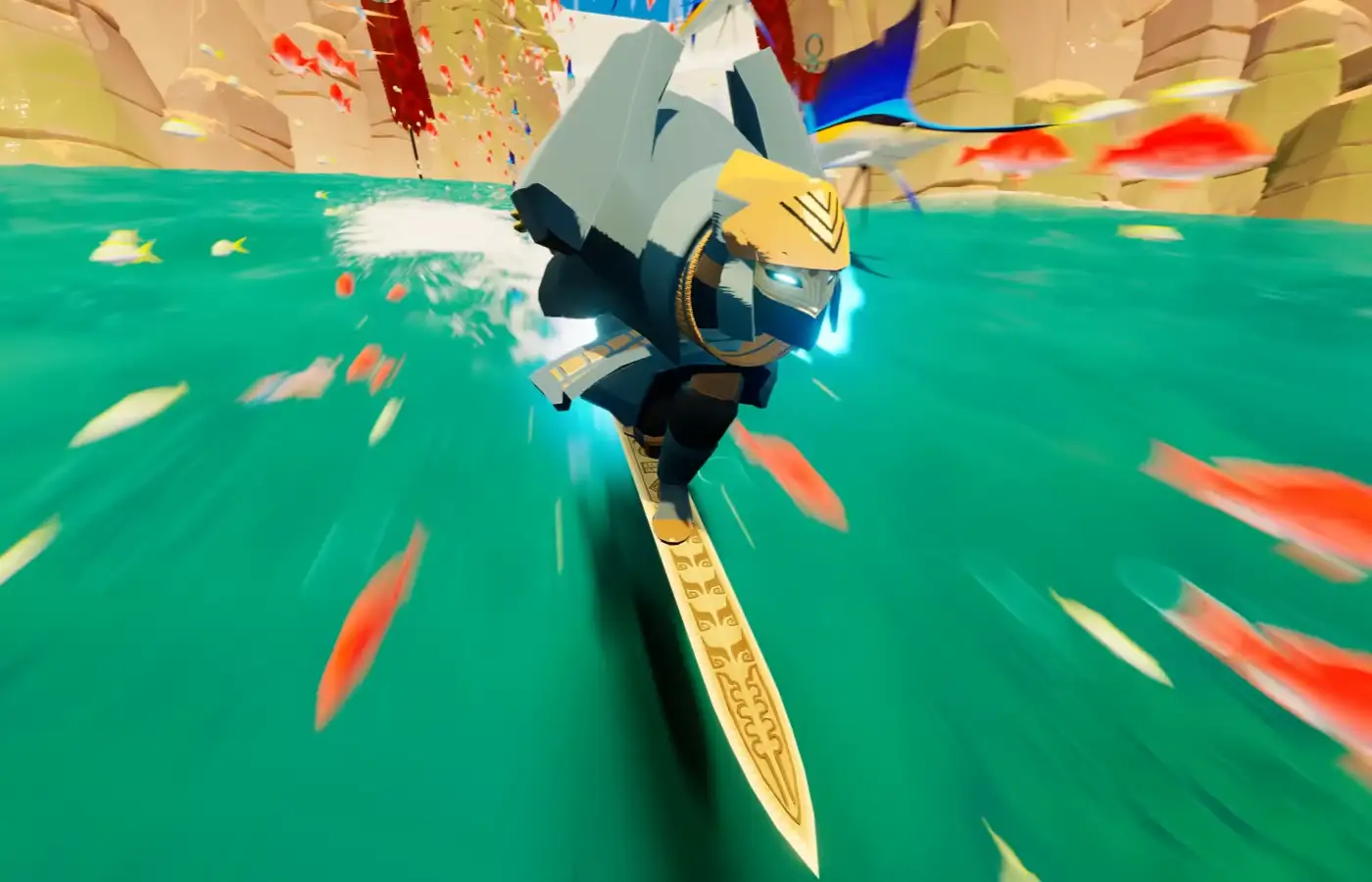
Giant Squid’s latest, from the folks behind Abzû and Journey, is the most beautiful skate session you will ever play, except it is not a skateboard, it is a sword.
The single most striking thing about it is its looks. Every horizon, every temple, every snowy mountain begs for a screenshot. But beauty alone does not make a game. The real trick is how it feels to play.
And here, Giant Squid delivers something smooth, grounded, and occasionally frustrating, but unforgettable all the same. It is short, stylish, and powerful, like a perfect skate run.
Key details
- Developer: Giant Squid
- Publisher: Annapurna Interactive
- Platform: PlayStation 5 (reviewed), PlayStation 4, PC
- Release date: August 19, 2025
- Price: $29.99
- Review Code Provided: No

A World Built to Stun
The visuals in Sword of the Sea are so good that they feel unreal. Sand dunes roll into coral reefs. Blue skies crash into abandoned grottos tinted with cyan. White snowy peaks stretch like painted brushstrokes. Later environments are even more breathtaking, but they deserve to be discovered, not spoiled.
It is not just about looking at the game; it is about feeling it. Traversing sand does not feel like gliding across snow, and snow does not feel like water. Every surface has texture.
On PS5, the DualSense translated those textures into vibrations, buzzing differently depending on where the sword cut across the land. Gravel clinked. Snow hushed. Water whispered. That tactile feedback gave the environment weight.

Living Landscapes
You play as the Wraith, a silent figure tasked with bringing life back to a deserted land. Watching dead terrain bloom with fish, dolphins, sharks, and sea turtles never got old.
It truly says something when a game makes the shift in landscape the most rewarding thing you can achieve, even more than currency or unlocks. Few games pull that off, but Sword of the Sea does.
Coins called Tetra reward your actions, too, letting you buy tricks from a vendor. The bigger reward is watching the world breathe again.
Riding the Sword
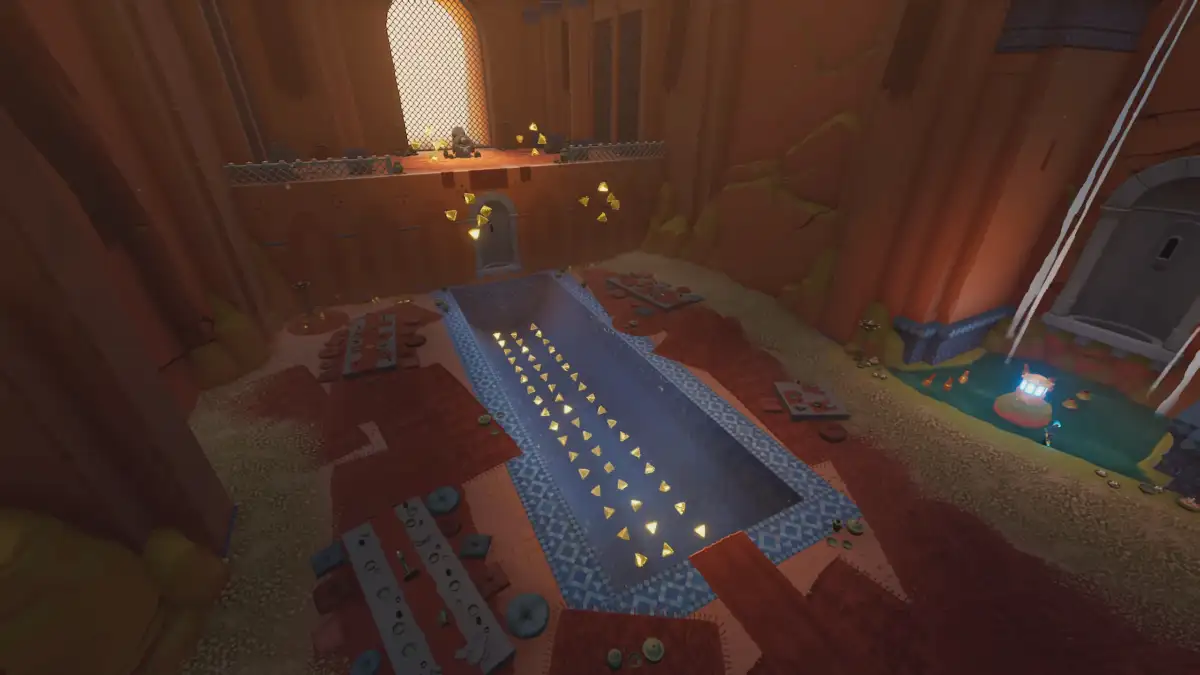
Traversal is the heart of the game. The sword is not a weapon but a board. Every hill, ramp, and giant chain (yes!) invites you to ride it. Several natural skate parks are tucked seamlessly into the world. They are not giant Tony Hawk arenas, but formations that feel believable in the environment while still letting you bust out tricks.
The tricks are optional but deeply satisfying. Buying a new one feels great, and pulling it off during a fluid ride scratches the brain in ways skating games usually do. I lost hours experimenting in these parks, ignoring the main path just to nail a landing.
Storytelling Without Words
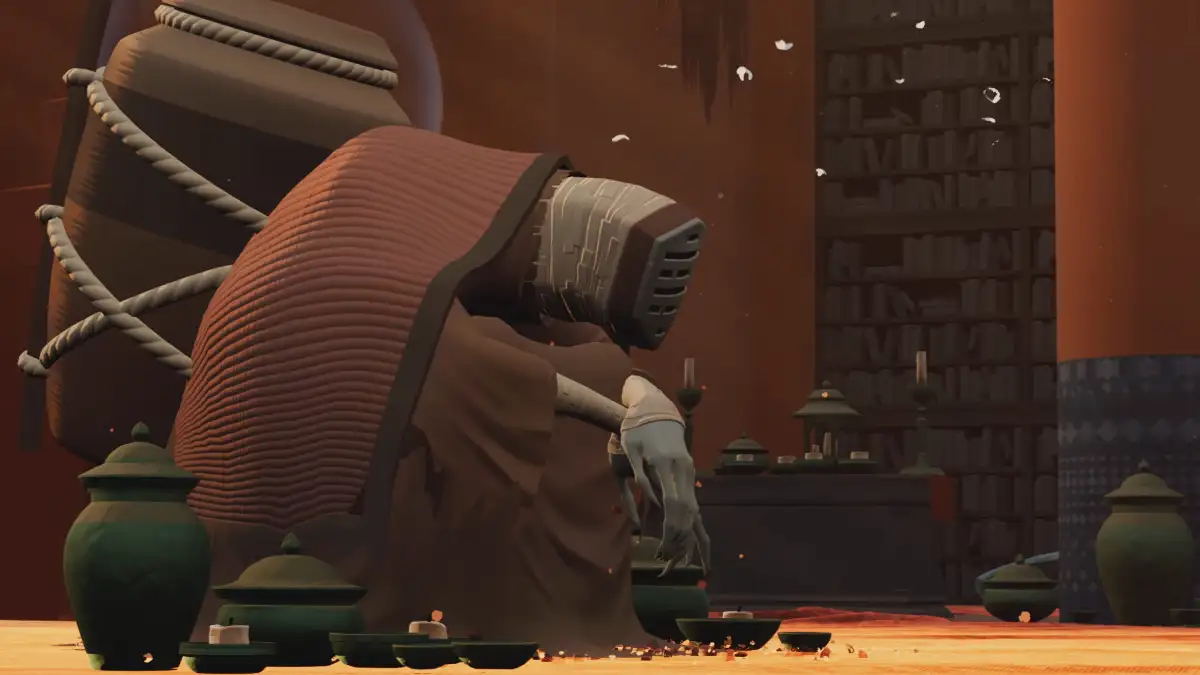
Do not expect voiced characters or lore dumps. The Wraith does not speak, vendors stay silent, and the story comes through stone tablets with cryptic poems. The intent is mood over clarity.
The lack of dialogue works. You embody the Wraith instead of observing someone else’s story. It is you, the sword, and the sea.
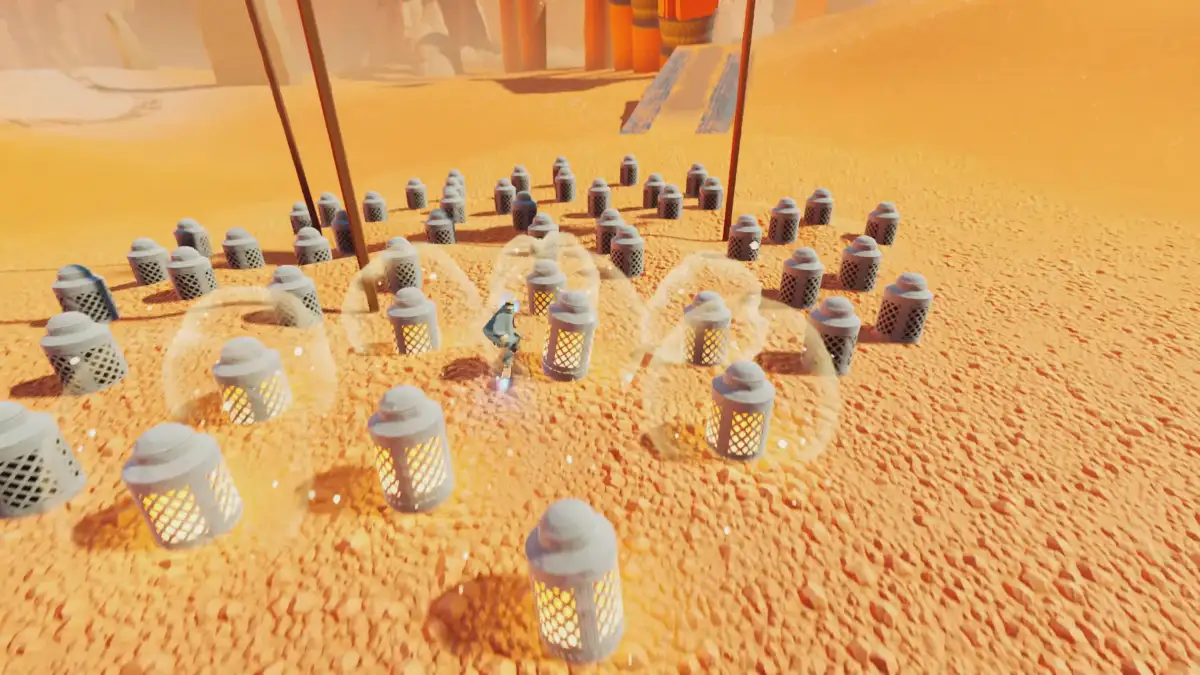
For most of the game, the UI is invisible. No mission markers, no waypoints, no tutorial screens. You discover mechanics by experimenting. Walk up to lamps, press a button, and they spring to life. The loop of exploration, experimentation, and reaction is elegant.
This consistency holds until the very last section. Despite being one of the strongest narrative moments, the game suddenly clutters the screen with button prompts. After hours of intuitive design, the shift felt unnecessary, especially during such a high-stakes sequence.
The Little Annoyances
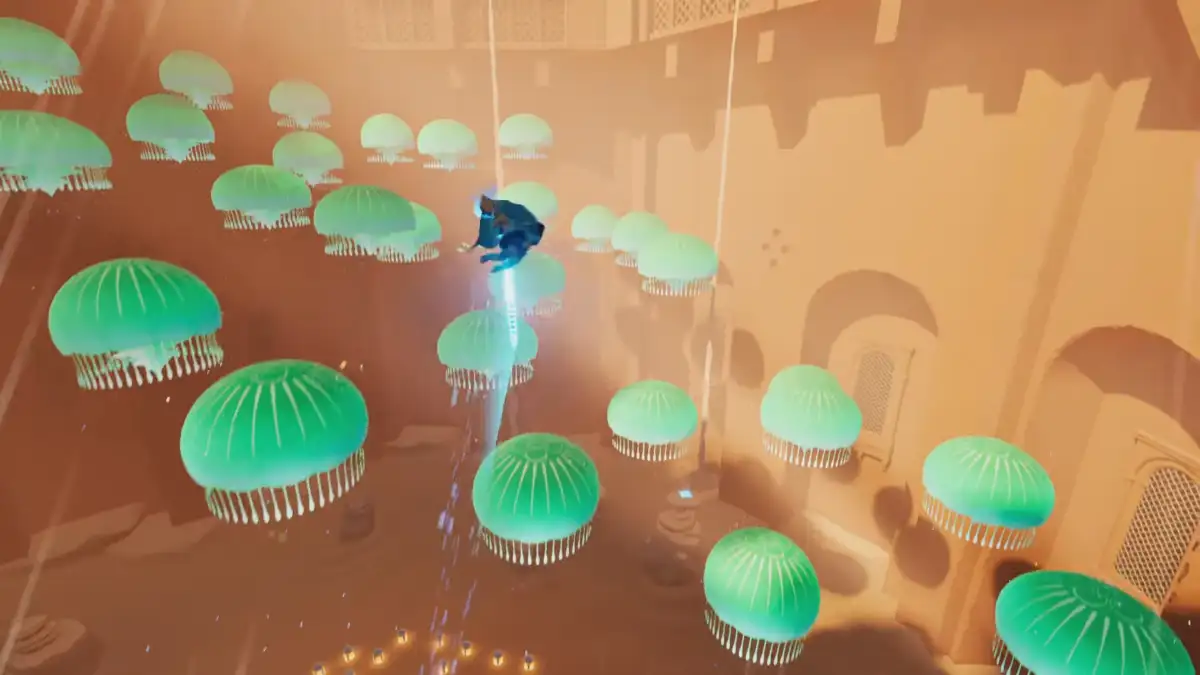
Cutscenes interrupt gameplay at awkward times. Triggering a puzzle solution pauses the action to show a door opening or a path clearing. Once, the camera shift made me fall into an abyss. It is a small issue, but noticeable.
Overall, Sword of the Sea is not a difficult game. It is about flow and rhythm, not punishing mechanics. One level is intentionally tricky and uncomfortable, which adds contrast, but overall, the experience is approachable.
Music and Motion as Meaning
The soundtrack elevates every moment. It swells during climaxes, quiets during calm stretches, and never overstays its welcome. When the game asked me to soar, the score carried me there. When I stopped to admire the scenery, the music softened as if on cue.
The best thing about Sword of the Sea is how it makes you feel spiritual about motion. Sliding across sand and chaining tricks is fun, but it is also meaningful. When the world blossoms in response to your movement, when the sword sings across different soils, it feels profound. Few games make traversal itself the reward. This one does.
Final Score: 9/10
Sword of the Sea is short, stylish, and flawed in small ways, but it is also one of the most satisfying games of the year.
Its visuals are spectacular. Its traversal feels incredible. Its world is rewarding even when the rewards are intangible.
Interruptive cutscenes and late-game button prompts are missteps, but they do not outweigh the joy of movement.
This is not a game about grind or challenge. It is a game about gliding, about presence, about being the Wraith for a few hours. When it ends, you will want to start again just to feel the motion.
About the Author

Discover more from Bonus Action
Subscribe to get the latest posts sent to your email.