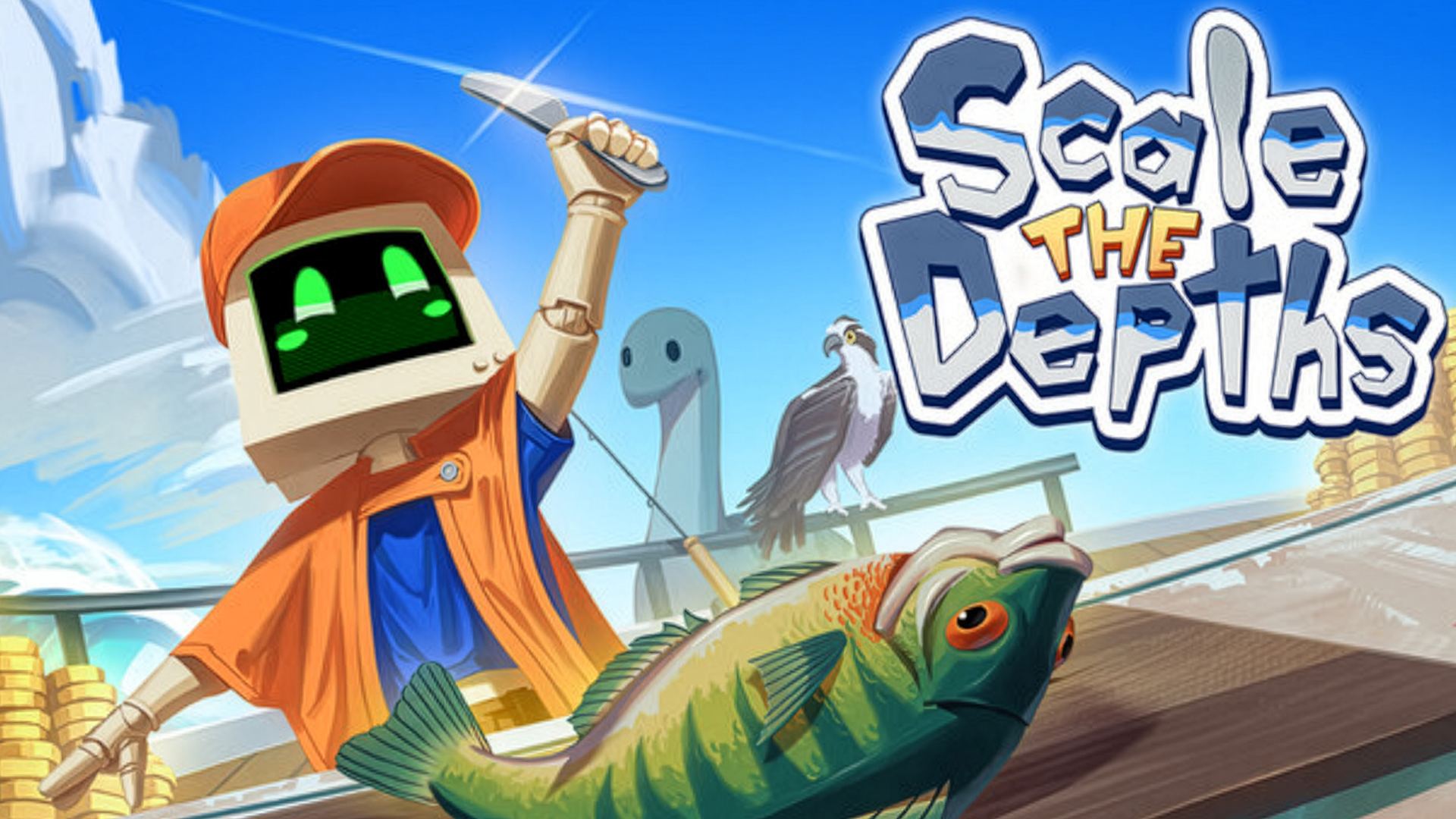
Have you ever wondered what happens after you reel those fish in and chuck them into Stardew Valley‘s bin? I’m sure you didn’t. Glass Gecko Games did, though, and I simultaneously wish they hadn’t and, because of how genuinely addictive this thing is, I’m enormously glad they did. The Canadian team built Scale the Depths out of a 2024 game jam entry, watched it rack up 210,000 demo players and 97% positive ratings before the full game even launched, and then shipped something that fully earns all of it.
Key Details
- Release date: May 28, 2026
- Developer: Glass Gecko Games
- Publisher: Pretty Soon, Phoenix Games
- Price: TBC
- Platforms: PC (Steam)
- Review code provided: Yes, for PC
Four Stations, One Problem
You are a tiny robot on a fishing boat docked at Loch Ness. You have four things to interact with: the fishing station, the bait station, the scaling station, and the feeding station.

You plant yourself at the fishing station, cast your line, and for the few seconds it allows you underwater, you thread through a maze of rocks and flora, ramming fish with your hook. Land enough hits, and they tumble straight into your bucket.
Bigger, rarer fish shrug off two or three strikes before they fold. Run out of line mid-chase, and the water spits you back to the surface, empty-handed. This is, in theory, a minor inconvenience. In practice, it is the most potent piece of game design I’ve encountered this year.
Once your bucket fills, which at the start means a humble three fish, you can’t fish again until you’ve scaled them. So you drag yourself into the scaling room, slap a fish on the cutting table, and do what only a game this cute could make look oddly satisfying: scrape out parasites and barnacles, shear off fins, sever heads.
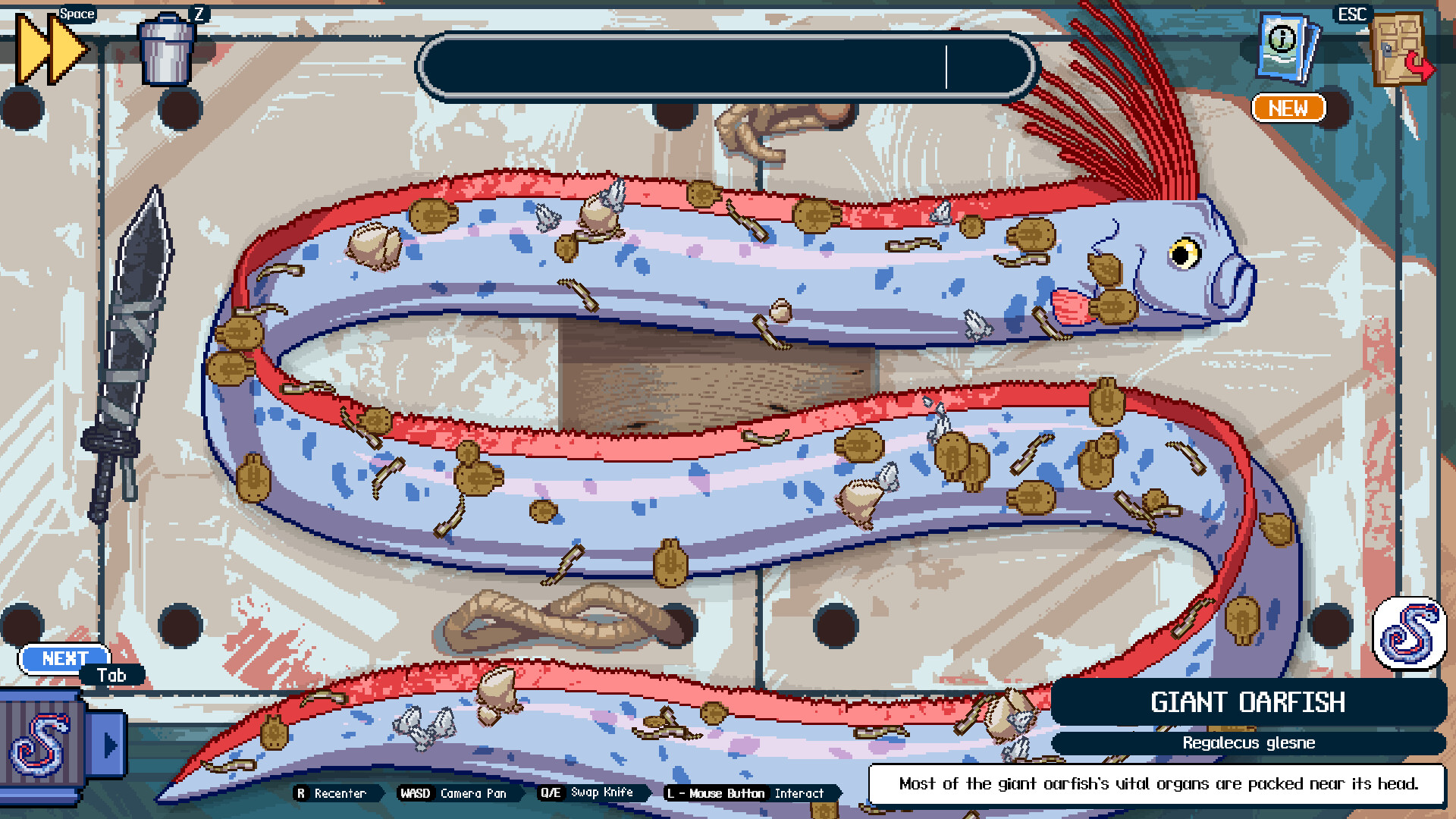
It’s safe to say that, in the first few minutes, I felt pretty awful doing this. This is a living creature I plucked from its school and started dismembering on a cutting board. After a few fish, I was carving without hesitation. With satisfaction, even. And after a while, a comfortable, telling monotony settled in.
The scaled fish go to the boat’s customers, who are nothing short of extraordinary: seagulls, sea turtles, mermaids, the Chupacabra, Nessie herself, and a rotating cast of creatures fantastic and unexpected.
They arrive with opinions on what you’re serving them. Some devour eels; others recoil from them. You’ll need to remember who wants what, and they’ll fling you an extra tip on the way out.
Because you do get paid, and on the walk back to the fishing station, you pass the shop, where you can usually sharpen at least one leg of the loop: the rod, to plunge further; the hook, to hit harder; the knife, to carve faster; or the bucket, to store more fish.
And just like that, an addictive loop is born.
Just One More Dive

You lock onto a big fish, hit it once, twice, it’s blinking red, you almost have it when the line yanks you back up. You were so close!
You dive again. You get it, but what’s that lever over there? You hit it and a passage cracks open, deeper still. You push in, but the line drags you back up. You surface completely undone.
The game then shifts: from the tight, adrenaline-soaked tension of fishing to the slower, grounding rhythm of the scaling room, drawing a knife across shiny scales, working each parasite out with the specific care that fish’s shape demands. Your heart rate drops, you breathe, and welcome the next fish, and with it, a slightly different problem. The contrast between these modes is chemical, and Glass Gecko Games engineered it with a precision that feels almost unfair.
Same Sauce, Different Bowl
Here is where Scale the Depths falters, and it matters that I say so because everything above is genuinely excellent.

When you clear an area and move to the next, from Loch Ness to Mexico to a swamp to Point Nemo, the game strips every upgrade you worked for. Your improved rod, your sharpened hook, your faster knife: gone, because “these fish are more tuff” or whatever. The logic holds, sure, but the feeling doesn’t. Starting from zero stings every single time, and the sting doesn’t soften.
More pressingly, the game never evolves in a way that justifies its own length. New areas introduce visually different parasites, barnacles, algae you scrub off with a sponge, and, of course, new fish with new looks. The sauce is still there, but there is no uptick in mechanical complexity, no story thread that pulls you forward, no feature that makes the fifth hour feel meaningfully different from the first.
What you’re doing at Point Nemo is structurally identical to what you were doing at Loch Ness. The coat of paint is lovely, yet the walls underneath never change.
Point Nemo does sneak in one genuinely delightful gut punch: the creatures there look pulled straight from Finding Nemo, sad and adrift at the most remote place on Earth, and I will not pretend I didn’t cackle and then immediately feel terrible about it.
Final Score: 9/10
Scale the Depths is a game that knows exactly one trick and performs it with such confidence, such tactile precision, and such genuine charm that you will play for hours before you notice the ceiling. The loop is impeccably designed, the customers are delightful, and the world is stranger and more inviting than any fishing game has a right to be.
What it cannot do is grow beyond itself, and the decision to reset your progress with each new area makes the repetition land harder than it should. This is a genuinely wonderful foundation that stops just short of being a genuinely wonderful game.
**Bonus Action was provided with a PC code of Scale the Depths for the purpose of this review**
About the Author

Discover more from Bonus Action
Subscribe to get the latest posts sent to your email.