
Image via Blizzard Entertainment
I’ve had plenty to say about Diablo 4 since I was given the pleasure of reviewing the original launch last year, as well as enjoying (and sometimes not enjoying) its seasonal content. So naturally, when allowed to try Vessel of Hatred, I jumped at the chance to see this next chapter in the game.
Now, after many demons killed, bosses slain, dungeons crawled, and loot collected, I can say this. If you love the game of Diablo 4, you are in for a treat in what is easily a great expansion. As for the story: eh, maybe not so much, but the demon-killing part is top-notch.
- Developer: Blizzard Entertainment
- Publisher: Blizzard Entertainment
- Platforms: PC via Steam and Battle.net, Xbox X|S, PlayStation5
- Price: $39.99+
- Review Copy Provided: Yes
Vessel of Meh
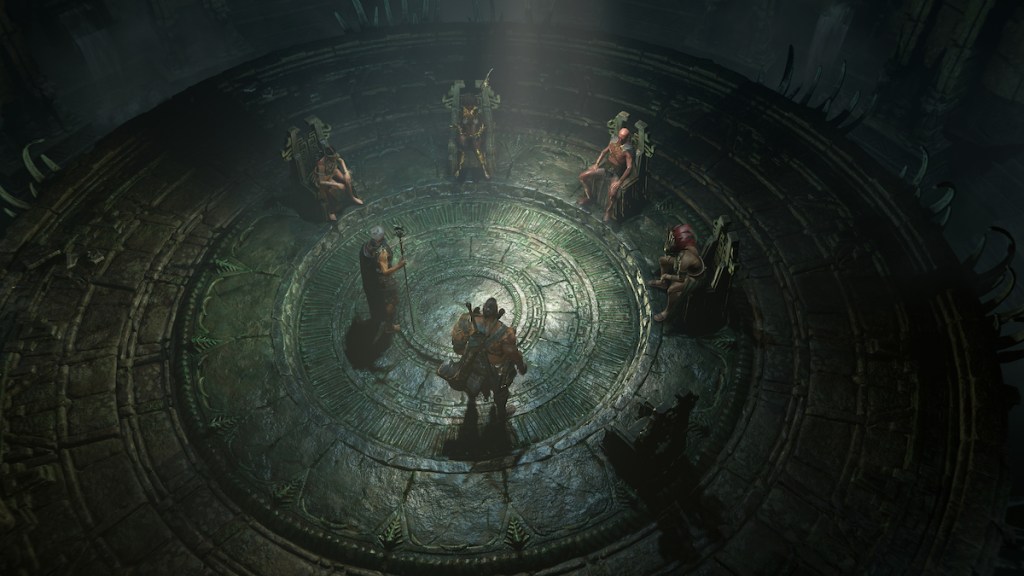
Let’s rip off the bandaid and get the least exciting part out of the way—the story. Now, don’t expect me to say it’s terrible or drag it through the mud because it certainly has its moments, but as a follow-up to arguably the best stories Diablo has seen, it wasn’t quite what I expected.
Of course, I’m limited by what I can say, and I want you, my lovely readers, to play and experience the story yourselves, but I still have plenty I want to share.
Vessel of Hatred takes us to Nahantu, a lush jungle region found towards the southern part of Sanctuary, and picks up right where the base game left us. Neyrelle, the young adventurer who traveled to hell and back with us, has made her way to this new region with a trapped Mephisto, one of the prime evils and father to Lilith. With this dark task ahead of her, she struggles and stumbles her way through in hopes of ridding the world of Mephisto for good, and we are along to find her, help, and hopefully succeed in that mission.

In terms of scope, it’s naturally a much smaller story than the base game, taking me around 12-15 hours to finish while doing some side quests and activities along the way. One of the advantages of that shorter run time was pacing. From the get-go, the story gets moving, introducing you to the world again and setting up the tone for what’s to come. In some regards, this tale is a little darker and more personal, with the major focus being on two characters, the previously mentioned Neyrelle, and a newcomer named Eru, an old Spirit born who acts as both your guide and sometimes moral compass.
Easily, the most enjoyable part of the story was these two. Both characters had through lines in the story that made their actions meaningful and important while allowing some moments for development or emotive points. My reaction to Neyrelle surprised me more than anything, considering how, in the time that followed my review of Diablo 4, my opinion of her changed, and her choices and story seemed more irritating than intriguing with hindsight.
However, Vessel of Hatred has put her back in my good graces, and you can expect to see a character that’s a bit more mature and “Diablo-ified,” which is to say, seen some shit.
Eru, our new addition, was also a worthwhile new entry. His devotion to his home and willingness to aid you made him rather enduring at times, and the whole older, wiser vibe he projected added a little distinction to his word of wisdom. He fits well with the narrative and feels right at home in this story and environment, which, I must say, is rather impressive.
A bolder color palette than usual, lush environments, and some impressive hubs make Nahantu a great environment to explore, and its winding jungle paths of Kurast alongside the deserts of Teganze were a nice difference from what I’d seen in the rest of the game,
However, for all those highs, there were a few lows that have been nagging at me the more I think about the story, which ultimately made it a sometimes meh experience.

For starters, where Neyrelle and Eru got regular attention and moments to push the narrative, nearly every other character introduced or seen in the story didn’t get that same treatment. Urivar, the new addition to the Chruch of the Light, is the biggest victim, as players will only meet 2-3 times during the story. It’s a shame too, because he showed glimpses of being a very interesting hurdle players would encounter throughout the adventure. But alas, he is relegated to a side character if I’m being kind.
Likewise, our main villain, Mephisto, isn’t really utilized outside of the final few hours, which arguably fits the character, being a rather crafty prime evil. But with that said, a little more time seeing him and his scheming would have been nice.
As I’ve said, I can only talk so much about the story and certain aspects of it, but I have to mention the ending. Don’t worry; I won’t spoil it, but I have to express my frustration about it.
After all the time I spent building to the climax of Vessel of Hatred, I ultimately wasn’t satisfied with how it ended, notably because it didn’t feel very fulfilling. Of course, I’m not saying I expected rainbows and sunshine; it is Diablo after all. However, even in the base game with its grit and tone, there was still a sense of accomplishment for what I’d done. Unfortunately, I didn’t get that feeling, which made the cliffhanger ending all the more deflating. Also, we already had a cliffhanger in the base game, and I hope it’s not a trend to leave players hanging with each expansion.
Now, I’m not saying it’s a bad experience, but if I were to wrap up my thoughts on Vessel of Hatred‘s story, it’s similar to my feelings on Diablo 4 and the series as a whole. The story was my least enjoyable aspect of Vessel of Hatred, outside of the good pacing and Neyrelle and Eru’s journeys, and in the end, it just didn’t quite have the same satisfaction I got with Lilith or the story I’d seen before. That, coupled with the cliffhanger ending that didn’t feel worthwhile, just left me a bit deflated by the end. Maybe a few more quests that would wrap things up better or some sense of closure or a more thorough setup for the inevitable next expansion could have helped.
With all that said, it’s not like it was a major turn-off, especially when everything else about Vessel of Hatred and the major changes that come with it are so damn good.
More to Do, More to Kill, More to Loot
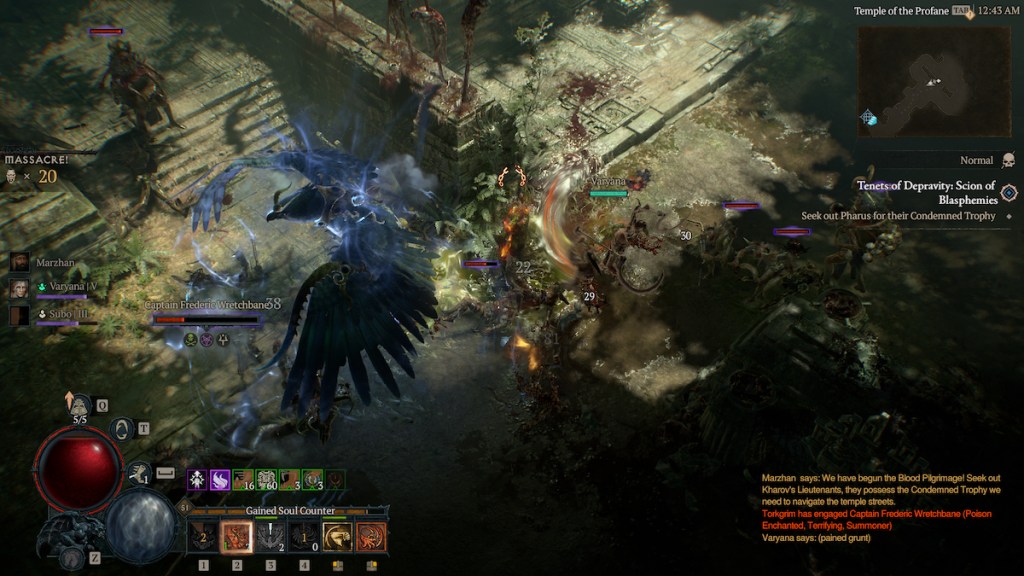
Where the narrative may stumble in places, the gameplay is the opposite story, offering plenty of worthwhile additions to the already robust selection Diablo 4 has to offer.
For starters, players have finally been given NPC companions in the Pale Hand, a group of four companions that each have their own abilities, small skill trees, and unique effects that can add to player customization. What’s more, you can have one as a permanent helper and another as a reinforcement, who will jump in when a specific condition is met which you choose. Need some help when you are stunned? Your companion can do that. Want some extra crowd control during a particular move? A companion can do that.
It’s a great addition that I can see being built upon and expanded as time goes on, and what they add to build potential is mind-boggling. They are all different in their role, with tanky options, damage, or support depending on your choices.

Plus, you can gain rapport with these companions, unlocking progression for them, as well as the ability to Barter, earning a special currency to buy powerful gear and earn great loot by using them, taking part in world activities, and generally playing the game.
But you don’t just get NPC companions with Vessel of Hatred; oh no, we get a brand new, completely original class with the Spiritborn. This new martial arts-focused class adds a whole new way to play Diablo, featuring incredibly fluid gameplay and build potential thanks to its unique class feature, the Spirit Hall, which provides bonuses to your moves depending on their incarnate type.
These are represented by four spirit guardians; the Jaguar, Gorilla, Eagle, and Centipede. Depending on which you lean towards, you’ll get different gameplay options, such as defensive bonuses with the Gorilla, or my particular favorite, speed and mobility-focused skills and passives with the Eagle. They also can be mixed and matched depending on Spirit Hall choices, further expanding build options and making this one of the most versatile classes Diablo 4 has by a large margin.

It helps that it is also a joy to play. I often found myself shifting skills and trying different options because every one of them felt fun and realized, eventually leading me to a speedy focused, screen-wiping fighter with a knack for mobility and shortening cooldowns.
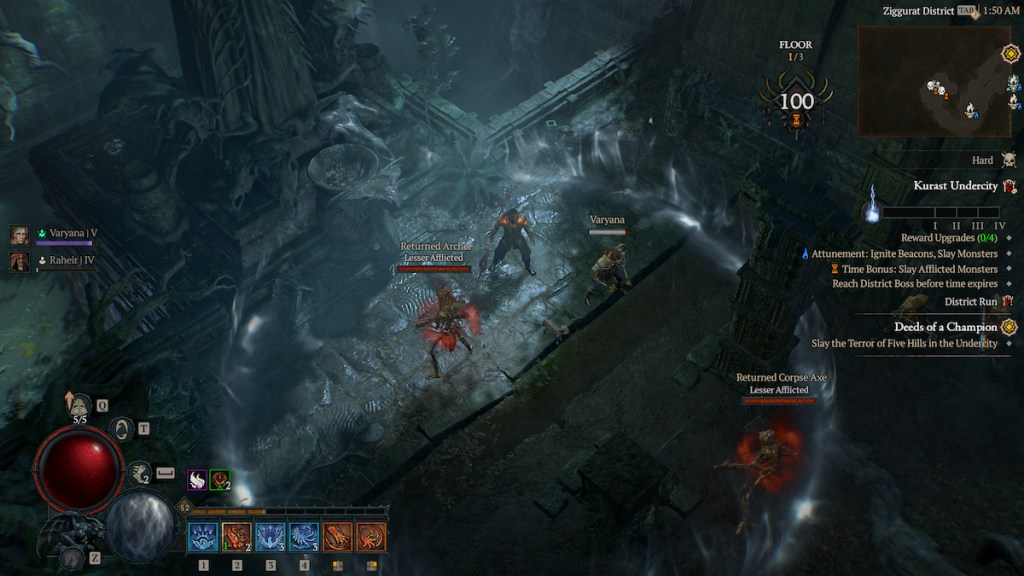
Along with this new class, there are new activities and endgame options to further add to the game’s offerings, starting with Kurast Undercity. This time-attack-focused activity has you blast your way through enemies while also improving your rewards with different tasks and challenges, all while keeping your time from reaching zero. As you fight enemies and move through each floor, you need to be quick, calculated, and precise to get the best rewards you can, and it’s available for both leveling and endgame farming once unlocked, with the option to use Spirit Tributes to add more risk and reward to your runs.
We also get the first truly co-op option with the Dark Citadel, which is unlocked when you enter Torment difficulties. This new endgame activity focuses on co-op gameplay mechanics, such as small tasks and puzzles, and action-packed combat encounters and bosses. You can also expect multiple paths and more complex boss mechanics to empathise the co-op aspect. This has a weekly cache reward too, so it’s got some potentially excellent rewards to earn. The introduction of a new marker system is best shown in this mode too, allowing nonverbal communication.
Then, there is Runewords, which first made an appearance in Diablo 2, and have been reinvented for Diablo 4. These allow you to socket two runes: one ritual and one invocation, into certain armor pieces, and together, they provide additional stats, buffs, and even a way to use other classes’ abilities. This is done with Offering, a resource you generate when you meet certain conditions, such as evading or using a potion, which is then used to activate the effect. The more powerful the effect, the more offering is needed, and inversely, using more than you need can overflow and increase the bonus you get.
Like companions, these add another thread to the weave of your character and build, further feeding that fantasy and control over how you play and demon slay, without being too complex. In some cases, that is a bit of a shame, as I could see it having a little more oomph in some runes, but they are still a great addition, one I can see being expanded down the line.
In case it’s not clear, Vessel of Hatred is a rather hearty offering when it comes to content, both in what you play and how you play it, which is ultimately the best part of Diablo 4. The new activities provide additional ways to enjoy the game, and the new class, mechanics, and gameplay enrich player options and choice, which in a game like this is crucial. Together, they deliver on those aspects, and I enjoyed experiencing them thoroughly.
It also helps that Diablo 4‘s progression and systems are getting a major overhaul, which are nothing short of brilliant.
Diablo 2.0
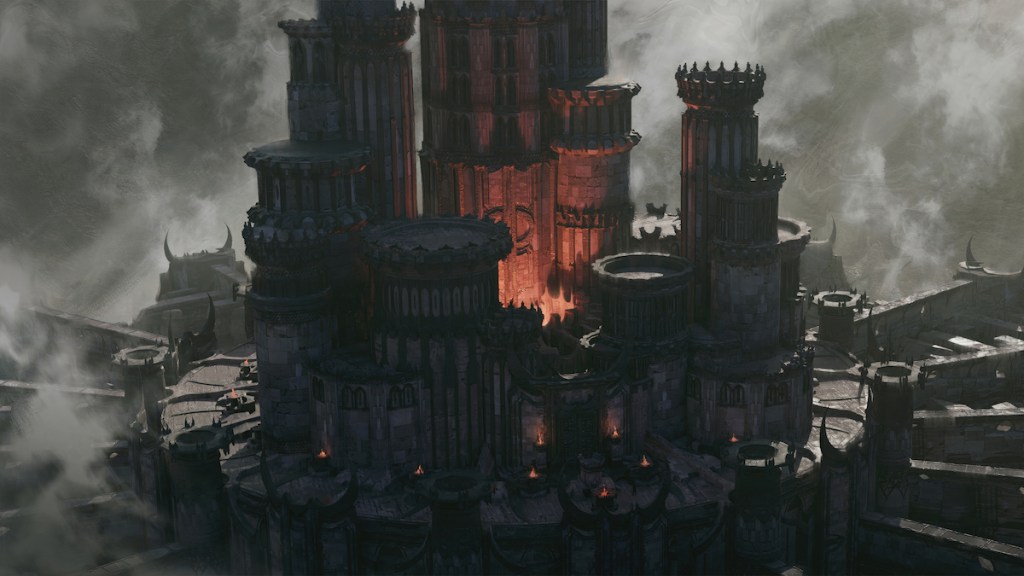
Along with the expansion, its release will coincide with the biggest changes to the game since Season 4: Loot Reborn, which will completely revolutionize the game’s leveling experience, progression, and core gameplay. They are also, in my opinion, a brilliant finale to a game rebuilt.
The most notable change comes to leveling, which will now see characters reach the max level of 60, which comes with ten more skill points, so there are now more points to invest in builds or pick up some extra nodes. Paragon levels have been split into their own levels, with an additional 100 points to spend on your boards. These alone have major implications in builds and progression; with more points comes more freedom in skill choice and investment, so you can expect to see new builds or additions that maybe couldn’t be done before.
These are coupled with a new skill for each class, as well as five new passives, a host of new legendaries (some of which I used and loved), and sweeping updates to paragon boards and item updates, and you have basically a brand new leveling experience – One, I might add, that feels much better to experience.
It’s quicker, more streamlined, and gets you to the endgame and other activities faster, as I’ve said, there is a lot to do and experience, so making the steps to get there more enjoyable is naturally going to be a plus.
Along with this, the difficulty tiers have seen a revamp to accompany these leveling changes. Now, players will have four Standard and four Torment tiers. Standard can be experienced during leveling, and progressively, you can go up a tier for more rewards and better gear. Upon reaching level 60, and clearing certain tiers of the newly reworked Pit of Artificers, you can enter Torment tiers, which increase difficulty substantially, but it will also have some of the best rewards and ways to progress.

This, along with other quality-of-life changes, like Glyph updates and UI changes, has refined the foundation set with the previous few seasons, and if Seasons 4 and 5 were the building blocks, this update, alongside Vessel of Hatred, feels like the shiny new roof to complete the house of Diablo. Or, to put it plainly, the final step in rebuilding the Diablo 4 experience, which will now be built upon and expanded going forward.
They all cement together into a more refined gameplay loop that is both streamlined but without losing depth, and I found these changes accompanied Vessel of Hatred perfectly. Even those who don’t own the expansion will see these changes, as it is a base game overhaul, so everyone will get to enjoy Diablo 2.0.
Final Score – 8/10
Diablo 4: Vessel of Hatred is a great expansion; let me make that clear. The changes to the base game, coupled with excellent additions of NPC companions, Runeword, and all the other elements like leveling and progression, combined with the foundation of the last few seasons, make it come together brilliantly.
Gameplay is refined, more varied, and brimming with things to do and ways to do it, and it’s now all the more enjoyable to demon slay and horde all the lot you want.
However, where the game of Diablo 4 has leaped forward, the narrative is more of a stumble in this case. Ultimately, it was a bit meh this time around, doesn’t exactly have me thrilled.
With that said, I believe Vessel of Hatred is a worthwhile addition to your game, and one that will just make the hack and slash, looting and booting, action-packed gameplay that only Diablo can provide a richer and more blood-soaked one.
If you want to hear more about my turbulent relationship with Diablo 4, I have a rather emotional feature detailing my time with the game. Or, if you want another kind of action, check out our review for Warhammer 40k: Space Marine 2.
About the Author

Discover more from Bonus Action
Subscribe to get the latest posts sent to your email.