

There is a desert in Zozo and the Lost Dreams made almost entirely of pudding. Wafi Harowa, the game’s director, calls it “a Dessert Desert, a desert filled with desserts.”
You clamber over cupcakes the size of hills, a mermaid works the till, and an octopus lurks somewhere nearby, waiting to teach you how to throw a punch. All of which would be unremarkable, except that this is a metroidvania, and metroidvanias do not, as a rule, do pudding.
They do gloom, sure. They do cathedrals and rot and a protagonist who has clearly not slept in weeks. The games that minted the genre’s modern reputation, your Hollow Knights and your Blasphemouses, tend to open with a locked door and the strong implication that you are not yet equal to whatever is snarling behind it.
I have bounced off a good number of them myself, usually somewhere around the second boss, at which point I close the laptop and go do something I am better at, like eating toast.
Zozo, sweetly, would like me to stay.
An Open Door Where a Boss Gate Should Be

So, the basics. Zozo and the Lost Dreams is a cartoon-inspired metroidvania in which a thirteen-year-old boy named Zozo tumbles through his own dreams and tries to find his way home, and it comes from Agate, one of Indonesia’s largest studios. It is built as seven self-contained dream episodes, each its own pocket world with its own rules.
I first tuned into it at the MIX Summer Game Showcase this June, somewhere between the pillow-fights with sentient pastries and the octopus that teaches you to brawl. Some games you forget the second the stream cuts to the next trailer. This one kept tapping me on the shoulder all week, cheerful and insistent, until I gave in and wrote to Harowa to ask what he was up to.
Harowa is not shy about who this game is for. It is for the bouncers, the toast-eaters, and the people who adore the idea of a sprawling, interlocking map but curdle at the thought of dying to the same wasp forty times over. He wants Zozo to be a doorway into the genre rather than a gate that slams shut in your face.
That ambition has a clear lineage, and Harowa points straight at it: Nintendo. He is drawn to the colorful, family-friendly stuff, the kind of thing you play in a heap on the sofa with your relatives, and that is the register he is reaching for. Not the game you conquer to prove something to yourself, but the game you buy your niece over the holidays and watch her fall for.
Please Stand By, We Are Changing The Channel

Here is the trick that makes Zozo more than a reskin of a hard genre: every episode changes the channel.
Each new stretch of the dream world arrives wearing a different genre like a costume, Harowa explains, and the whole thing reshapes around it: the story, the art, and the way you actually move and play.
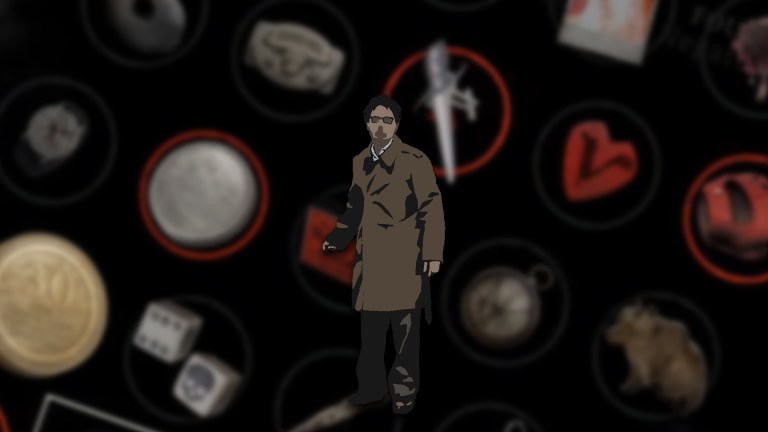
One episode plops Zozo into a detective story, where he has to crack a case and lean on suspects until somebody talks. Another swerves off somewhere else entirely. The through-line is that dream logic gives the team permission to be promiscuous with format, to channel-surf, to serve you a noir on Tuesday and something sugared on Wednesday.
This is the cleverest thing about the pitch, and it is pulling double shifts, since it keeps a beginner-friendly game from going slack, because the ground keeps shifting under your feet. And it earns the metroidvania label since Harowa landed on the genre precisely because a connected, backtrackable world reinforces the story he wanted to tell, one dream bleeding into the next.
He did his homework to get there, too. When he was working out what shape Zozo should take, he played the syllabus. He worked his way through the Shantae games, clocking which ones let you wander back through a world you had already seen and which ones marched you along stage by stage, and decided the wandering was the good part. Backtracking, he reckons, rewards the curious, and curiosity is the muscle he wants his players flexing.
None of this, incidentally, is what Zozo was born as. The game began life as a free mobile title, and almost nothing survived the migration. “The only thing we keep from the mobile game is the protagonist’s name, Zozo,” Harowa says. Everything else went in the bin; “Back to drawing board.”
The team, split between Bandung and Abu Dhabi, rebuilt from the studs, folding Indonesian and Middle Eastern flavors in as they went. The Dessert Desert leans Middle Eastern. Bubblefin, the mermaid at the shop counter, he says, is a nod to Jumbo, a beloved Indonesian animation.
Fall Down, Keep Your Coins

The thing about promising a gentle metroidvania is that you then have to build one, and gentleness turns out to be deceptively hard to engineer. Difficulty is easy, see, you just take things away from the player, but kindness costs you.
Harowa’s north star is a single phrase: “Our main design principle is Challenging, not Frustrating.”
In practice, that means stripping out the little cruelties the genre tends to treat as sacred. Die, and you are not frog-marched back across the map to reclaim your lost money from the exact spot where you perished. “If you die, you keep all the currency and try again,” he says.
Lose to a boss, and you simply have another crack at it, no ceremony, no groveling. And before the game asks anything difficult of you, it hands you room to get your hands accustomed to the controls, to build the muscle memory, so that the hard bits land as a challenge rather than a betrayal.
“It’s more of a stress-free metroidvania game,” he says, and the phrase should be an oxymoron. Metroidvanias run on a low hum of dread: the fear of losing progress, of the map’s teeth. But Zozo wants to file those teeth down without yanking them out entirely.
Whether it fully pulls that off is the sort of thing you can only know with a controller in your hands, and I have not had one yet, but the intent is coherent, which is more than plenty of cozy games can claim.
The Kindest Thing a Cartoon Can Do

Set the mechanics aside for a second, and Harowa’s reason for all this gentleness is disarmingly plain. “The world at the moment is already stressful and full of bad news,” he says. It is why the industry’s bottomless appetite for grim and gorgeous suffering leaves him cold, and why he would rather build the other thing: “We want our game to make our players find joy in life.”
He promises that the game is stuffed with foreshadowing, small details you will breeze straight past that turn out to matter, all of it tightening toward a finale he thinks will lodge itself in you. “At least that’s what our playtesters already told us,” he adds, which is either modesty or a very good closing argument.
Zozo and the Lost Dreams is due later this year. It wants to be your first metroidvania, and quite possibly your softest landing in a genre that has never once fussed over whether you were comfortable. There is a pudding desert, there is a mermaid, and there is, blessedly, nowhere it is straining to make you suffer just to get in.
About the Author

Discover more from Bonus Action
Subscribe to get the latest posts sent to your email.







This game looks so cool with its artstyle and premise! Will definitely be excited to play this.
Let us know what you think!!