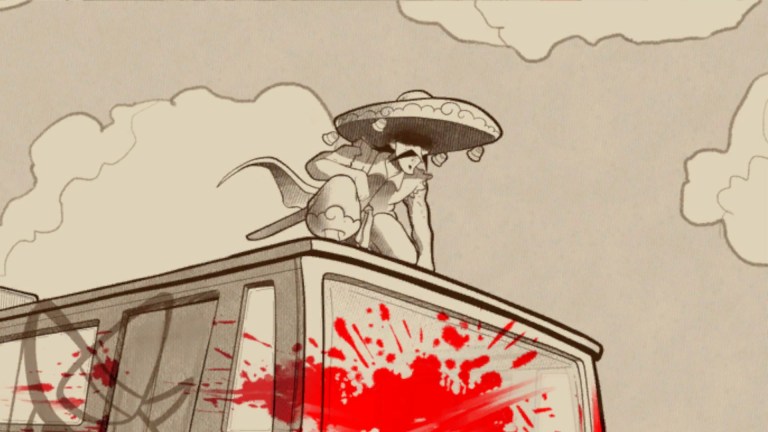

Deductive1 games are hard to get right and even harder to get perfect, but The Roottrees are Dead threads the needle2 effortlessly. It’s an easy game to recommend for fans of a very specific type of experience; namely, people who love The Return of the Obra Dinn, The Curse of the Golden Idol, Her Story, and Papers, Please3.
It’s rare for a deductive game NOT made by Lucas Pope4 to be this enjoyable (which is why I could only come up with two other examples in the previous paragraph) but Robin Ward & Jeremy Johnston’s The Roottrees are Dead5 pulls it off. Most of this is due to the excellent writing, but it would be remiss to not fully acknowledge the vibes on display here. From the soundtrack6 to the setting to the technology available, everything gels together perfectly to make you feel like you’re wrapped up in a blanket by a cozy fire reading a mystery novel.
The Roottrees are Dead, Long Live the Roottrees
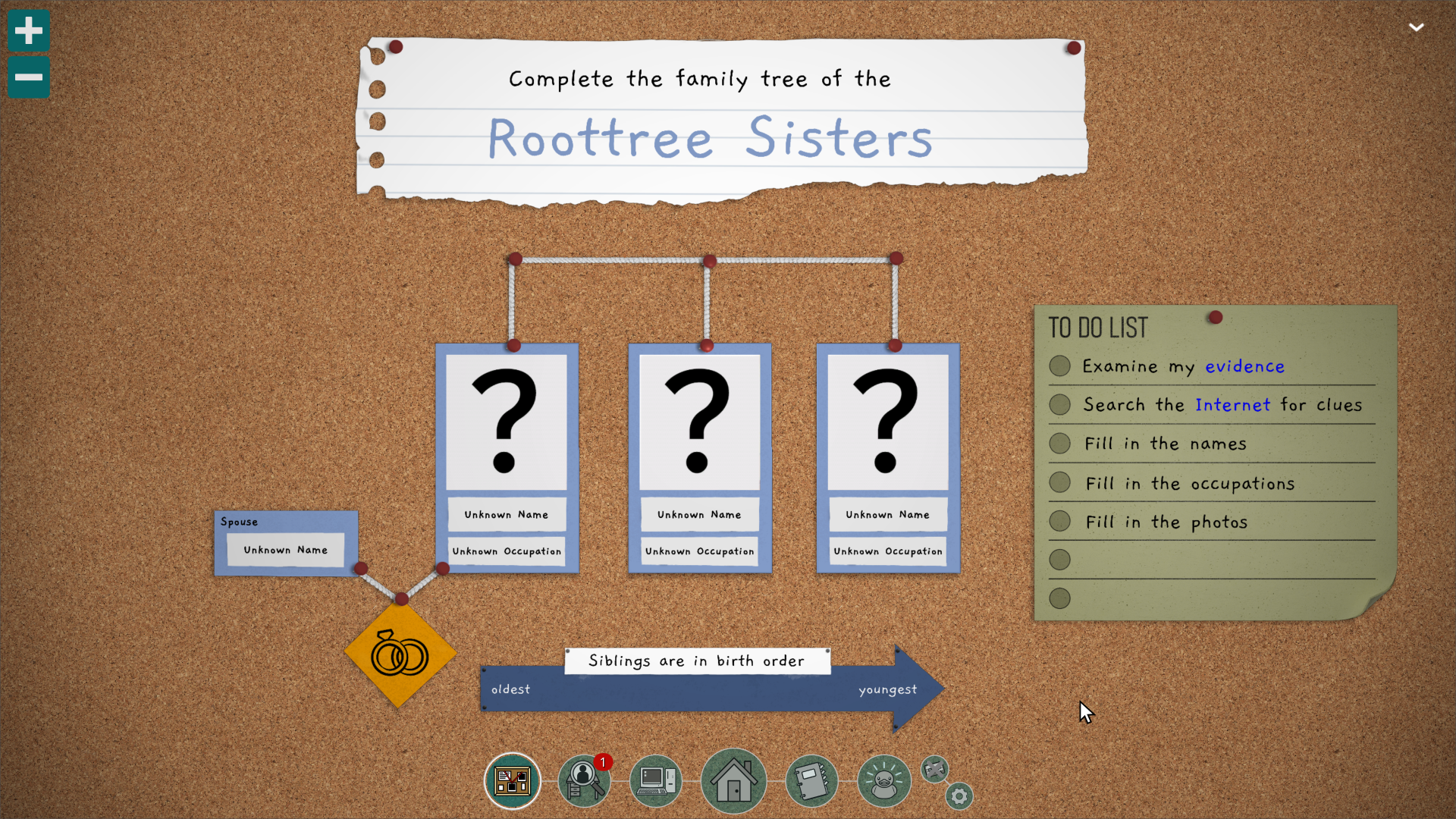
Here’s the setup: It’s 1998 and Carl Roottree, president of the Roottree Candy Company, along with his wife and their three daughters, has died in a plane crash. You are a genealogy expert tasked with sorting through some of the remaining family documents in order to determine who is and who isn’t a direct blood relative of the Roottrees. The problem? The relevant family history dates back 90 years, all the way to 1908, and all you have to start with are a few documents and Windows 3.1 with a dial-up modem.
It’s a simple premise with a seemingly overwhelming amount of depth, especially right after the tutorial when you are shown the whole 50-person family tree at once and told, “Have at it!” However, soon the old adage about eating elephants7 kicks in and you’re off to the races, perusing old periodicals and searching through library catalogues for just one more piece of vital information. Some information is important, some of it leads to further questions, and some of them are red herrings8, and it’s up to you to sort it all out.
The Roottrees are Dead and I Feel Fine

There’s only one criteria9 I have for whether or not a deductive game works for me: do I wake up the next morning thinking about an unsolved part of the mystery? The Roottrees are Dead passed this test two nights in a row, and I didn’t give it a chance for a third. The best news is that, after finishing the main story, there’s an additional, even more complex mode called “Roottreemania” which scratches the itch even further10.
Ultimately, what saves The Roottrees are Dead from being boring is the writing. It’s an excellently written game that leaves just enough unsaid to keep you curious, but not so much that you are blindly searching for answers or spamming entries hoping something works. Using the “three correct entries locks them in” system from The Return of the Obra Dinn works amazingly here, and the fact that it moves to needing four correct entries later in the game is a perfect upping of the stakes.
The Roottrees are Dead and Awkward to Spell
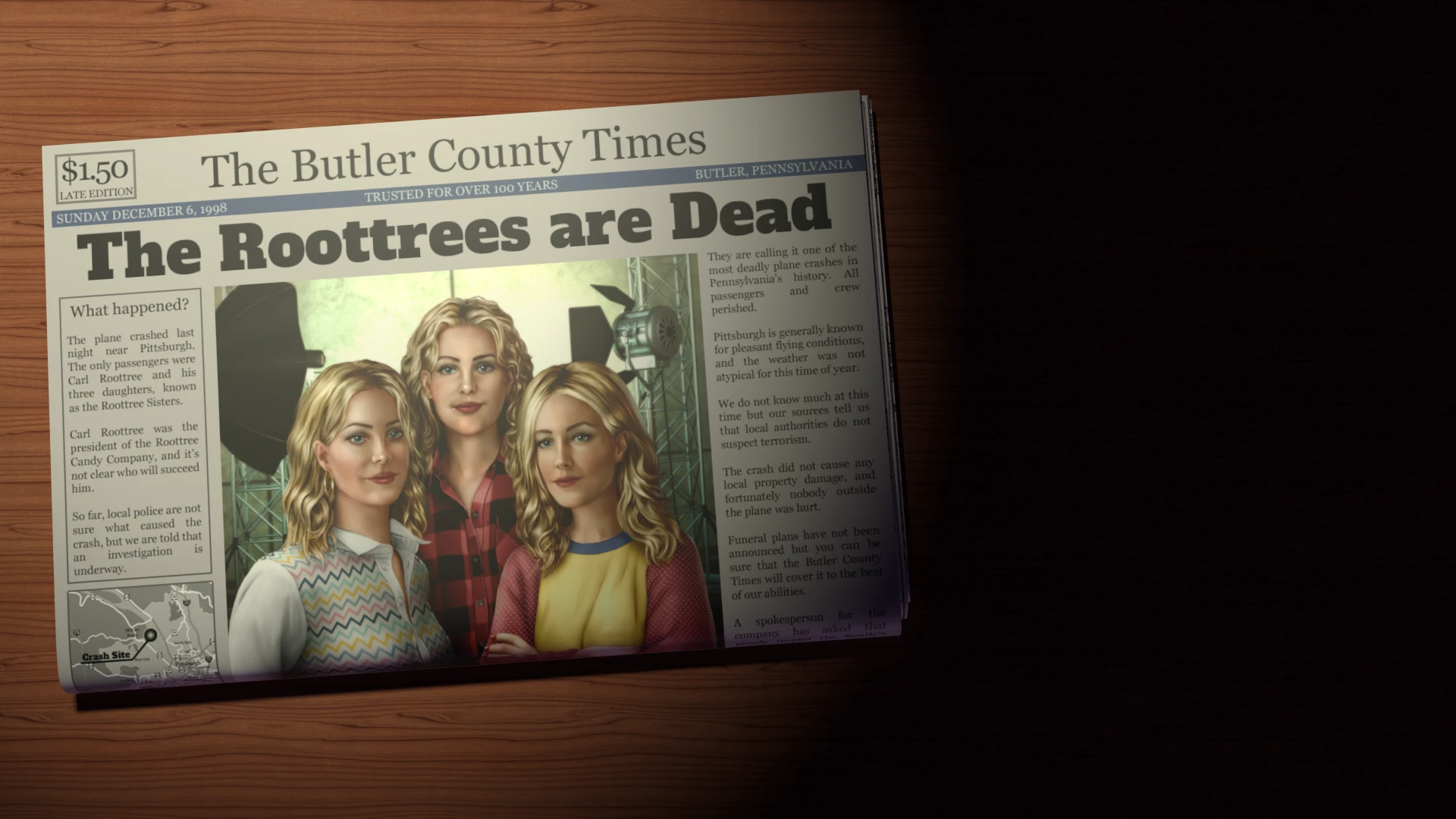
There’s something impressive about naming your game The Roottrees are Dead. Roottrees is an unwieldy name, cumbersome to spell and ugly to look at. When the majority of your interactivity comes from reading documents and typing in search terms, it would be easy to pick a family name that’s a bit nicer on the eyes and fingers. It works here because it adds to the “ancient family” vibes, as does the George R. R. Martin-esque11 naming conventions.
Just like my Cryptmaster review a few weeks ago, I’m not going to say much more here, because to do so would require more images for headers and all images of this game, even the ones in this article, are spoilers if you know where to look. Y’all all got the big speech last week with the Stop Killing Games campaign— which is still important and still needs to be shared around and still needs support, by the way. Go do that. And, if you are one of the kinds of people who like the titles I mentioned above, go play The Roottrees are Dead. You’ll be glad you did.
THIS WEEK’S RECOMMENDED MEDIA:

IN OTHER, NON-VIDEO GAME RELATED NEWS:
- It snowed here in Savannah, GA, for the first time in eight years this week. Here’s the snowman my kids made:


- No, I’m not going to call them DETECTIVE games. Dammit Jim I’m a genealogist, not a private eye! ↩︎
- An idiom meaning “finds the proper balance” or “successfully executes something difficult.” ↩︎
- Only the “looking for inconsistences” aspect of Papers, Please, really. There’s no time limit in The Roottrees are Dead (thankfully) so you can take as long as you want examining documents. ↩︎
- Or Sam Barlow, to be fair. ↩︎
- The original The Roottrees are Dead was released on itch.io by jjohnstongames. The version I am reviewing for this issue of Ludology Now! was recently released on Steam and contains significant visual improvements over the original, along with an additional game mode. To be clear, I have not played the original, I have just been keeping an eye on this because I heard it was a good deductive game. ↩︎
- Between this, Mind Over Magnet, and Starstruck Vagabond, it’s amazing there aren’t more major breakdowns on the contributions Kevin MacLeod made to the indie game (and YouTube) scene over the past 10 years. ↩︎
- Q: “How do you eat an elephant?”
A: “One bite at a time.” ↩︎ - Literally. ↩︎
- Well, technically two. The other is, “Does it make me want to break out a physical notebook?” The Roottrees are Dead also passes that test, but it provides an excellent in-game notebook you can write in yourself and pull up at any time, so I didn’t even need to. ↩︎
- At the time of writing, I have not completed Roottreemania. It’s cool though, I’m glad I can keep going because I didn’t want it to be over. ↩︎
- Seriously, it’s like an Elden Ring family reunion with all the Gwyndolines, Gwyneths, and Gwynns out here. ↩︎
About the Author

Discover more from Bonus Action
Subscribe to get the latest posts sent to your email.