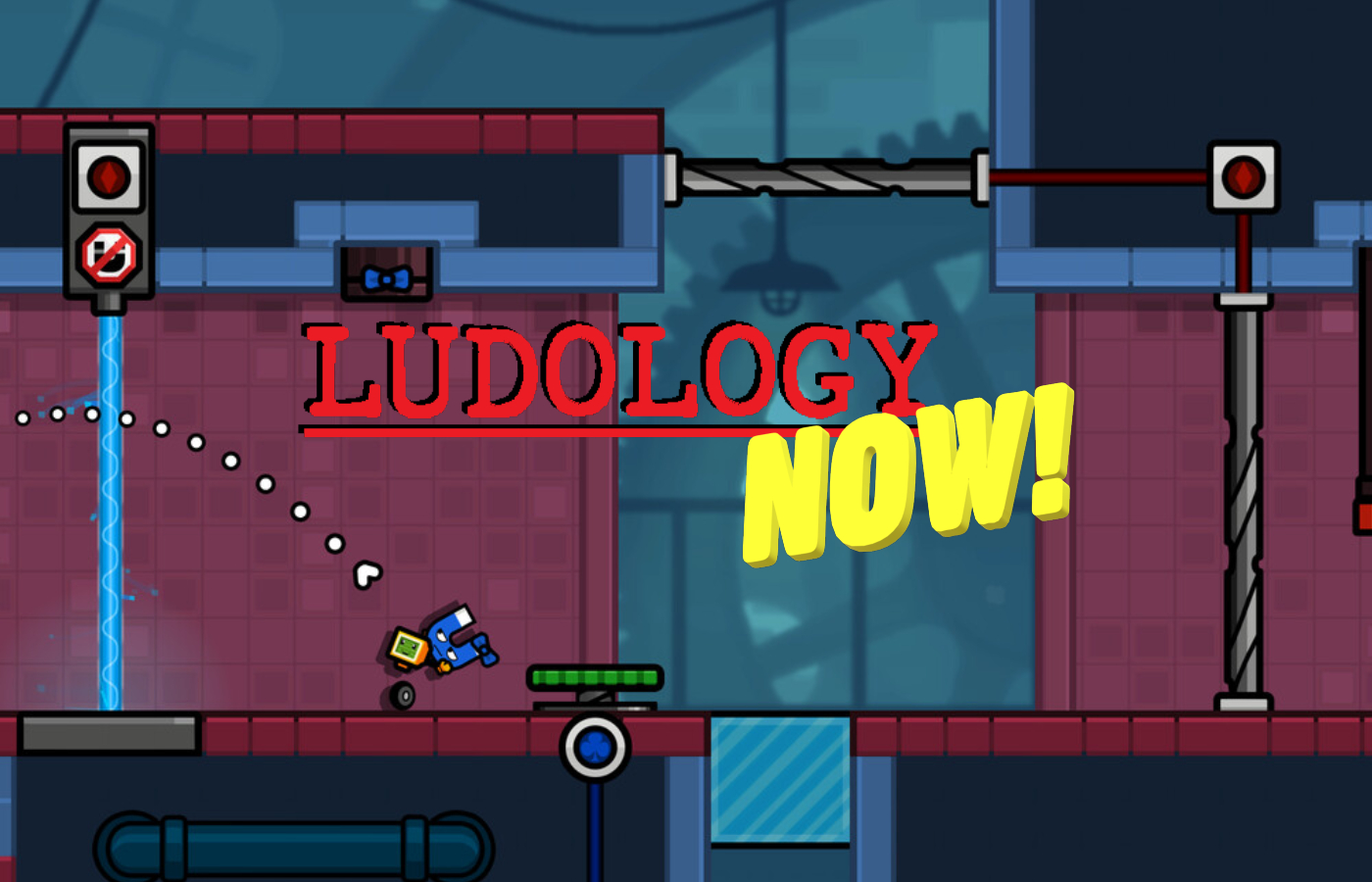
I’ve been watching Mark Brown’s Game Maker’s Toolkit series for nearly a decade. It’s a fantastic YouTube channel focused on all aspects of game design, from accessibility and UI elements to level design and the difficulty of getting, well, difficulty, correct. For the past three years Game Maker’s Toolkit has also been running a side series called “Developing,” in which Mark Brown attempts – and succeeds – to make his very own indie game. That game is Mind Over Magnet, and it’s my son’s new obsession.
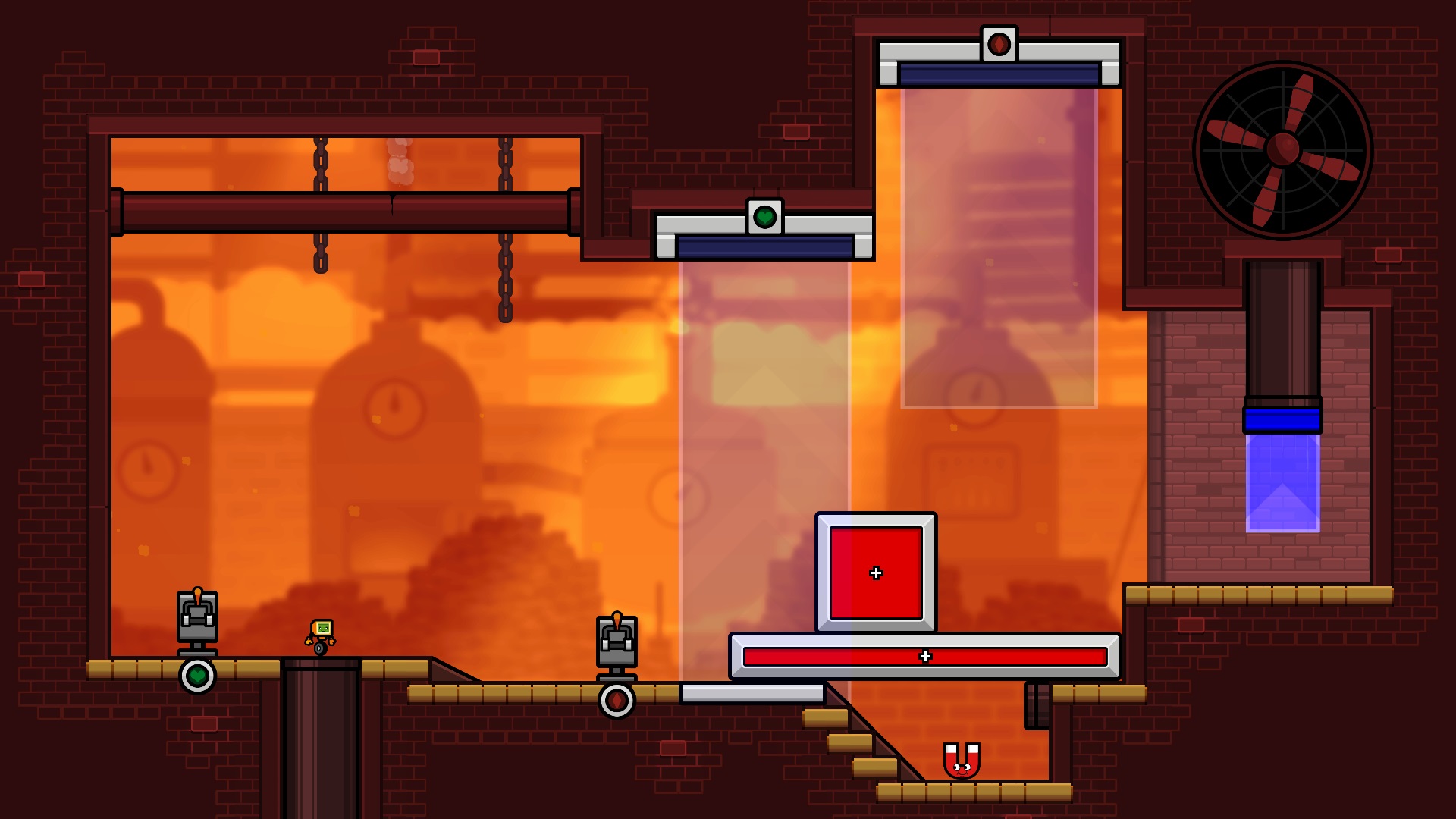
The game Mind Over Magnet can be best described as a long string of bite-sized puzzle-platforming levels broken up by incredibly brief narrative moments. The puzzles never last long enough to where you begin to feel exasperated, and the narrative moments are never so long that you feel as if you want to skip them to get back to the puzzles. It’s also extremely cute in terms of visuals and audio design, and (to me, at least) it’s extremely well balanced.
“No, Let Me Do This!”
As a parent, it’s interesting to see what your child latches onto and what they don’t. As someone who has worked in the games industry since my children were born, sometimes I get asked “Is this a work game or a fun game?” They don’t mean my work games can’t BE fun, but they do understand the line between the two. Often, they’re hoping for the latter.
When my son Benjamin walked into my office while I was playing Mind Over Magnet, he said “This is a fun game.” He didn’t ask whether or not that was true. After a few seconds of watching me struggle over a, in retrospect, fairly simple puzzle, he said, “I know what to do!”
I said, “Yeah? What’s that?”
“Give it here.”
Like any good parent, I said, “No, it’s my turn right now. What’s your idea?”
“I have to show you,” he said, trying to pull the controller out of my hand.
“Hmmm… That Didn’t Work.”

His idea was wrong, but it didn’t deter him, and I wasn’t able to get the controller back for another two levels, until he got stuck enough to ask for help. Since then my son has been hooked on the game, talking about Mind Over Magnet’s puzzles randomly when we’re out on the swings or standing at the bus stop. Just today, when we were talking about what happened at school, he ended with, “Since I was good, can I play the magnet game?”
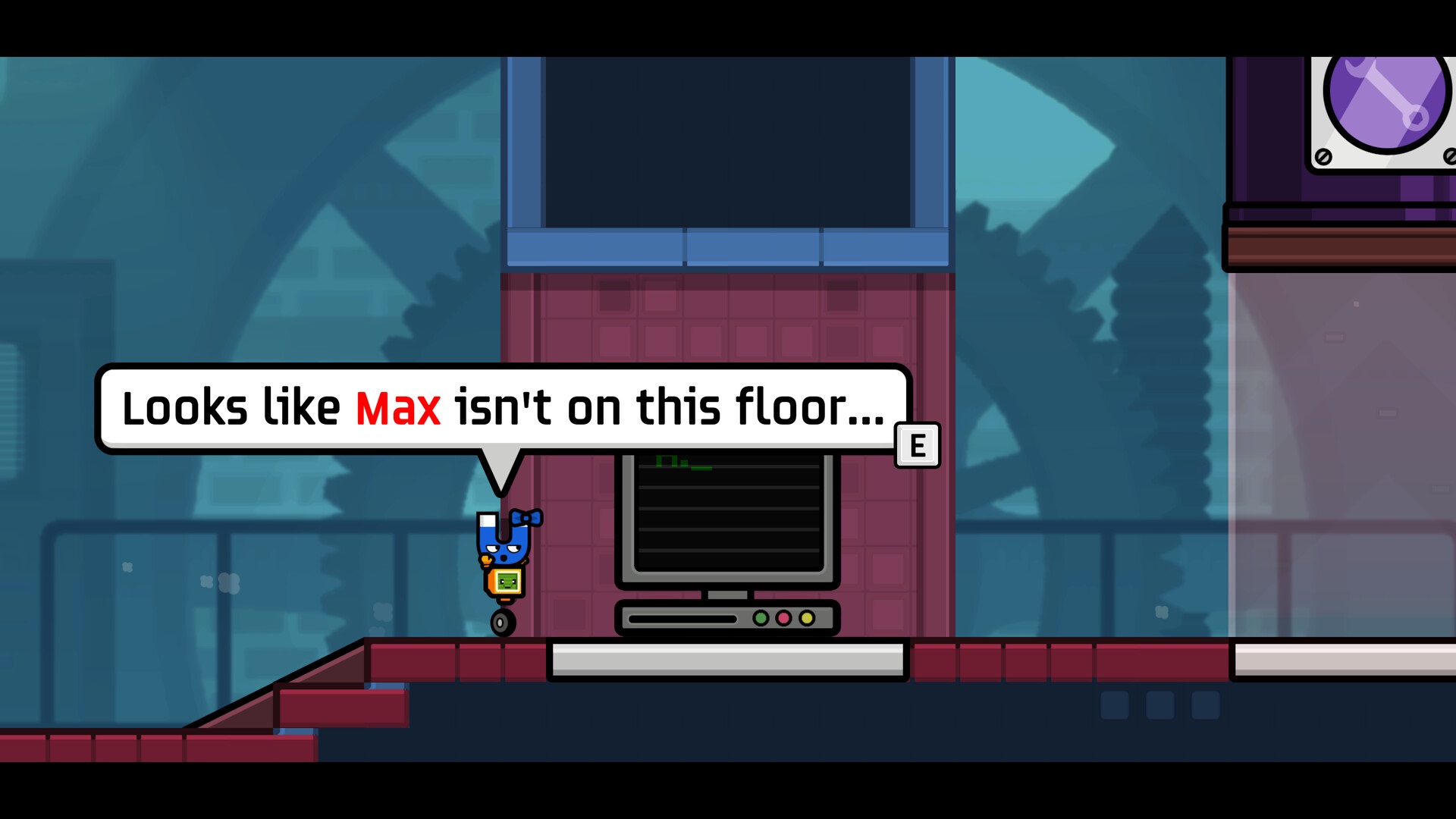
It’s no surprise that Mind Over Magnet endears itself to children in this way. Both the main character Uni and Magnus the Magnet have simple but expressive designs, almost Pixar-like. The game focuses more on gameplay than dialog, with all of Uni’s responses restricted to symbols like smiley faces and punctuation marks. The sound design is excellent and the ease of early puzzles makes onboarding new players an exceptionally simple process.
“I Know What To Do Next!”

Mind Over Magnet is a great co-op puzzle game. It’s single-player, but the fact that nearly all of the game’s puzzles are presented on a single screen means it’s easy for anyone watching to try and solve them along with you. For two people who don’t mind passing the controller back and forth (whether it’s a parent and a child or two friends) this kind of room-by-room progression is ideal for cooperation and idea sharing.

During Game Maker’s Toolkit’s Developing series (above) creator Mark Brown talks a lot about how the original idea for Mind Over Magnet was to make a skill-based platformer like Celeste or Super Meat Boy. It was never supposed to be a puzzle game, that’s just what ended up happening when the magnetism systems were put into place. Developers can’t force ideas to fit into boxes they aren’t made for, and Mind Over Magnet always wanted to be a cute puzzle platformer.
“Don’t Forget Your Friend!”

There’s a lot of reasons to recommend Mind Over Magnet. What negative aspects do exist are few and far between, and how much they will impact your experience will vary from player to player. It’s a rather short game, roughly 2-4 hours long on a first playthrough, which may deter some people. It’s solo-developed, which means a higher chance of bugs – although I haven’t experienced any.
From my perspective, the only negative thing I can say about the game is I think the base audio level is too loud. Don’t have your volume set to full when you open it for the first time or you might give yourself a bit of a startle. Everything else, though? Everything else is lovely. And it’s under $10, so (again, to me) the shorter game length is perfectly reasonable for the price.
“I Need Help With This Part”
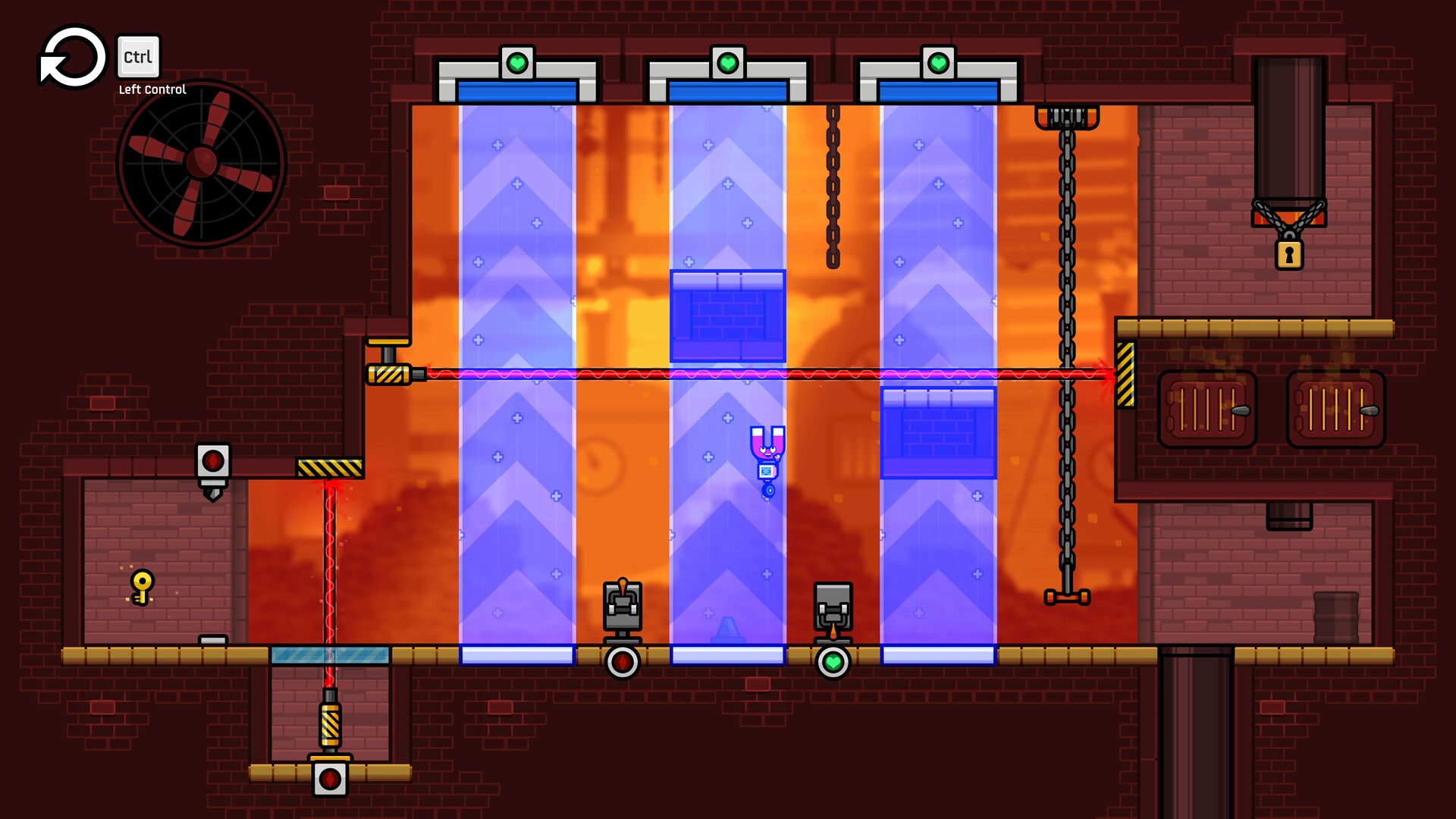
I don’t want to give the impression that all of the puzzles in Mind Over Magnet are easy. There are some real head-scratchers throughout that stumped me for five or so minutes at a time, and towards the end of the game there are some downright tricky magnet manipulation tricks necessary. I did my best to refrain from using the in-game hint system as much as possible, and there’s even a skip level button which unlocks after a certain amount of time has passed if you get really stuck.
To me, the most interesting feature unlocks once you’ve beaten the game. Mind Over Magnet has a New Game Plus mode; remember a few weeks ago when we talked way too long about the new game plus in Silent Hill 2 and other games? Well, this NG+ mode contains a developer’s commentary much akin to those from Valve in Portal and Half-Life, where Mark Brown explains the ideas and development process that led to the levels you are currently playing. It’s excellent, and I replayed the entire game just to hear all the details.
“That’s A New Magnet!”
Last week’s announcement of the Game of the Year nominees from The Game Awards caused a bit of a stir in online communities, as they usually do. This is to be expected and should, as always, be ignored. No matter how you feel about the titles selected, it is undeniably been a stellar year for indie games. I’m not alone in thinking that – look at The Independent Game Awards or The Game Awards For People Who Can’t Afford The Game Awards to see dozens, if not hundreds, of fantastic titles released in 2024.
I’ve been on the TGA voting panel in the past, and if I were on there still I’d be advocating hard for Mind Over Magnet to be acknowledged in some fashion. Best Debut Title, Best Sound Design, Best Art Direction all feel like possibilities. Best Kids Game? Mind Over Magnet is a great co-op puzzle game for kids, despite already being a fantastic single-player puzzle game for adults. I don’t want to rehash all the same arguments I made in last month’s Is Balatro Still Game Of The Year? issue, but, at the very least, the following deserves to be said: In this house, Mind Over Magnet is a winner.
THIS WEEK’S RECOMMENDED MEDIA:
- The most recent episode of Writing On Games (below) provides a very interesting look at the wrong way to use AI in game development. One day soon we’ll discuss other, much better ways AI can be helpful for developers, but until then this is a good taste of what to avoid:

About the Author

Discover more from Bonus Action
Subscribe to get the latest posts sent to your email.