The thing about reaching your Slay the Spire threshold is that you don’t notice until you’ve already crossed it. One day you’re building synergies with gleeful abandon and then, without much ceremony, it’s simply over. The roguelike deckbuilder, as a viable object of my attention, had run its course. All the shuffling and the dying and the cheerful obligation of doing it again. I was ready to put it behind me
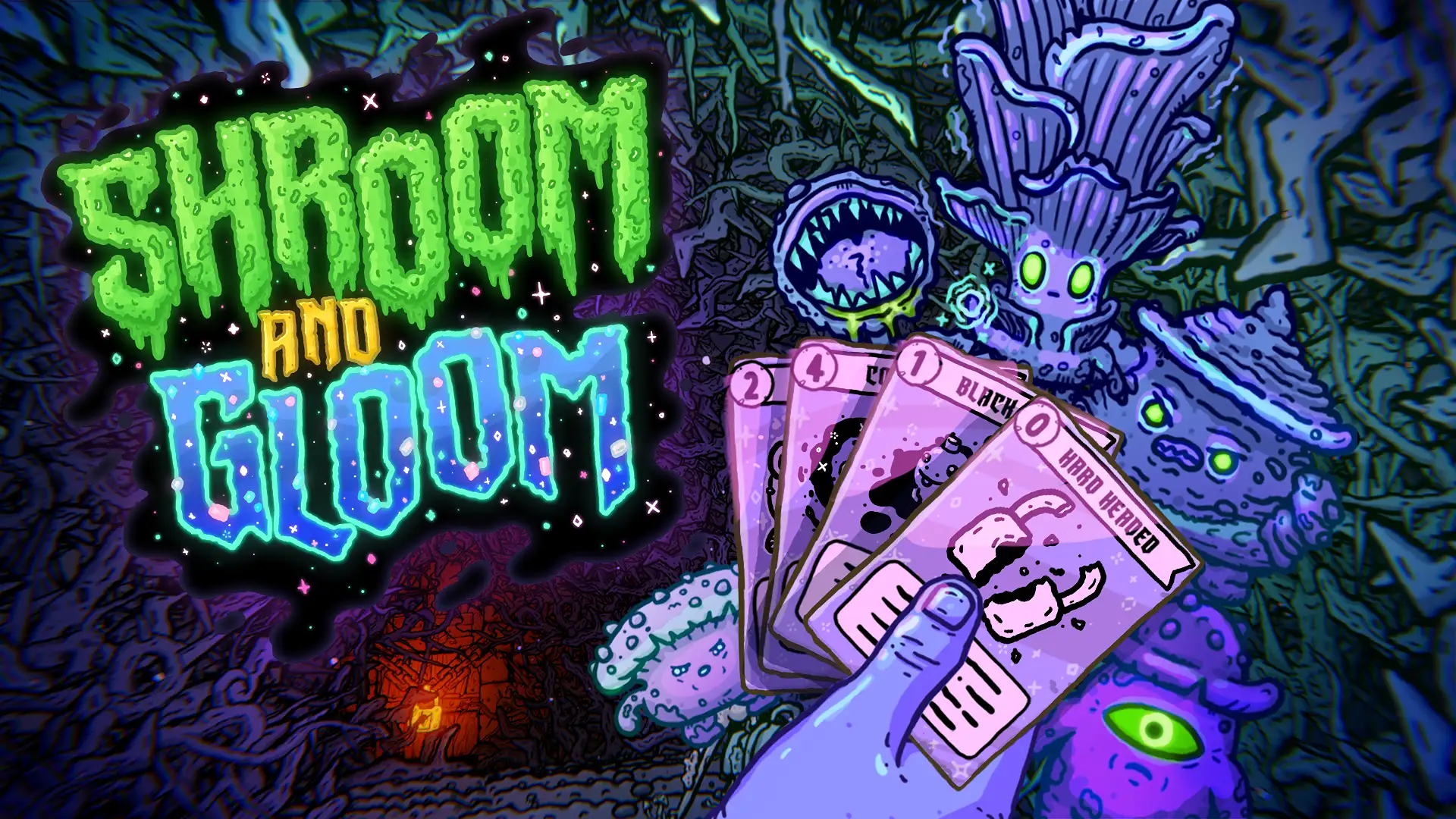
Shroom and Gloom had other ideas, though, as it wormed its way to my wishlist in spite of my wishes. We first met through Team Lazerbeam’s TikTok, which is not something I’m proud of and not the way I’d suggest you get your game recommendations, but it burrowed in before I had a chance to close the app.
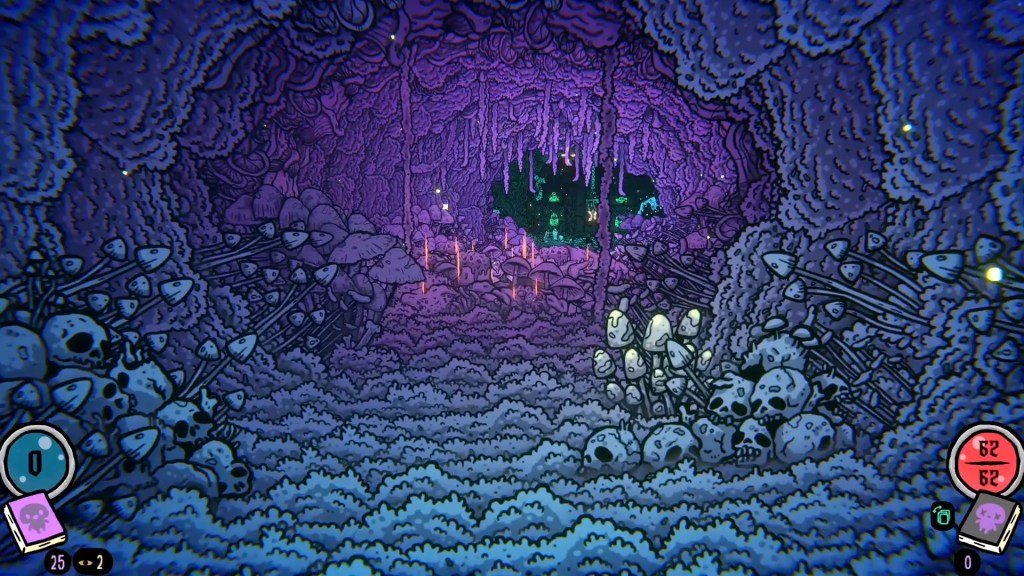
The first reel was just the environments: hand-drawn fungi pressing in from every direction, a first-person crawl through something that looked less like a dungeon and more like the inside of a thing left in a drawer for too long. I followed the account immediately.
It was only several videos later that I clocked the familiar cards, then the clichéd roguelite map. I screeched in horror and closed the app, but Shroom and Gloom had already germinated in the back of my head without asking permission. Steam Next Fest flung it back at me and, reluctantly, I played one demo. That was that.
Cardboard Never Looked This Menacing
Team Lazerbeam describes their visual approach as hand-drawn art and animations colliding with rich 3D spaces, which is accurate but undersells the result considerably.
What they’ve actually built looks like someone stacked sheets of illustrated cardboard one behind the other and then lit the whole arrangement from within.
From the side, in their own behind-the-scenes footage, that’s almost literally what it is: layer after layer of 2D illustration assembled into a corridor you can walk through. The effect in motion is genuinely singular, and no screenshot will do it justice. Really, you should check it out!
The atmosphere this technique produces is one of the game’s most masterful achievements. Everything in these tunnels is slightly too organic, slightly too present, masquerading as a dungeon while feeling more like something that grew itself into the shape of one. The colour palette is vivid rather than washed-out, which sounds counterintuitive for something so foreboding — it’s alarming, livid, and impossible to look away from.
Eat the Monsters. Get Some Protein.
You have already tried the daggers, the arrows, and the spells. Here is a game that would like you to consider, as a tactical alternative: unhinging your jaw and swallowing.
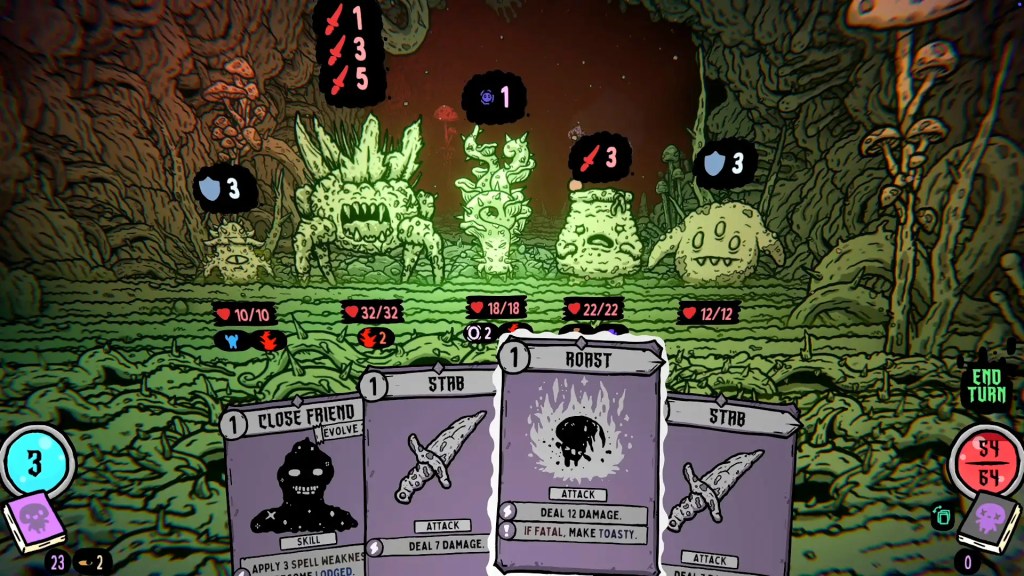
You are here to season your enemies, skewer them, roast them, and then eat them, because health restoration in this game is a culinary enterprise. A smorgasbord of status effects accrues through this process, all of them themed around seasoning and sauces rather than the standard elemental vocabulary, and the result is a combat loop that tastes, figuratively speaking, like nothing else I’ve played recently.
Cards grow, too, which is the other thing. That low-level opening jab can be modified across runs into something that would concern a mushroom. The potential for broken builds is very much real, and the game seems chuffed to let you discover them the hard way, by dying first.
The Cave Grows Its Own Dark
What makes Shroom and Gloom genuinely interesting is the second deck. Outside of combat, the Explore deck handles everything else from the shovels that dig up buried cards, to the keys that spring caged birds loose to scout ahead, and even the food you can offer a resident rat in exchange for a perk. There is an almost point-and-click elegance to these rooms, and every action costs energy you will have to rest to reclaim.
Resting is where the Gloom comes in. The Gloom grows when you sleep, and how much damage it deals depends on how deep you have gone and how long you have been toiling down here.
There is always one more chest, one more door, or one more pocket of dark with something shifting inside it that won’t let you go.
I mean, not literally. You could leave at any moment as long as you’ve unlocked the exit door… but are you really about to leave that chest unopened, that bird caged, and that weird creepy-crawly begging for food, unfed?
No, you should sit here in the accruing darkness and sacrifice your health to find out what is behind it. Yes, yes. The Gloom beckons you. Its secrets compel you. The potential for growth demands it of you.

Shroom and Gloom is in early access at $14.99, and the content for now is limited.
After six hours, I have yet to unlock a second character (I may just suck at the game, mind you), and the post-run wrap-up is longer than I would like when I am already reaching for the next one.
But these feel like the growing pains of a game with a genuine idea at its centre, slung into early access in a moreish, playable state by a studio that clearly built this for the love of the thing.
The creature waiting at the end of each failed run, appraising whether you are finally ripe enough to be eaten, is the best kind of motivation. I have disappointed it several times and stood there forlornly as it found me wanting. I intend to disappoint it several more.
Still here? Good.
That means the article did its job! If you’d like to see more of them (and get first crack at what’s next) our Patreon’s the place.
About the Author

Discover more from Bonus Action
Subscribe to get the latest posts sent to your email.