I have spent an embarrassing number of hours watching a small alien creature grow a third eye and a pair of spiky shoulder plates because I made a DNA choice seventeen levels ago that I didn’t fully understand at the time.
That’s the trick Voidling Bound keeps playing on you: it looks like a game about shooting things in space, and it is, but what it’s really doing is making you care so much about a creature you built from scratch that you’ll replay a mission just to see a different evolutionary branch.
Hatchery Games is a Quebec City indie studio made up of ex-Skylanders developers who also carry credits on Borderlands 3 and Call of Duty, and within about ten minutes of playing, that makes complete sense. The visual DNA is unmistakable: saturated, chunky, cartoonishly alive, somewhere between a Saturday morning show and a fever dream. The difference is that Skylanders asked you to buy a plastic toy to play a different character. Voidling Bound just gives you the biology.
Key Details
- Release date: June 9, 2026
- Developer: Hatchery Games
- Publisher: Hatchery Games
- Price: TBA
- Platforms: Steam (PC only at launch; PS5, Xbox Series X/S, Nintendo Switch 2 TBA)
- Review code provided: Yes, for PC
Every Creature is An Eevee
Every creature in Voidling Bound can become something completely different from every other creature of the same species, depending entirely on the choices you make. It is, in other words, a game made entirely of Eevees.


If you know Pokémon, you know that almost every species follows the same fixed three-stage line: Bulbasaur becomes Ivysaur becomes Venusaur, and that’s that. Eevee is the famous exception, the one capable of evolving into eight completely different forms depending on what you expose it to.
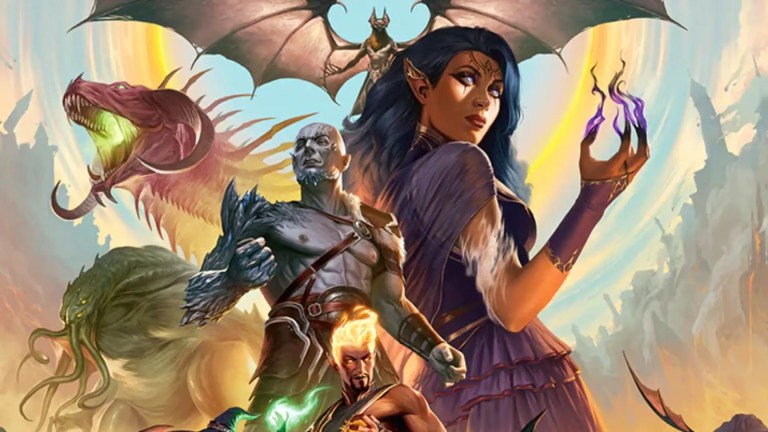
Voidling Bound takes that exception and makes it the rule. Every Voidling you hatch starts bare-bones and undefined, and through a branching evolution tree, you steer it toward a finished creature that looks and plays nothing like the same species raised on a different DNA path. The first fork assigns an elemental type: fire, cryo, electro, nature, and others.
Every subsequent choice shapes what that elemental type does in combat and, crucially, what the creature looks like. Choose to send your electric Voidling down the “bouncing projectile” path, and it sprouts one set of features. Push it toward a single devastating burst, and it grows into something else entirely. By the time you reach the final evolutionary stage, you’ve designed the thing. The appearance is not cosmetic, but the record of every decision you made.
This is the part that kept me playing long past any reasonable hour. There are sixty-two species choices across branching paths, and the compulsion to see what the next fork unlocks is genuinely hard to shut down.
Spore, if Spore Knew What it Wanted to Be
Every review of this game will mention Spore, and those reviews are not wrong. The creature creator energy is very present.

But here’s my honest memory of Spore: I spent three hours building a creature and then lost interest the moment the actual game started. The creature creator was the game, and the colony management that followed felt like it belonged to a different, worse product.
Voidling Bound does not have this problem. The creature creation and the third-person shooter are load-bearing walls for each other. The thing you build is the thing you fight with, and the way it fights is a direct consequence of the choices you made while building it.
Warframe is the other comparison that keeps floating around, and it holds up: there is that same satisfaction in understanding the geometry of your own combat, in knowing exactly what your creature does and positioning yourself to let it do that thing repeatedly and well.
Between missions, you return to your station, a hub populated by a small cast of NPCs who send you back out into the field. Rachel manages the extraction mission panels. There’s a breeding station, a training station, and a full roster of creatures at various stages of development.
The loop is: go out, cleanse planet, find eggs, hatch them, evolve them, go out again. The exploration missions, where you cleanse areas, defeat a boss, and scavenge collectibles shaped like alien flora rather than treasure chests, are where the game is most fully itself. The wave-based arena missions are fine, but they’re not the reason I kept coming back to the game.
Where it Earns The Difficulty
There is a difficulty selection screen you can access at any point in the game, which is a generous design choice: set it to easy, and you can breathe through the whole thing if that’s what you want. I chose the second difficulty, which is not hard mode, and I am dying quite a bit.


The game will let you coast through its early missions regardless. This is a trap. Once the level requirements and elemental weaknesses start mattering, a team you haven’t been paying attention to will get humiliated, and you’ll deserve it.
Voidling Bound rewards players who treat it as a strategy problem: matching creature types to mission parameters, rotating your roster, and keeping eggs in the hatcher at all times.
The shooting feels the way it should, which is not a given, and so does hatching an egg: the animation has a physical satisfaction to it that makes you want to immediately hatch another batch.
You can feel the team’s pedigree in how movement and combat lock together. Exploring the maps has a low-grade Ratchet and Clank quality that suits the whole aesthetic: the platforming rewards curiosity, golden eggs hide in spots that require a little lateral thinking to reach, and finding one of those golden eggs, which hatches into a fully evolved creature, is incredibly satisfying.
A Story in Need of a Story
The story is doing its best, but the characters do not have voices, and they do not have personalities strong enough to compensate for that absence. This is a gameplay-first game, and it knows it. If you need a narrative reason to care about what you’re doing in the world, Voidling Bound will not supply one.
On the exploration front, the maps broke for me more than once. Exploration is rewarded so consistently that when you push into a corner looking for a hidden egg and instead clip out of bounds and die, the betrayal feels specific and personal. You were doing exactly the thing the game taught you to do.
Similarly, I hit one moment where an objective floated over a lava-floored arena, and my melee creature had no viable way to reach it. It happened once, and it was irritating precisely because the game had let me choose that build freely and then penalized me for it. A game that asks you to invest this much in your choices should not punish you for making them.
These are polish problems, and polish problems have patches. They are worth saying out loud because a game this confident about its own systems deserves feedback to match that confidence.
Verdict: 9/10
Voidling Bound is Hatchery Games’ debut, and it is not a modest one. The evolution system is the most genuinely interesting take on creature customization I’ve seen since Spore’s creature creator, which is high praise, even accounting for the fact that I cannot tell you anything about what happened after that in Spore.
What happens after that in Voidling Bound is the whole point. The game gives you something worth caring about and then sends you out into space to prove you deserve to keep it.
**Bonus Action was provided with a PC code for Voidling Bound for the purpose of this review**
About the Author

Discover more from Bonus Action
Subscribe to get the latest posts sent to your email.