
Image via Hazelight
Split Fiction is the latest offering from Hazelight Studios, the geniuses behind It Takes Two and A Way Out.
If you’ve played either of those, you already know that this studio has a knack for creating deep, cooperative experiences that are as fun as they’re emotionally engaging.
But does Split Fiction manage to pull off the same magic? Let’s figure it out.
Key Details
- Platforms: PC, PlayStation 5, Xbox X & S
- Price: $49
- Developer: Hazelight Studios
- Review copy provided: Yes
One fiction, two characters
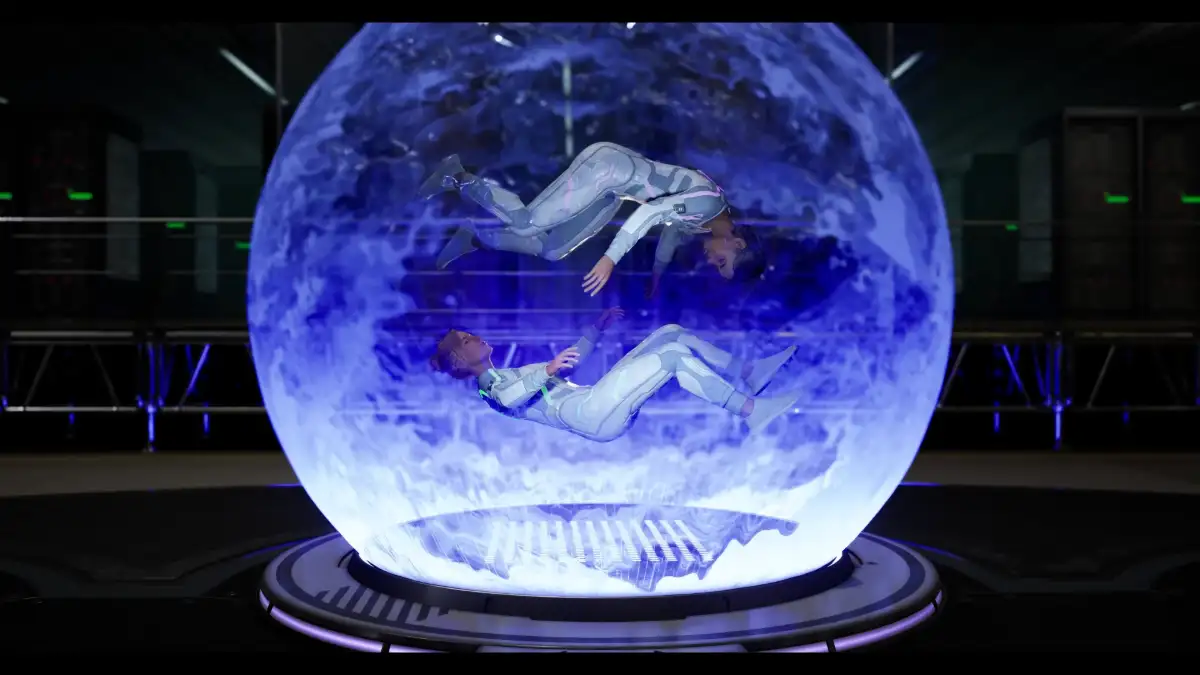
Split Fiction kicks off with a pretty wild yet believable premise. The story revolves around two writers, Mio and Zoe, who are invited to test out a machine that brings stories to life.
Of course, things go haywire, and their respective genres – Mio’s sci-fi and Zoe’s fantasy – get mashed together into one mind-bending simulation.
One moment, you’re in this Cyberpunk 2077 world, and the next, you’re taking a leap of faith to a haystack. And if that sounds like it’s gonna be a whirlwind, you’re absolutely right.
At its core, Split Fiction is all about cooperation, which is Hazelight’s bread and butter. Each player controls either Mio or Zoe, and you have to work together with your distinct yet in-sync abilities to navigate through the madness of their combined worlds.
Their powers and skills are radically different; you’re not working with the same weapons or abilities. One player gets a flying dragon while the other gets a rolling one.
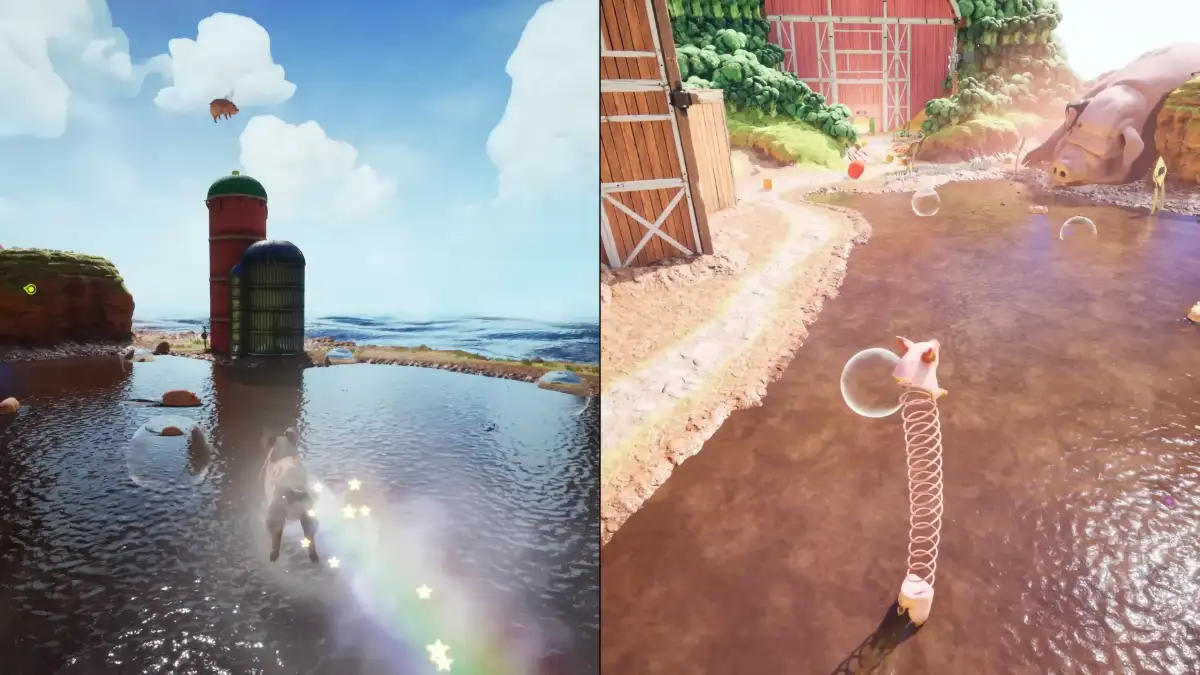
Or, one player gets a rainbow farting pig, the other gets a slinky pig. This means you can’t just waltz through the game like a couple of lone wolves. Sure, one of you is probably getting the short end of the stick, but hey, it’s mostly balanced.
Plus, how many other games make you shout “Let me fart my way to you”?
Regardless of the scenario you find yourselves in, you’ve gotta talk to each other, strategize, and genuinely sync up to survive the simulation.
A dynamic duo
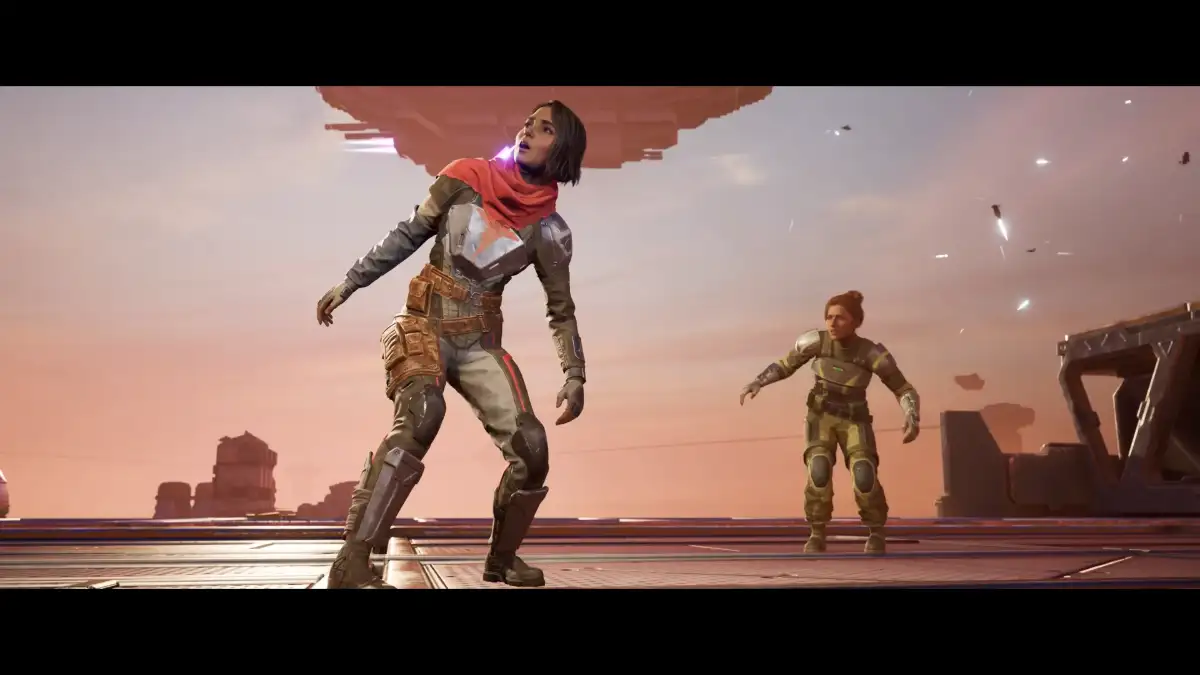
As much as Split Fiction dazzles with its innovative mechanics, it also does a pretty good job in the narrative department.
Whether it’s through cutscenes or mid-platforming dialogue, the game explores the relationship between Mio and Zo.
Mio is this meticulous, sci-fi-obsessed urbanite, while Zoe is a carefree, fantasy-loving country girl. But that’s exactly where the magic happens.
As they’re forced into each other’s worlds, you see them grow, evolve, and learn the true meaning of cooperation – not just for survival but because they’ve found ways to connect to each other beyond their superficial differences.

There’s an undeniable depth in their ever-evolving dynamic that resembles that of It Takes Two. However, whereas the banter between two near-divorcing parents is understandable, Mio and Zoe’s anger at each other feels a bit out of nowhere at first.
That said, the dialogue is sharp, often witty, and always purposeful. Hazelight doesn’t just slap together a narrative for the sake of gameplay – every twist feels like it’s there to drive the emotional core of the game forward.
The story, though predictable, also offers a cheeky critique of the current state of the writing industry. There are digs at clichés, tropes, and even the rise of AI-generated content. It’s a story about stories, and it’s as clever as it is entertaining.
The cooperative dream (or nightmare)
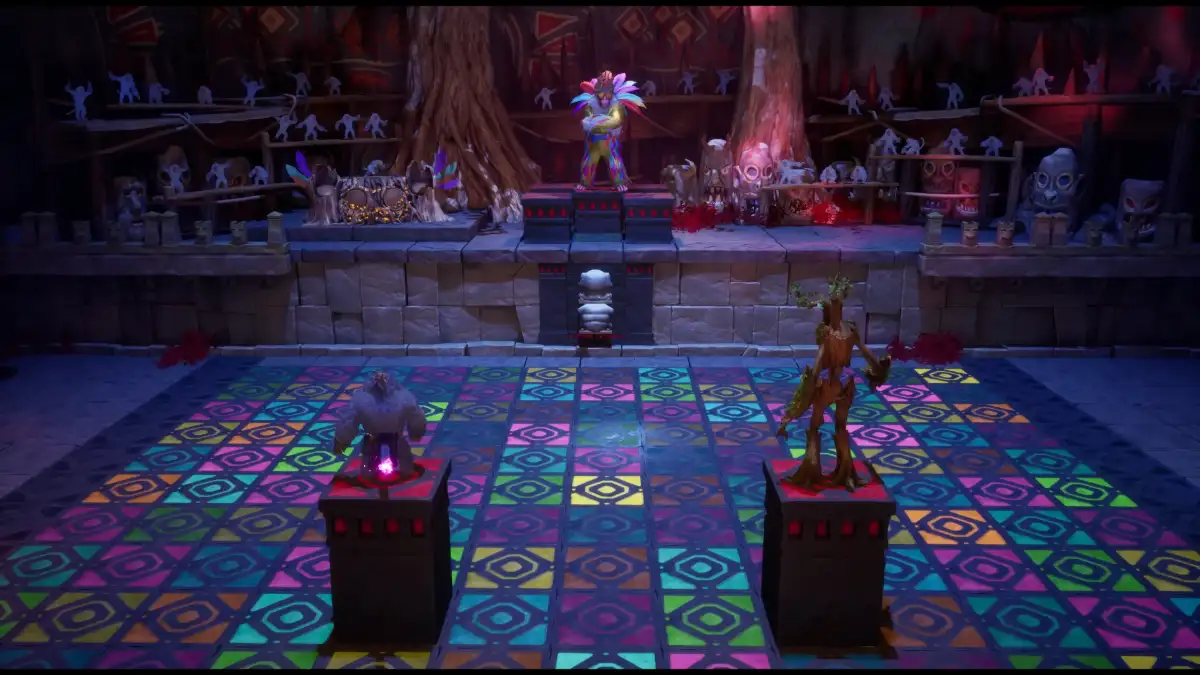
There’s no doubt that what makes Split Fiction tick is the gameplay.
If you’ve played other Hazelight games, you’ll feel right at home with the mechanics here. This isn’t your typical action-adventure game where you can just go on autopilot and leave the other player behind.
Split Fiction constantly requires both players to think on their feet and make decisions in tandem. Think of it like a dance – if you’re not in sync with your partner, you’re going to trip over your own feet.
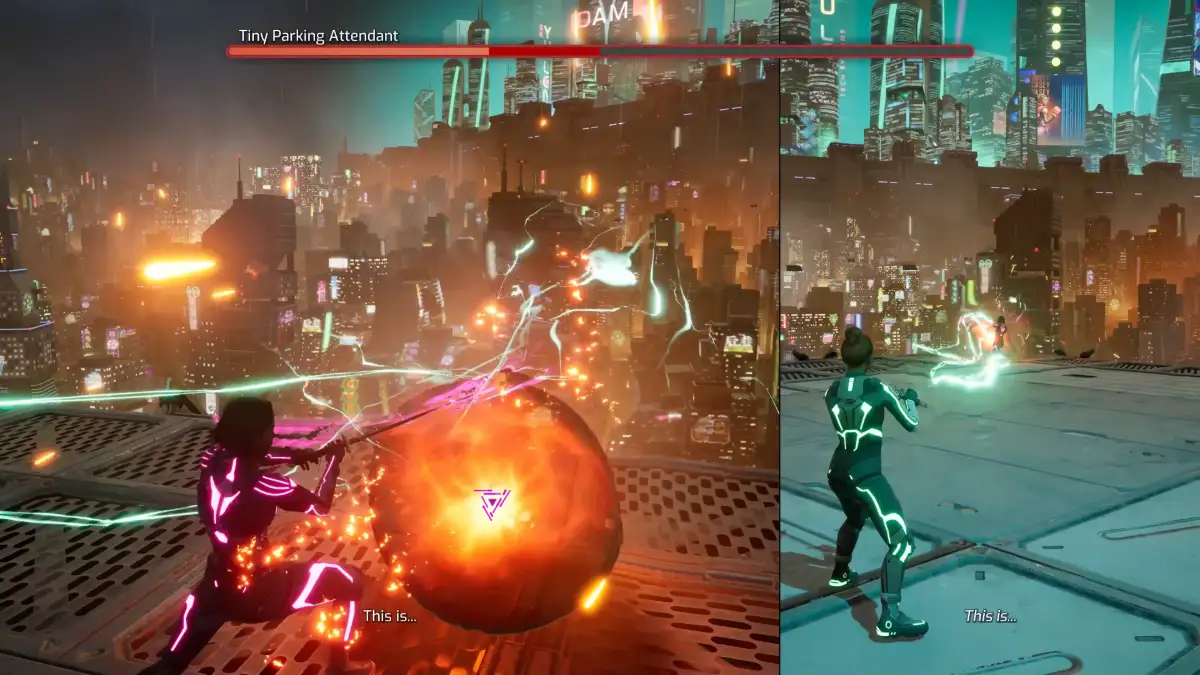
The levels are a riot of variety, mixing genres, environments, and gameplay styles. One moment, you’re jumping through a dystopian city, avoiding laser traps and hacking into security systems. The next, you’re riding a dragon through a magical forest, blasting fireballs at incoming enemies.
There are driving sections, puzzle-solving challenges, and captcha solving. In short, it never lets you get bored. The game keeps throwing new mechanics at you, constantly keeping the experience fresh.
The cooperation isn’t just about solving puzzles together, either. You need to rely on each other’s abilities in very specific ways – ways that, if misused, could get you killed.
There’s a seamless integration of asymmetric gameplay, where each player has a unique skill set that complements the other. For instance, Mio might be able to leap from platforms while Zoe is in charge of controlling said platforms.

If the gods are feeling generous and decide to bless your partner with the will to actually progress the game instead of just laughing at your pixelated demise, you might maybe get to land on that platform.
The trick is figuring out when to use each power, and how to use them together, to unlock new paths or defeat bosses. It’s the kind of game that demands teamwork in a way that’s both challenging and incredibly satisfying.
Or, if you’re both feeling troll-y, you might end up on a 15-minute murder spree, coming up with increasingly ridiculous ways to get back at each other using your totally weird, creative toolset.
And yes, the game can get tough. It’s not brutally difficult, but you’ll definitely hit moments that require quick thinking and sharp coordination.
A feast for the eyes
If you’re into stunning visuals, Split Fiction will not disappoint. The game looks fantastic, with rich, detailed environments that shift between futuristic dystopias and fantasy landscapes.
The world design here is phenomenal, and Hazelight has clearly spent a lot of time ensuring each universe feels distinct and alive. It’s not necessarily a graphical powerhouse in the way that some AAA titles are, but it’s striking in its own right. The textures are rich, and the lighting, especially in the sci-fi sections, is moody and atmospheric.
The character models, too, are impressive – especially Mio and Zoe, whose design evolves in fascinating ways as they adapt to the strange worlds around them. The animations are smooth, fluid, and make the game feel immersive. You can tell that Hazelight has put a lot of love into the presentation here, and it shows.
The Verdict: 9/10
Split Fiction is a triumph for co-op games. It’s an unpredictable, engaging, and deeply rewarding cooperative adventure that keeps you on your toes from start to finish.
The story is sharp, the gameplay is innovative, and the emotional payoff is real. Sure, it might get a little repetitive in the final stretch, but that’s a minor flaw in what is otherwise a masterclass in cooperative game design.
If you’re looking for a game that celebrates the magic of working together, one that’s bursting with creativity and personality, then Split Fiction is a must-play.
Trust me, you and your co-op buddy will be talking about this one long after you’ve put the controller down.
**Bonus Action was provided with two PC codes of Split Fiction for the purpose of this review**
About the Author

Discover more from Bonus Action
Subscribe to get the latest posts sent to your email.





![Gnome Chompski Left 4 Dead 2]](https://bonus-action.com/wp-content/uploads/2026/05/Gnome-Chompski-Left-4-Dead-2-150x150.webp?crop=1)