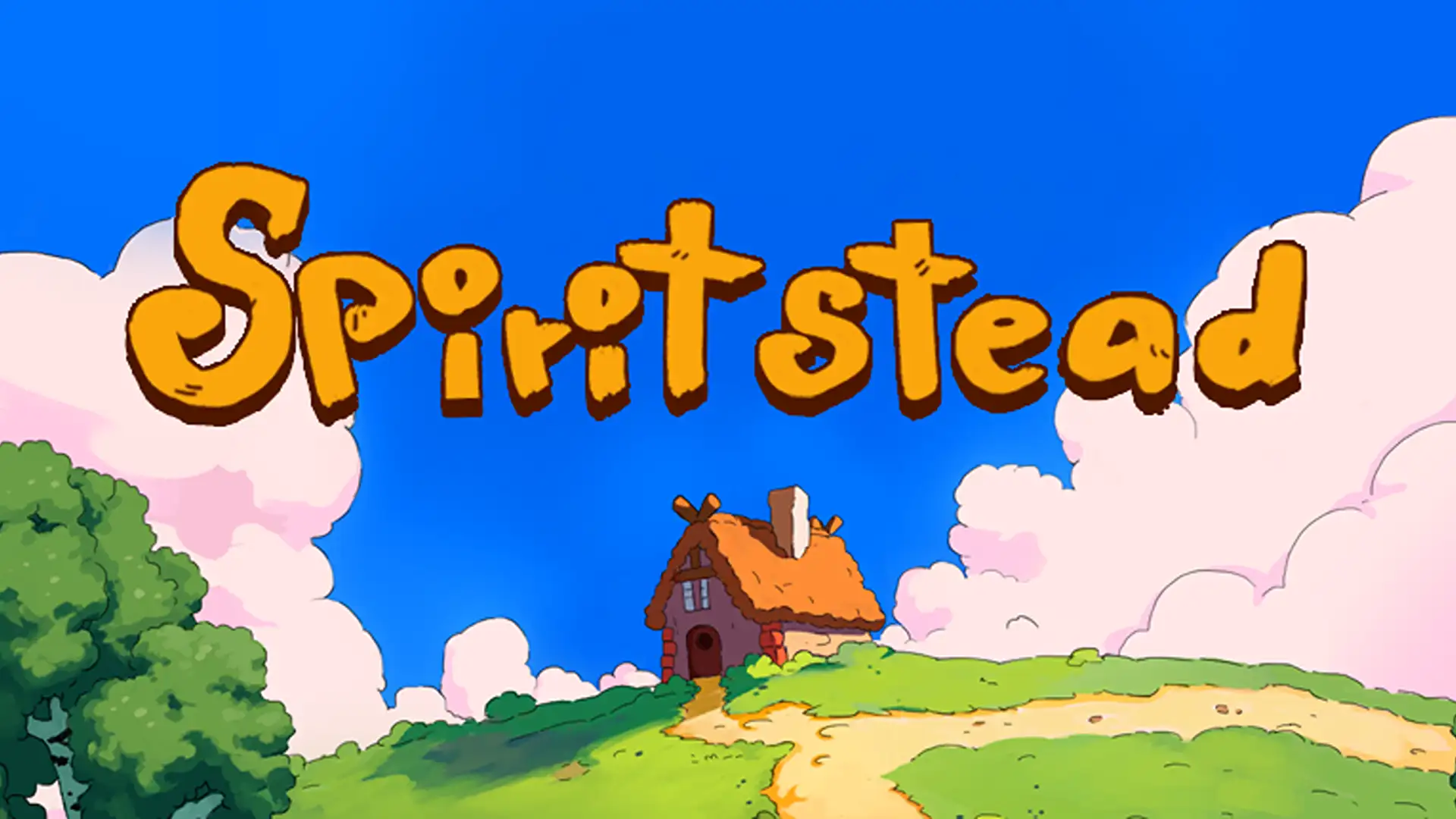
Fifteen minutes into Spiritstead, I built a house, put my villagers to work, and held a chicken over a bonfire for three full seconds. Nobody explained why, really. The prompt was just there, so I did it, and that is apparently how you summon Peppok, the first of many spirits who will spend the rest of the game quietly doing my job for me.
That’s the trick Spiritstead keeps playing on you. It looks like a small, pretty city builder about farming carrots and stacking huts, and it is, but what it’s actually doing is teaching you a system through rituals so odd you’ll remember them long after you’ve forgotten which building unlocks what.
Spiritstead is the debut game from Turbo Dog Games, a four-person studio based in Europe, supported by publisher WINGS. There’s no back catalogue to compare it to, as this is just what four people decided a cozy city builder should feel like, and mostly, they nailed it.
Key Details
- Release date: August 6, 2026
- Developer: Turbo Dog Games
- Publisher: Turbo Dog Games, WINGS
- Price: $9.99
- Platforms: Steam
- Review code provided: Yes.
The Rituals Do the Tutorial’s Job
You will build farming plots and sawmills and exactly one shared toilet for your entire population, and you will quickly discover that clicking on every worker to collect wood and carrots gets old fast. So you summon Nibbin, a small ghost who collects resources for you, which frees you up to build chicken coops and sheep farms and pretend you always meant to run a proper farm empire.
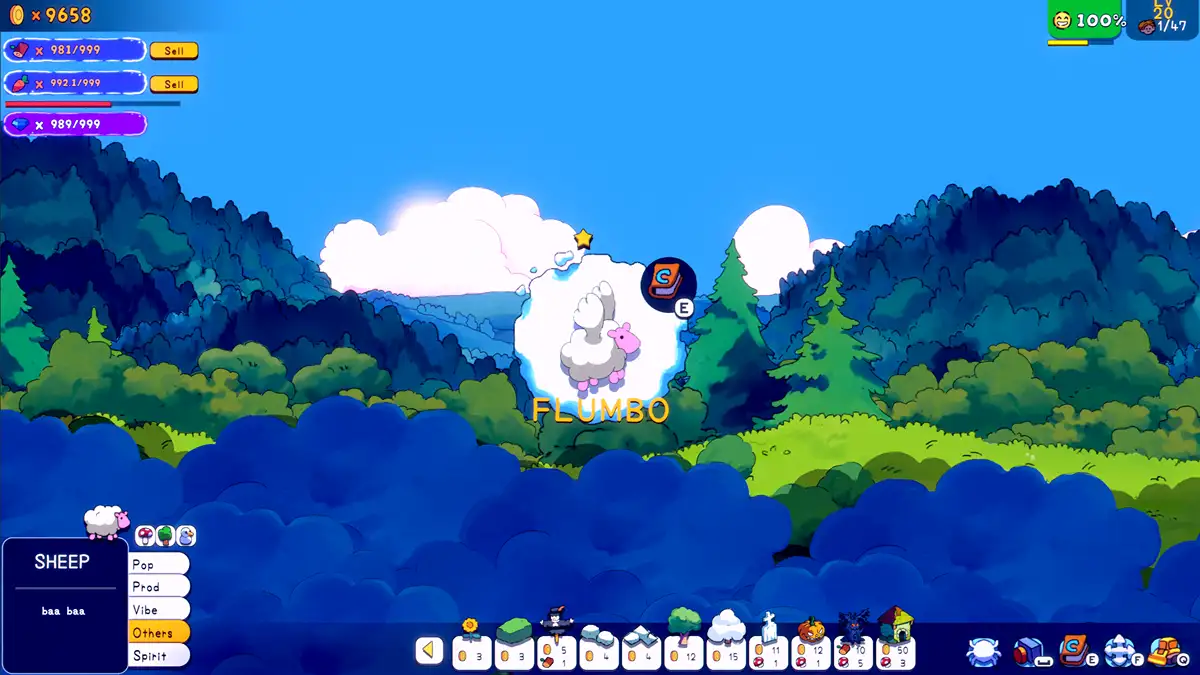
Soon enough, eggs and wool pile up all over your town, mostly because you didn’t think to build fences. The fix is flinging a sheep into the sky until it grows wings and shoving a chicken into your food warehouse so, in the game’s own words, “the producer meets the pantry.” This is how you get Wooly and Yolkos, who’ll collect animal produce for you.
I promise did not make any of this up!
An Automation Game Wearing a Cozy Disguise
Once you’ve collected a handful of spirits, Spiritstead stops feeling like a city builder and starts feeling like an automation game, the kind of satisfaction you get from Ball x Pit or Satisfactory or the factory-brained corner of Palworld. Assign the right spirits to the right jobs and your entire town runs itself. You earned that, mostly by being clever.
Or you paid your way there with gold, because Spiritstead also sells hints. Nobody forces you to buy them, but I would have loved the chance to figure out every spirit through world clues alone instead of a menu with a price tag on it. That one choice cheapens a game that otherwise wants you to feel smart for solving it yourself.

No Civilization, No Problem
If you came here hoping for Civilization or Frostpunk levels of complexity, close the tab now. There is no diplomacy, no tech tree, and no war. Villagers grumble about workload or about a very specific unauthorized bathroom break somewhere on the map, and you fix it with one click and a trip to the bonfire, which apparently cures everything from hunger to bad vibes.
You can even set up a trader to auto-sell your surplus once it hits a certain percentage and you never touch the sell button again. Spiritstead is not interested in friction. Whether that’s a feature or a flaw depends entirely on what kind of player you are.
The Growth Is the Point
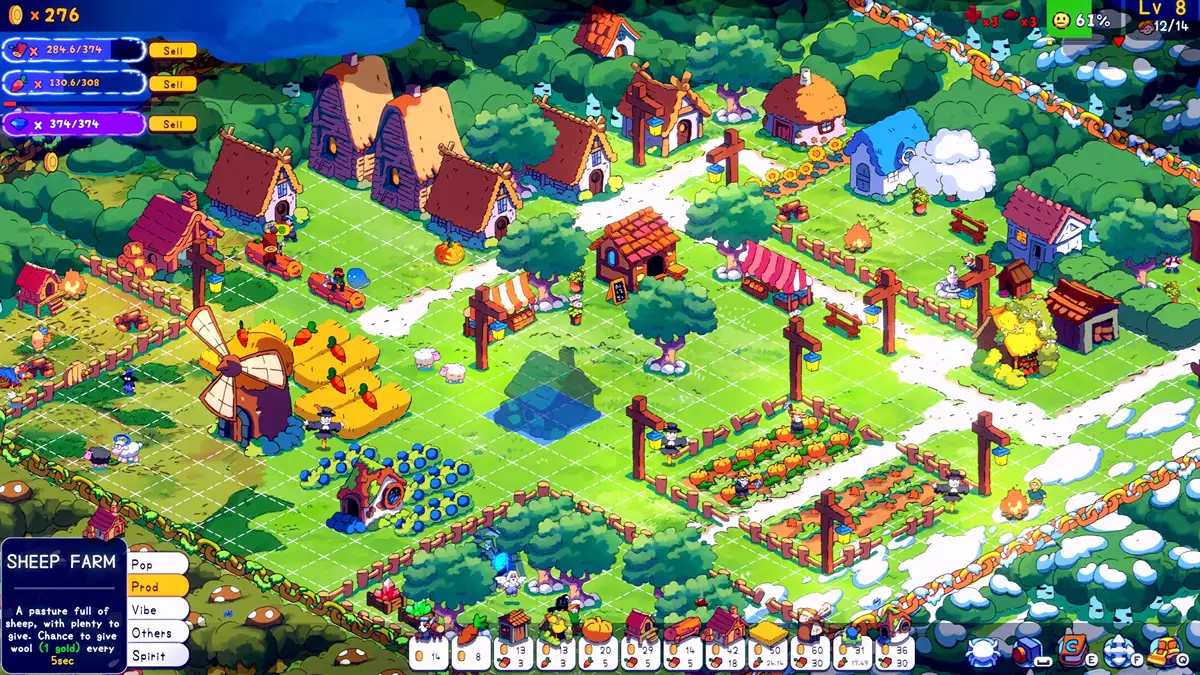
There’s real pleasure in that lack of resistance. Watching your resources tick up until a basic farmer’s house graduates into an artisan’s cottage, or until you can finally build a Happy Tavern or a Sauna, scratches the same itch as any good incremental game, minus the guilt of doing nothing productive with your afternoon. Eventually you unlock new biomes on either side of your town, along with new buildings, resources, and more spirits.
There’s technically a story here, something about restoring the land and rebuilding the Grand Spirit Sanctuary to balance humans and spirits, and it’s charming without trying to be profound. Adventure Mode wraps in well under eight hours, but if you want zero goals and zero pressure, Creative Mode strips the objectives out entirely and just lets you build, which might be the purest version of what Spiritstead is going for.
Verdict: 8/10
It’s rare for a game to appeal to both the part of me that wants to lie in a hammock and the part of me that wants a spreadsheet, and Spiritstead gets both halves of my brain to shut up and get along.
My only real complaint is that the spirits, the actual heart of the game, deserved a little more mystery and a little less menu. For nine dollars and ninety-nine cents from a four-person debut studio, that’s a small price to pay for a genuinely confident first game.
**Bonus Action was provided with a PC code for Spiritstead for the purpose of this review**
Still here? Good.
That means the article did its job! If you’d like to see more of them (and get first crack at what’s next) our Patreon’s the place.
About the Author

Discover more from Bonus Action
Subscribe to get the latest posts sent to your email.