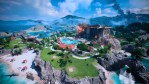
I’m pretty sure I have never once sold an item at the correct price in Moonlighter. Mind you, that’s dozens of hours across two separate playthroughs, and I have made my peace with the fact that I am too much of a people-pleaser to pick the right price.
So when I got to talk to Víctor Ribera, Design Director at Digital Sun, during Guadalindie 2026, I told him he’d stolen hours of my life and only given me forty-five minutes back for an interview; I meant it as a compliment about a game that has humbled me for years.
If you’ve been stalking the wishlist button, unsure whether the full release is worth surrendering your evenings to, here’s what its own director told me about how close the whole thing came to going to shit, and everything else Digital Sun has cooking in the meantime.
A Market Lousy With Roguelikes
If you go outside and lift a rock, a roguelike game will crawl from under it. It’s true, I swear it!
Moonlighter 2 is stepping into a genre that’s, needless to say, cacophonous as hell. Hades and its sequel, Slay the Spire and its sequel, the sequel (spinoff?) Vampire Crawlers, Megabonk, Ball x Pit (none of which are actually sequels to anything, for the record), the list keeps going. I asked Ribera why now, and whether he worries about getting lost in the noise.

His answer split in two. First, timing: the decisions behind Moonlighter 2 were made when the market wasn’t nearly this saturated, though he admits basically everything is saturated now.
Second, and more interesting, is what he thinks nobody else is doing. “If I had a time machine,” he said, “I’d probably tell everyone, let’s commit fully to this and not to that, because I know some of you won’t like it, since it’s more expensive to make. A content-driven game gives you far more hours than a story game that ends, and that’s it.”
By “content-driven,” he means systems that keep generating new combinations the more you play: the backpack, the dungeon effects, the shop effects, stacked so the studio gets more mileage out of every asset.
From Messy Demo to 1.0 Launch
The rockiest stretch of Moonlighter 2‘s development wasn’t a bug or a missed deadline but a demo. When Digital Sun publicly showed the game’s redesigned, more RNG-heavy shop mechanic, the backlash was immediate and loud enough that the studio put up a Steam post begging players to fill out a feedback form.
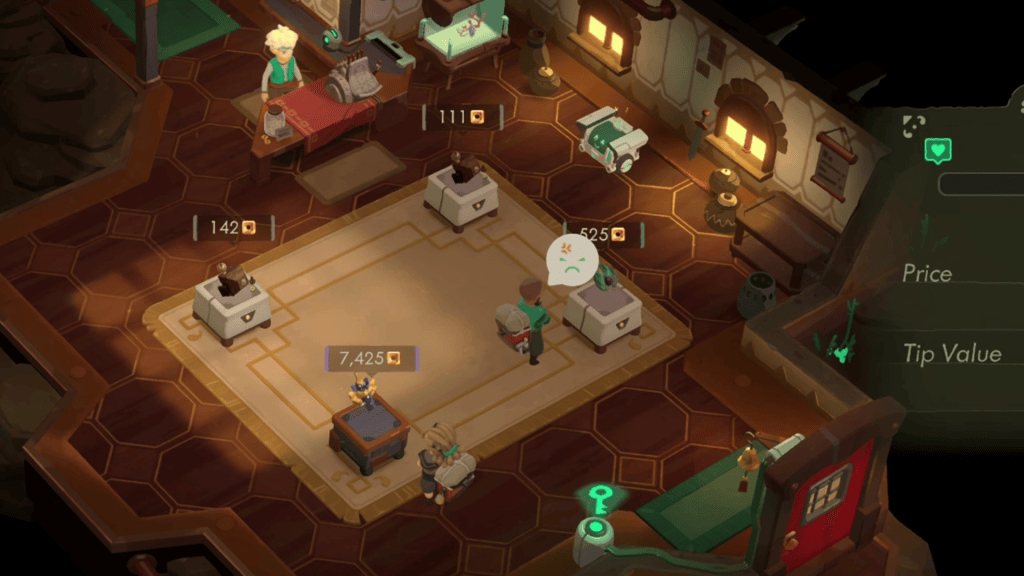
“The demo was a bucket of cold water over our heads,” Ribera told me, “an anvil-sized chunk of reality on our minds. Even if we’re totally sure this is the shop we want, no, we can’t leave it like that, because we owe it to our players. In the end, if the players aren’t going to like it, who are we even making the game for? I have to make a game that I like and that I’m happy with every system in, but if nobody else likes it, I’m not making a good game. I’m not doing my job well as design director.”
What followed was a week of what he called pure desperation, endless meetings, ideas that didn’t get structured half as well as they should have, under pressure to answer immediately.
The team landed on a version they hoped wouldn’t alienate the players who liked the old system while addressing the ones who hated it. It hasn’t pleased everyone; some still miss the original skill system, and Ribera doesn’t sugarcoat what he thinks of that kind of feedback: you can’t please everyone, but when the unhappy minority is the loudest voice in the room, you still have to actually look.
Pixel Doesn’t Pay Like It Used to
The jump from Moonlighter‘s pixel art to Moonlighter 2‘s full 3D was, by Ribera’s own account, the most argued-over decision of the whole project.
He’s not shy about admitting some fans were always going to bail. “There’s a chunk of people who say, I’m not playing this if it’s pixel art, and that group is bigger than you’d think,” he said. “Whatever we lose there, I think we gain a lot more in the market we’re opening up.” There’s a blunter commercial logic underneath it too: 3D lets the studio spend money in places that make things shine in ways 2D can no longer justify charging full price for.

It also just plain lets you hit harder. Digital Sun’s own comms lead, Isra Mallén, has said in an AMA that the shift to 3D was what finally let the team build combat out properly, and playing the sequel confirms it. Will now carries four separate weapon classes (sword, long sword, spear, gauntlets, each with its own combo tree), a ranged weapon that recharges off your melee hits, and a dodge roll with such absurd invincibility frames that the community’s collective advice boils down to “roll around like you’re Sonic and let physics sort out the rest.”
Knock a big enough enemy into Rupture, the purple-tinged stagger state that kicks in under fifty percent health, and you get to finish the job by clubbing them with your own backpack. None of that existed when Will was a sprite punching things in four directions.
Boss fights have scaled up to match, with The Herald throwing up energy shields you have to dance around, and Monte rides in on a giant stingray and rains weapons down from above. Pixel art would have buckled under the weight of it.
Never Just One Egg in the Basket
Digital Sun has spent years operating on a rule Ribera repeated to me almost like scripture: never put everything into a single game. “We’re a company that has always said we’re multi-project. We’ve never worked on just one,” he told me. “We’ve never had a hundred percent of the company working on a single project. That’s never happened. It hasn’t even happened at fifty percent.”
At the point during Moonlighter 2‘s development when the game’s own team hit around 35 people, he said the studio as a whole was closer to 70.
That philosophy is also, he’ll be the first to say, exactly what made things messy a few years back. When Cataclismo (Digital Sun’s Lego-brick castle-building RTS) was in active development alongside Moonlighter 2 and The Mageseeker, the three teams barely spoke the same technical language. “That group of three teams genuinely had some communication problems,” he said. “Passing along how we actually worked in Unity was really complicated at the time. I think with Cataclismo we paid the price for that to some extent. The game turns out fine, but when you look under the hood, what we learned here didn’t get applied there, or the other way around.”
Cataclismo, for the record, shipped its 1.0 in March 2025 and just picked up its first expansion, The Old Kingdom, on August 20, expanding the single-fortress formula into a multi-citadel campaign where you’re shuttling reinforcements and supply convoys between strongholds while the Mist’s nightly attacks escalate around the clock. It’s the “new content in the works for about a year” you may have heard whispers about, and it’s out now.
If it sounds like a lot of plates spinning for one shopkeeping roguelite and a brick-based RTS, consider that Digital Sun also found room in the schedule to fly in Hollow Knight composer Christopher Larkin to score Moonlighter 2‘s soundtrack.
The good news, Ribera says, is that the pipeline chaos taught the studio something it’s now actively reusing. “Now we have more knowledge and more involvement across the other projects,” he said. “I’m actually supporting programming on ReVamp right now, so I’m passing along a lot of what we learned on Moonlighter 2 to it, and to other projects too.”
Enter the Landlord Who Bites Back
ReVamp is Digital Sun’s next game, and it flips the studio’s usual formula on its head: you play Dracula, defending your own castle from waves of invading, torch-wielding mortals. Its director, Eric Benavente, has described it elsewhere as essentially “Castlevania in reverse,” with castle building by day, brutal sieges by night, except here you can personally step into the fray and swing Dracula’s own powers around. Digital Sun’s own team has taken to calling it a “tower defensevania,” which is either a great pitch or a terrible pun, possibly both.
Ribera was careful not to overclaim how much Moonlighter or Cataclismo DNA runs through it. “I’d say relatively little,” he told me, “because as a company we don’t marry ourselves to anything.” Where the inheritance does show up is in the art, courtesy of former Mageseeker hands who’d spent years elbow-deep in 2D and Cataclismo‘s aesthetic, and in the design and programming, which he says is drinking most heavily from Moonlighter 2‘s own tooling.
As for outside inspiration, Ribera pointed to the deckbuilder Monster Train as one source the ReVamp team has borrowed ideas from, though he was quick to add that the final mix feels genuinely singular.
Digital Sun is also, quietly, dabbling outside Unity for the first time. “We’re starting to dip a toe into Unreal,” Ribera said, though he’s not personally sold. “I wouldn’t make a game in Unreal. I’m not against people who are experts in it doing their thing; I just wouldn’t program it. I’d design instead.”
There’s no release date yet, but Ribera sounds more relaxed about ReVamp than he ever did about Moonlighter 2 at a comparable stage. “I wouldn’t say early stages,” he said. “I think the game is more solid than Moonlighter 2 was at a comparable point. We’re already talking publicly on Discord about doing playtests sometime relatively soon.”
Whatever Digital Sun’s sprawling, multi-project, Dracula-adjacent catalog ends up looking like, Ribera seems most interested in protecting one thing. “I’d like to think the games we make are reliable, finished experiences that are at least fun,” he said. “The Digital Sun name should mean a baseline of quality.”
As I gaze at my forty-five-plus hours since 1.0, and the Moonlighter 2 icon still pinned to my taskbar, sitting there next to Slack like it’s daring me to open it instead, I’d just like to say: mission accomplished.
Still here? Good.
That means the article did its job! If you’d like to see more of them (and get first crack at what’s next) our Patreon’s the place.
About the Author

Discover more from Bonus Action
Subscribe to get the latest posts sent to your email.