
I have a bad habit of making decisions purely to keep other people happy and then living with the fallout for far longer than the moment ever deserved. This means saying yes to a favor I did not have the bandwidth for or agreeing with someone I actually disagreed with because the alternative felt like a fight I did not have the stomach for that day.
I did not expect a video game about a fictional Round Table to make me stare directly at that habit, but here we are, and here is Sovereign Tower to thank for it.
The newest game from Wild Wits Games hands you a crown, a tower full of knights with feelings roughly the size of the kingdom you are meant to be ruling, and absolutely no good options, then leaves you to live with whatever you picked.
Key Details
- Release date: August 6, 2026
- Developer: Wild Wits Games
- Publisher: Curve Games
- Price: $19.99
- Platforms: Steam
- Review code provided: Yes For Steam
Baldur’s Gate 3 Minus the Combat, Plus the Paperwork

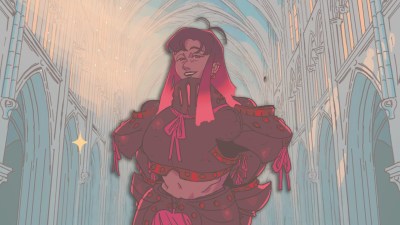
You are the newly crowned Sovereign of a magic tower, which in practice means your days become one long audience of people arriving to ask you to fix things you never signed up to fix.
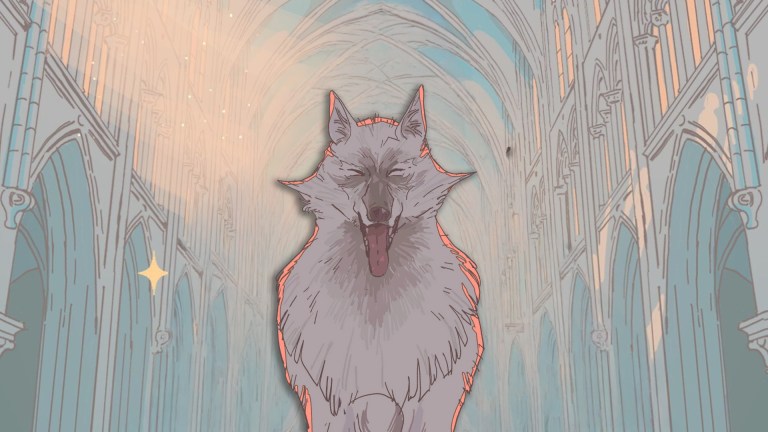
Ruling, it turns out, is no fun. In a matter of days, a goose has occupied the public baths, a jester needs an exorcism, and a blacksmith has lost her hammer again, for what I am fairly sure is not the first time.
So off you go, on a quest to help them out. Not you, the Sovereign. You’re spellbound to the confines of the Tower, so your knights will have to do. The problems, then, get solved by reading the room, understanding what a quest is actually asking of you, and sending the right knight for the job.
Guess wrong, and you miss out on a reward you never even knew existed, but guess right and you’ll reveal that your mightiest, most insufferably arrogant knight was built, this entire time, for exactly the kind of dragon fight nobody else on your roster could have survived.

Sovereign Tower borrows the exact bones that made Baldur’s Gate 3 or Dragon Age Origins impossible to put down for me — a roster of companions with real, contradictory personalities, choices that ripple forward instead of resetting at the next checkpoint, and enough optional intimacy to keep you constantly reconsidering your priorities.
And the writing is genuinely brilliant and gleefully irreverent. It’s the kind of script that has you laughing at a knight’s audience monologue and then, three lines later, quietly winded by something more serious. It is, and apparently we have to specify this these days, human. You can feel someone actually enjoying themselves while writing it, and that enjoyment is contagious.
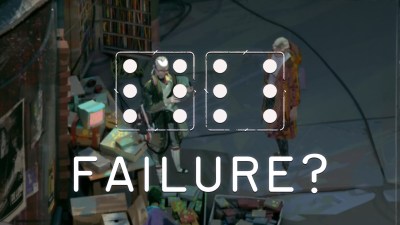
What it strips out from these RPGs entirely is… well, the RPG elements. There’s no positioning, no initiative order, and no dice deciding whether your fireball lands. Combat, as a system, simply doesn’t exist here. Every conflict, whether it’s a duel, a tournament, or an actual siege, gets resolved by picking the right knight and letting the story tell you whether you were right.
These Knights are Undeserving of This Clumsy Little Menu

Every knight carries five stats: Strength, Agility, Charisma, Magic, and Wit, but the sheet only ever tells you half the story. The rest comes from paying attention to them outside of missions, and occasionally leaning on your Intendant to gather a little court gossip on your behalf.
The game wants you to actually read (*gasps*) what is being asked of you and notice which knight’s personality and history make them the obvious pick, even when their stat sheet is quietly telling you otherwise, and by Act Three you are juggling ten active knights out of a roster that eventually tops twenty, so the gap between a routine success and a properly spectacular one almost always comes down to whether you were paying attention two hours earlier.
Your choices accumulate into a ruling identity across four tracks: Kindness, Tyranny, Audacity, and Wisdom. None of them exist to make you feel good about yourself, though I’ll be the first to admit that being audacious and solving everything by being an absolute hornball is pretty fun.
Still, if you lean hard into one, you unlock entire dialogue branches and quest outcomes the rest of your roster never sees, while knights who dislike your style quietly lose faith in you. It is a smarter reputation system than it first appears, because the game keeps reminding you that ruling well and ruling likably are not the same thing, and it will not let you have both for free.

The interface looks stunning and occasionally works against you. Feeding a knight their favorite meal or sending them to training takes several extra confirmations it does not need.
Worse, equipped gear is marked only by a small pawn icon, which becomes nearly impossible to track once you are managing ten active knights and a bench full of inactive ones. I have unassigned a knight I had already prepped for a mission more times than I would like to admit, purely because the game gave me no clear way to see who was holding what.
The Demon in the Basement Giveth and Taketh Away

Down in the Crypts, a demon lets you rewind time, carrying your foreknowledge forward into a fresh set of choices. It is a genuinely clever device for unlocking dialogue you would never stumble into otherwise. It is also, without exaggeration, the most exhausting mechanic I have used in a game this year.
Affinity cutscenes rarely skip on a rewind, so replaying a stretch means resitting the same emotional beats and reselecting the same knights for the same missions, one by one, until the charm of a genuinely great script starts to wear thin from repetition alone. It feels like the essence of what Sovereign Tower is trying to communicate about second chances gets lost somewhere in the tedium of actually taking one.
Still, if you’re willing to push through the tedium, you’ll get quite a few rewards. Turning back the clock hands you dialogue options and entirely unique outcomes you would otherwise need a full second playthrough to uncover, all without ever having to start over from the beginning.
Even so, I would gently advise against leaning on it obsessively, because chasing every possible branch is a wonderful way to lose an entire weekend, and quite possibly your own sanity along with it.
Mostly because there is not really anything stopping you. Nothing happens, mechanically, when you use the power. No gold lost, no stat dinged, no hour of progress sacrificed. The closest thing to a consequence is narrative rather than real: the Lady of the Tower voices her disapproval, a mysterious visitor starts turning up in your audience queue once you have made a habit of it, and knights occasionally needle you for acting like you already know how things will play out, which, to be fair, you do.
Structurally, this is save-scumming with a cutscene attached, dressed in just enough narrative tension that you almost forget nothing is actually stopping you.
Romance for Absolutely Everyone, Pulse Negotiable

Sovereign Tower is, at its core, a medieval strategy game with a very active side hustle in romance, one that appears to run almost entirely on your own personal thirst, which I say with love, because I have never once objected to a game correctly identifying my priorities.
You can pursue, or at the very least flirt outrageously with, almost every knight on your roster. In fact, somewhere around hour six I stopped keeping careful track of who was actually eligible and simply operated on the assumption that if a character had a face and something resembling a personality, they were fair game, and more than once I caught myself wondering whether even that second requirement was strictly necessary.
Some of these arcs are more fleshed out than others, but nearly all of them unfold across a tight run of five or six scenes rather than the sprawling, choice-heavy commitment of a proper dating sim, a restraint that I believe works entirely in the game’s favor.
Sovereign Tower knows exactly what it is — a medieval strategy game first, a courtship simulator running a close and very enthusiastic second — and it never once loses track of which one is actually steering the ship. That said, I would be lying if I claimed the hotties were not doing a significant amount of the narrative heavy lifting.
Verdict: 9/10
If you finished Baldur’s Gate 3 and immediately missed the companions more than the combat, this is your next obsession.
If you loved Dragon Age: Origins for how quietly your smallest choices came back around, or Fire Emblem Three Houses for making you genuinely afraid of losing someone you’d grown attached to, Sovereign Tower earns a place next to them, UI grievances and all.
I won’t deny the rewind fatigue in Sovereign Tower is real, and it will test you in the back half, but it never once made me want to abdicate.
**Bonus Action was provided with a Steam code of Sovereign Tower for the purpose of this review**
Still here? Good.
That means the article did its job! If you’d like to see more of them (and get first crack at what’s next) our Patreon’s the place.
About the Author

Discover more from Bonus Action
Subscribe to get the latest posts sent to your email.