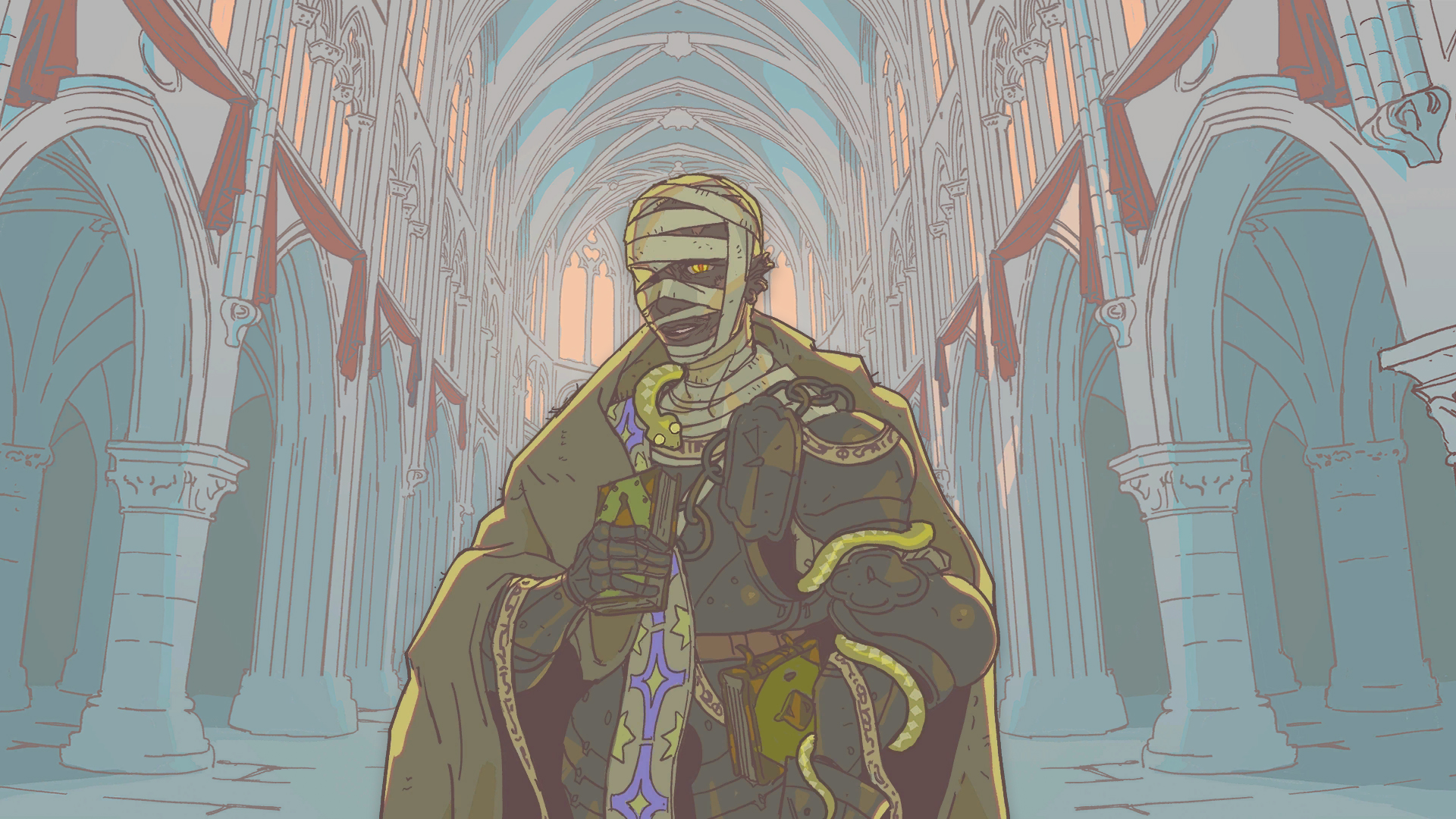
Epicrates spends most of his own recruitment arc without a name at all, and he’s one of the easiest knights in Sovereign Tower to misjudge as a villain before you’ve heard his side.
He’s a name etched into the history of the Brimwood Revolt, the political system that emerged from it, and, until you clear him at trial, the masked figure everyone calls the Serpent Knight. Underneath the politics is a knight carrying a demonic eye, a lost timeline’s worth of grief, and a plan involving an artifact called the Golden Key that could end your reign entirely.
This Epicrate guide covers everything you need: how to recruit him through Brimwood’s full trial chain, his favourite meals, the quest types he actually enjoys, and every dialogue choice across all four of his affinity events.
Epicrate’s Character Sheet
Background
Traits
Liked & Disliked Quests
Liked Meals
Base stats

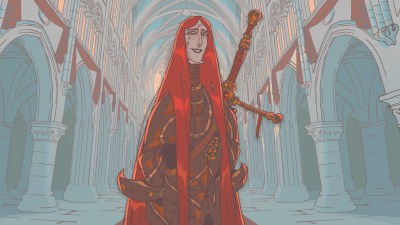
Epicrates is a name etched into the history of the Brimwood Revolt, along with the moral principles and political system that grew out of it. For most of his own recruitment arc, you don’t even get to use that name; he goes by the Serpent Knight until the game decides you’ve earned the reveal.
| REVOLUTIONAR | UNDIPLOMATIC |
| TIME PERCEPTION | INTUITIVE |
| Liked | Disliked |
|---|---|
| Relic Recovery | Diplomacy |
| Magic Involved (condition) |
 Brizhian Butter Shortbread |  Prefou |
| Stat | Level |
|---|---|
| Strength | 3 |
| Agility | 3 |
| Charisma | 9 |
| Magic | 9 |
| Wits | 12 |
| Luck | 3 |
Mastered stats: Charisma, Magic, Wits
How to Unlock Epicrate

Epicrate is unlocked through Brimwood’s county trial chain, which begins when Marian shows up at the tower in Act 3, opening with the county’s first audience. Here, you can decide how to approach the trial scene (or escape route) with one of three quests.
Once successfully completed, the second audience is where you actually meet Epicrates as the Serpent Knight, and it’s the densest single scene tied to any knight in the game; you choose how to handle him and whether to pursue a witness.
However you decide to take the story, the trial’s finale is where recruitment fires.
Interactions
One-Heart Event
Epicrates greets you as though he’s been expecting you, and offers to unveil “certain aspects of my existence.”
Dialogue Choices:
“What became of this man?” (no affinity change. “Died in a mutiny. The common fate of tyrants.”)
“Perhaps we share the same ugliness.” (+Affinity. “That’s what I like to think.”)
This is the scene’s only real affinity swing, and it’s easy to miss since it’s buried two questions deep. Push into the Brimwood history and he lays out the full Revolt with nobles selling mining rights that weren’t theirs to the Angelor Empire, the Emperor’s merciless response, and the workers uniting once the nobles abandoned them.
Once that context is out, a follow-up hub offers several reactions to how Brimwood punishes its former nobles.
Dialogue Choices:
“You stole books?” (no affinity change)
“It seems cruel to inflict the fate that caused you so much suffering on the nobles.” (no affinity change.)
“A legitimate backlash against those who oppressed you back then.” (+Affinity)
“Enough about Brimwood.” (no affinity change)
Ask about his politics directly and he clarifies that “Epicratism” is a slur invented by terrified aristocrats, his work is collective.
Two-Heart Event
Epicrates hands you a book: the songs of a former Sovereign, Candid the Kind. Depending what you already know, you’ll hear either about Candid’s romance with knight Shamrock of Clovermont, or their songbook’s real purpose as coded critique of the monarchy.
Push far enough and the darker truth surfaces: Candid was assassinated for their convictions, and the beloved “Shamrock” story exists to obscure Melior, the knight and manipulated assassin who actually killed them.
The conversation turns to whether Candid’s dream, a world without rulers, is achievable at all.
Dialogue Choices:
“Candid’s dream world seems utopian and dangerous to me.”
“Is such an ideal truly achievable?”
Either way, his answer doubles as a thesis statement: “it is far easier to imagine the end of this world than the end of the order that governs it.” Then he reveals an artifact called the Golden Key, attainable by a Sovereign who unites all their subjects under one banner, guided by the path of “a lost child” who can heal your people’s discord.
Three-Heart Event
Epicrates warns you the Tower’s destruction means your own slow death, and that the Empire will move on your realm the moment it falls, then asks, point blank, whether you intend to walk this path.
Dialogue Choices:
“I’ll follow this plan.” (+3 Affinity)
“This is not my purpose.” (no affinity change.)
If you’ve already made a pact with the demon, this whole branch reroutes. He tells you it’s not too late, defeating the Emperor first can still turn back the clock to before that pact, in a different thread of time, with no affinity attached either way.
Four-Heart Event
Epicrates is uncharacteristically calm, admiring the Tower’s architecture despite everything he’s said about it. He calls you “my friend” for the first time here.
Dialogue Choices:
“You are also precious to me, my friend.” (+2 Affinity)
“I don’t feel that way.” (no affinity change.)
Either way, he opens up about where his powers actually come from: a demon he met and dissected in the Brimwood mines as a young man, extracting its eyes for their “unrivaled mystical properties.” One eye he gave to you when you cleared him at trial. The other became his own.
Dialogue Choices:
“Did it hurt?” (+1 Affinity.)
“What exactly do you see through it?” (no affinity change)
Still here? Good.
That means the article did its job! If you’d like to see more of them (and get first crack at what’s next) our Patreon’s the place.
About the Author

Discover more from Bonus Action
Subscribe to get the latest posts sent to your email.