
The Alters Ludology Now
What does it mean to be you? That’s the question The Alters is obsessed with. Are you nurture or nature? Are you input or output? Are you, you? Are you sure?
What if you went back to that one moment and did what you really wanted to do? What if you went back to that drastic mistake and chose the other option? Would you still be where you are now? Would you still meet your partner if you never went to college?
In The Alters, Jan Dolski learns the answers to all these questions. Through a fairly standard sci-fi setup of “crashed ship, alien planet, trapped alone, hunting miracle elements,” Jan uses that element (here called Rapidium, a fake element name that’s still better than Unobtainium) to create “altered” versions of himself in order to help maintain his spaceship. These are clones up to a specific memory point, at which point the new being followed its own path and ended up as a functionally different person than the original Jan. Different, but still the same person. Just altered.
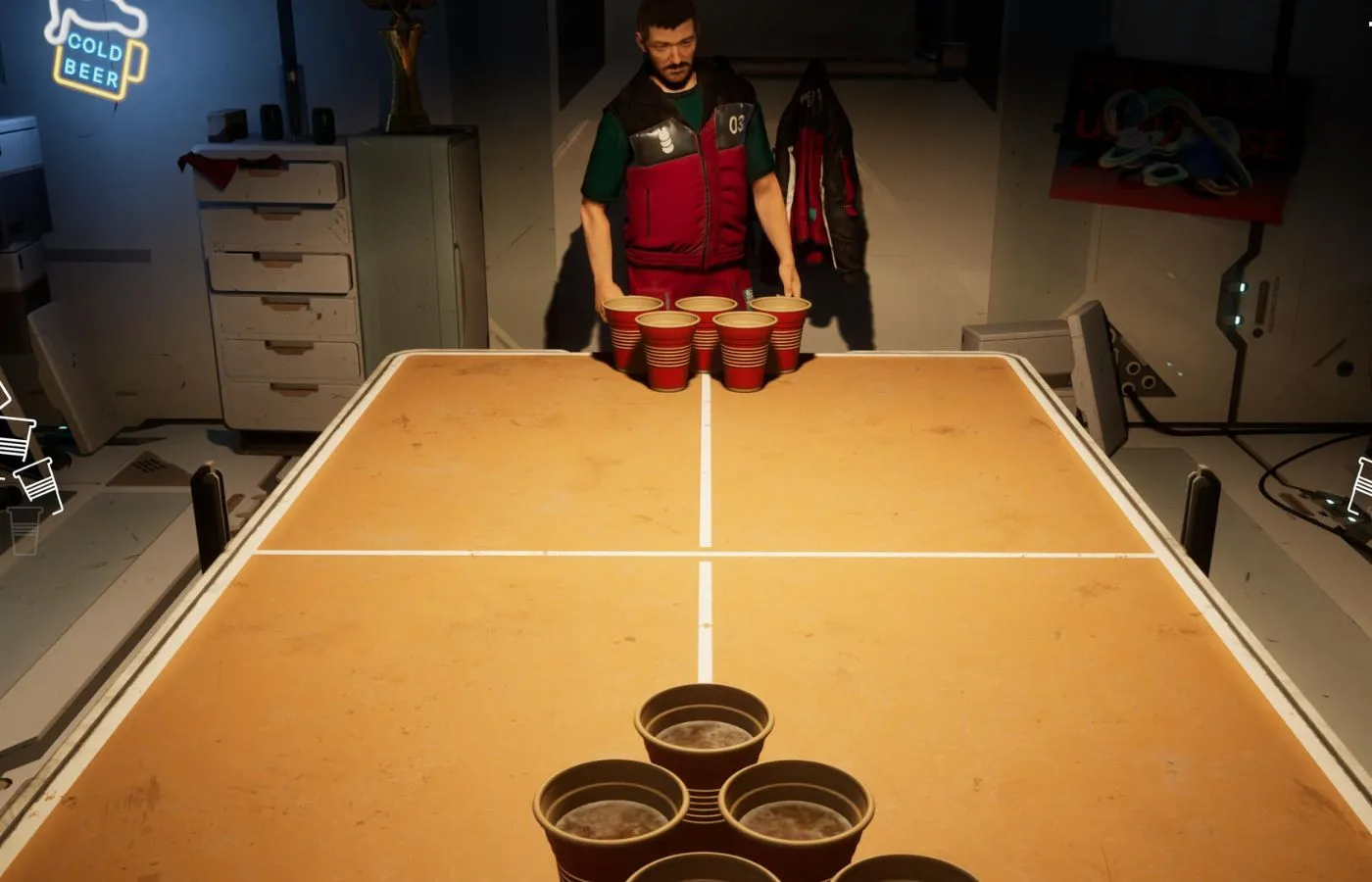
Can you get along with yourself? Would you enjoy your own company, or would you abhor it? What about if you were the worst version of yourself, and you were forced to be surrounded by other versions of you that were far more successful in life, both personally and professionally?
There’s a moment, I believe near the end of Act One in The Alters, when I had amassed three different alters of Jan: a Technician, a Scientist, and a Botanist. The Technician was smarter than me, more world-weary. The scientist was smarter than me in every technical matter, but had no social skills. The botanist was the only one of us who, in his memory, was still married to our ex-wife. He made it work – we didn’t.
In a way, each of these Jans were more successful in their lives than I was. I created them because I needed them to stay alive, I needed the skills that I never had the time or energy or opportunity to accumulate. I needed those skills because I hadn’t chosen them, Jan hadn’t chosen them, in his life up to that point.
RELATED CONTENT: I Can’t Stop Playing The Alters
The four of us, Jan and his three Alters, all had early memories in common. We all remembered our mother’s cooking, our abusive father, pretty much anything that happened before we were young adults. We all remembered the garage band, and bonded over that, and then we wrote a song together. To write a song with three different other people, all of whom are you, sharing some but not all of the same heart and mind, it was a lovely moment. The Alters earned that musical number.
That all being said, it’s impossible to think about even the loveliest moments in The Alters without acknowledging and directly addressing the moral issues at play. This culminates in what might be the most logical extreme during Act Two, where the death of a cloned sheep leads the Jans to discover that all of the alters have only a few days to live unless drastic action is taken. What kind of drastic action? Well, that depends where your line is.

“Cloning yourself to save yourself from an impossible situation” is an action forced upon you by the game. You do have to create at least one Alter. Doing it again is your choice. What’s going to happen to these Alters when the mission is over? Do you think you are going to be able to bring them back to Earth? Are they going to have lives? Do they know that?
When you find out they’re all going to die, how far will you go to save them? If you had to sacrifice one of them to save the rest, would you? What if you just created a blank clone with no memories and sacrificed that one? Would that be better, morally? Would it be worse? What if they didn’t want you to save them? Would you listen?
The Alters was created by 11 Bit Studios, previously known for games like This War of Mine and Frostpunk. Like those games but to a larger extent, The Alters defies genre classification. It’s got some base building, some exploration crafting, and some resource management, but at its core The Alters is a morality simulator. Jan might be the protagonist, but your choices are guiding him. Unlike pretty much every game, those choices actually matter here. Choose wisely.
THIS WEEK’S RECOMMENDED MEDIA:

About the Author

Discover more from Bonus Action
Subscribe to get the latest posts sent to your email.