
Image via Sara Raasch
Every year, for the holidays, I love to head over to my local bookstore and browse through the new releases for something fun and cozy to read. Sometimes, I am looking for a cute queer romance, and other times I am hopeful for a lighthearted adventure in a fantasy world. Nothing too hefty. Just something fun. However, in recent years, this once joyful little tradition has turned into a frustrating series of disappointments.
Instead of finding a little collection of recent publications, I am met with a wall of YA and New Adult options with flimsy covers and art so similar you can barely tell any of the stories apart. I start picking up books to read back covers, and the bulk of them all sound the same. In fact, it sounds extremely familiar to a place I have been before. The entire bookshelf feels almost exactly like I am browsing Ao3.
And that is because, largely, I am.
As of 2026, we have seen an alarming increase in the publication of rebranded fanfiction. It started many years back, and some of you may remember the controversy of Fifty Shades of Grey. But what once caused eyebrows to raise and lawyers to prep for a plagiarism lawsuit is now as commonplace as a Starbucks, and for some reason, no one is doing anything about it.
To understand how this strange phenonmenon effects modern publishing, we have to break down a few core elements of this problem.
What is Fanfiction?

Okay, hear me out. We all understand what Fanfiction is at a glance. By modern general understanding, fanfics are stories written by fans about existing media. But it’s a bit more complicated than you’d expect.
To dive a little bit deeper, Fanfiction is a fictional work based on another piece of media that portrays existing characters in an alternate set of situations from the main canon storyline. (Canon being the official, creator-confirmed world and lore systems of a series or franchise.) For example, a fan of the Percy Jackson series may choose to take two characters, Nico and Percy, and write a story about the pair running a coffee shop.
In the fanfic, the writer emulates the character as they are written or portrayed in the original content, sometimes with creative changes like an expanded backstory or alternate history. For example, in this story, Nico and Percy could be brothers who grew up together after Percy’s mother adopted him. Or they could be shipped as a pairing who met in college in a non-demi-god world. However, the key point is that the characters are still, largely, based on the writing or creative process of another individual.
Fanfiction is an amazing medium for young writers. It’s like playing dollhouse as a child. You are working in a world and with characters that already exist, and you can focus instead on practicing character interactions, pacing, and progression. Unfortunately, however, it can also lead to issues with developing original characters and concepts, and many Fanfiction writers get stuck in the dollhouse with Barbie, unable to create a character with a blank doll.
Currently, the vast majority of young authors got their start in Fanfiction. Specifically, fanfiction for Supernatural, Marvel, Harry Potter, Doctor Who, Star Wars, and several other very popular series. However, instead of shedding their Fanfiction cocoon to blossom into creative and mature original storytellers, they seem to have pulled the corpses of Ao3 downward spirals to publishing houses, spitting them out on the doorstep alongside a huge social media view count that modern publishing houses just can’t seem to resist.
Authors like Ali Hazelwood, Rachel Ried, Everina Maxwell, and Sara Raasch have gained substantial followings for storylines that are lifted from other stories. And while imitation can be seen as the sincerest form of flattery, it presents a bigger issue for publication.
The Fanfiction Plot Conundrum
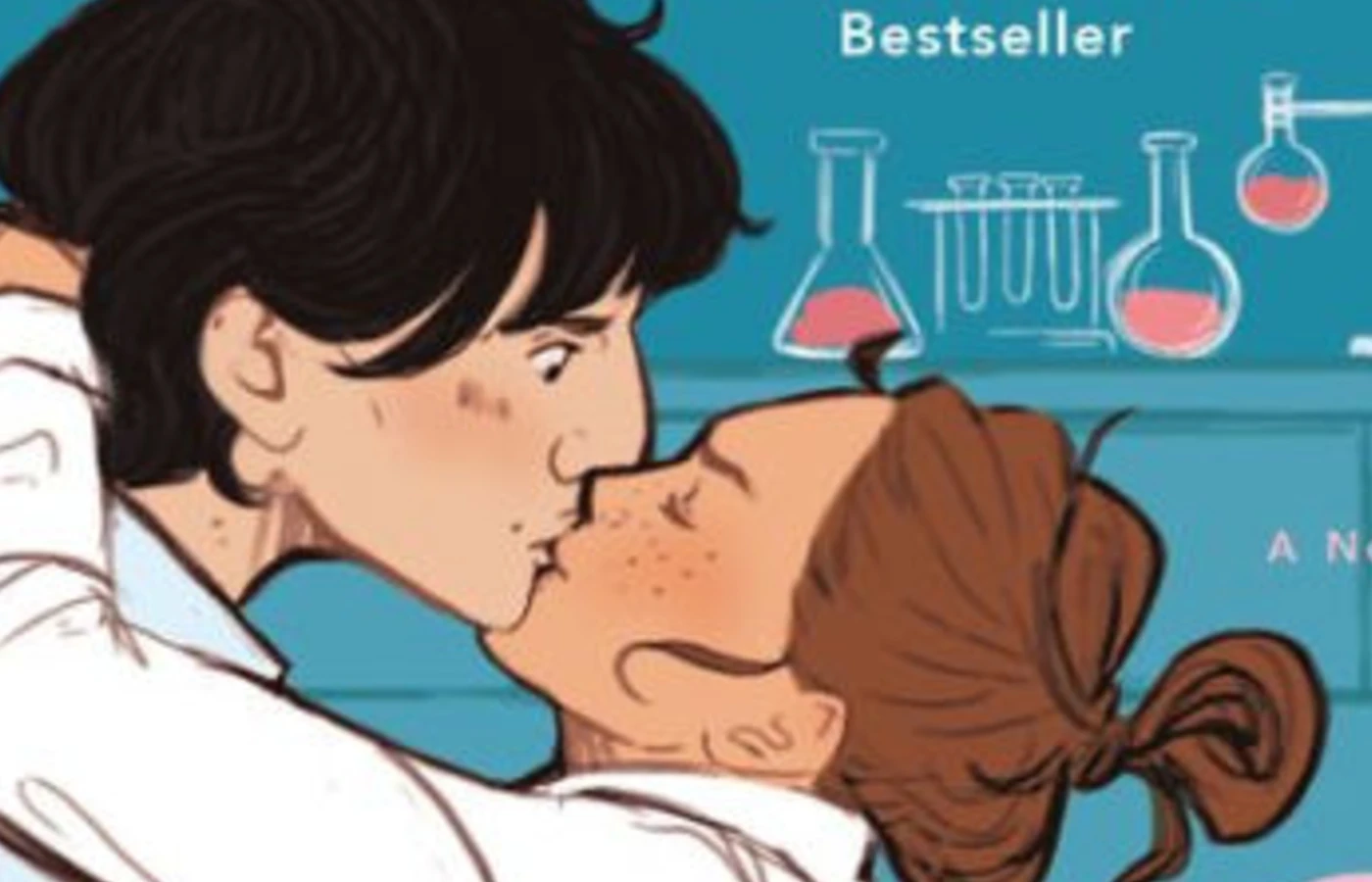
Why bother complaining? If you don’t like it, don’t read it – right? Well, not exactly. Just because some authors have been vocal about their artistic “inspiration” behind a story doesn’t mean others have been. This makes it tricky to know what is a fanfiction and what isn’t.
Additionally, there are some big issues in the process of converting a fanfiction to an “original” piece. As mentioned before, when you are writing a fic, you are typically working in a world that is premade. Your readers know this world, and require minimal world-building from the writer, as it is expected they already have this information. Additionally, the characters themselves came pre-packed with personalities that were painstakingly built by another person.
To publish these works, the Fanfictions have to be doctored. Character names and places are changed, and hasty world-building is chucked in to make things feel more original. However, if you have a story about Harry and Draco falling in love during their time at Hogwarts and you change it to Stew and Gary falling in love at Regal Wizards Boarding Academy, it is really just off-brand Drarry. People are still going to know that Snorp is Snape, and that Gary Hooper is still a “very special boy”, even if he has no scar or that scar is now on his left foot.
The point is, instead of spending time creating truly unique, original characters with their own stories, authors are now trying to pass their story off as “not a complete copy” of trademarked, existing concepts. This creates strange, thin plots with characters that feel like half their backstories are missing. This is something I broke down in a recent feature about Sorcery and Other Small Magics by Maiga Doocy. Because the writer never had to have the deeper details of the characters or the world in the original Fanfiction, the story lacks structure, depth, and cohesion, making these stories feel a bit like an addled mess with a $20 price tag.
It is, in most situations, very difficult to extract a meaningful and original piece of fiction from a fanfiction, as it was never an original or personally meaningful piece of work to begin with.
So What’s The Big Deal Anyway?
You may be thinking, what’s the big deal? If the story is cute and the author had fun, isn’t that the point? Well, to a degree. But have you ever taken a photocopy of a page from a book? The words and images always look a bit weird and grainy or gritty. What about a photocopy of a photocopy? Do it a few times, and the images become unintelligible, and the text slowly begins to fade and become less and less readable. That is what is happening when we publish fanfiction.
By encouraging young authors to steal concepts from the work of others and pass them off as their own, they are making a thin photocopy of existing work. When a work that is fanfiction gets published and becomes popular and gains a following and new fanfiction crops up, it is now fanfiction of a fanfiction, and the cycle begins anew. However, the content in these stories is recycled from the original work, losing structure and direction in each new iteration.
Again, Fanfiction isn’t bad; it’s an amazing tool for young writers. I got my start as a writer on Fanfiction.net. However, I would never have published those works despite how popular they may have been. The driving factor being, I knew it was not my work. Those weren’t my characters. It wasn’t my world. Not only did I know that it wasn’t mine to use in such a way, but I understood that there was nothing in those stories that could be considered original.
Many readers have noticed the struggle that bookstores now face. New release sections are filled with “Romantasy,” which is primarily published fanfiction. The stories aren’t really about the plot, but about the tropey main leads who vaguely resemble other existing characters from popular franchises and focus on who they might end up in bed with. Sorting through bookstore shelves feels just like stumbling through Ao3’s homepage, only without the benefit of tags to keep the particularly weird or gross stuff out of the search feed.
It has become increasingly difficult to find truly original ideas, and when books cost $30 a hardback, that is a serious gamble.
Additionally, there has been another problem cropping up alongside the fanfiction issue: poor editing. Because the writers and editors are working so hard to make the book they are prepping to publish not sound exactly like Harry Potter, copy errors, continuity issues, and general quality problems have become increasingly common. I regularly pick up books from big publishing houses only to find copy errors like mispelled words, text alignment problems, or even misnumbered pages. Books sometimes read like a fever dream, where the plot is barely understandable because all the context was removed when the names were changed and never properly rebuilt. It’s made me hesitant to purchase new books or trust upcoming authors.
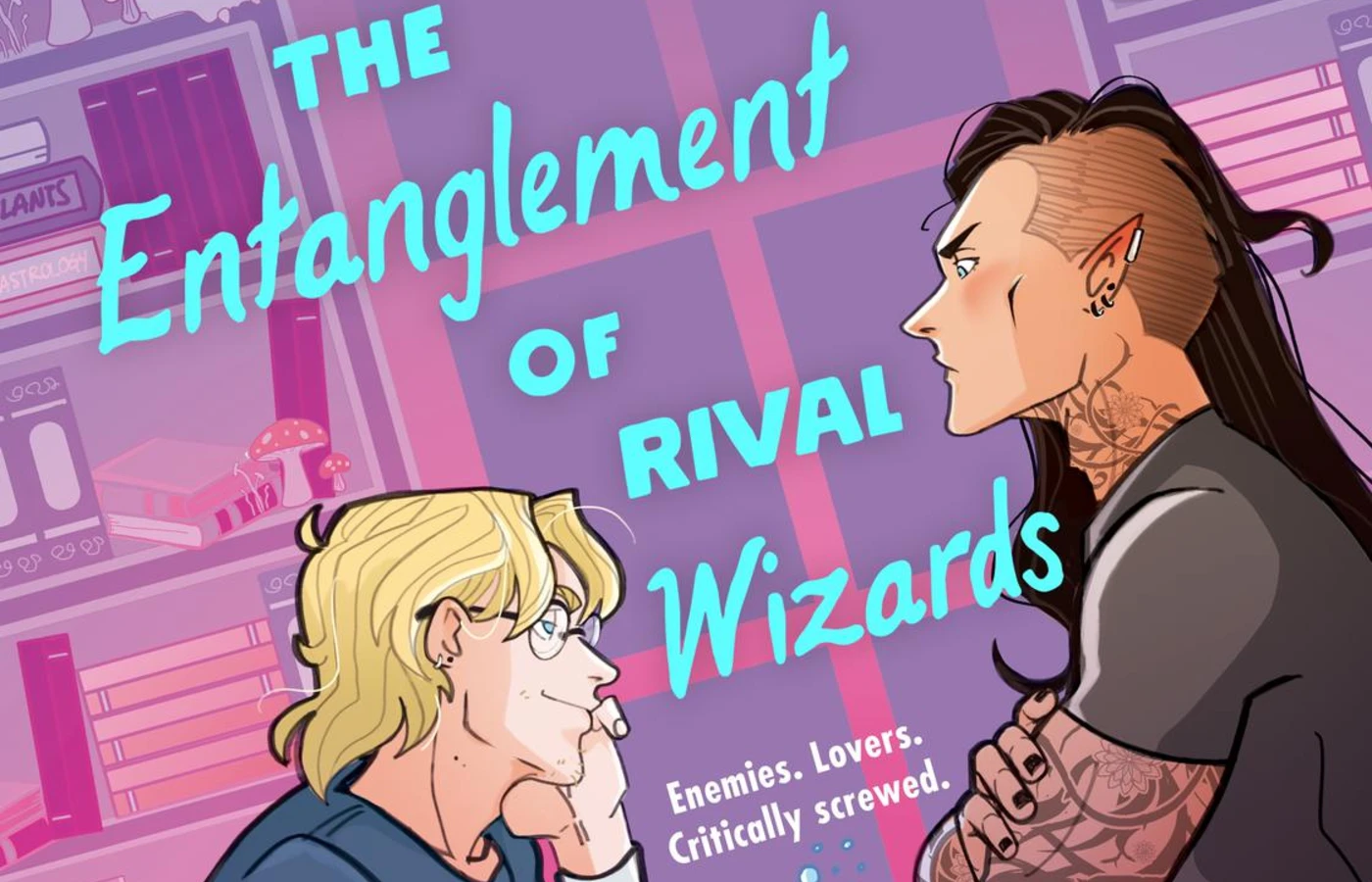
No better example of this could be found than that of The Entanglement of Rival Wizards by Sara Raasch. This was my holiday pick this year. Sara Raasch is by no means a stellar writer. I mean that as kindly as I can. Her work is heavily tropey, and her lead male characters are often petulant and a bit difficult to deal with. However, I am going to admit, I thought the cover was pretty, and I wanted to watch dumb boy wizards fall in love.
Well, she got me and my money. I started reading the book just before the holidays, and I only made it to chapter 2 before I couldn’t take it. The pacing was very strange. The characters were inconsistent to a fault. The world felt half-baked at best and was difficult to grasp.
I flipped to the back of the book, and to my genuine shock, she stated the reasons for this turbulence right there in the acknowledgements. It was Critical Role fanfiction.
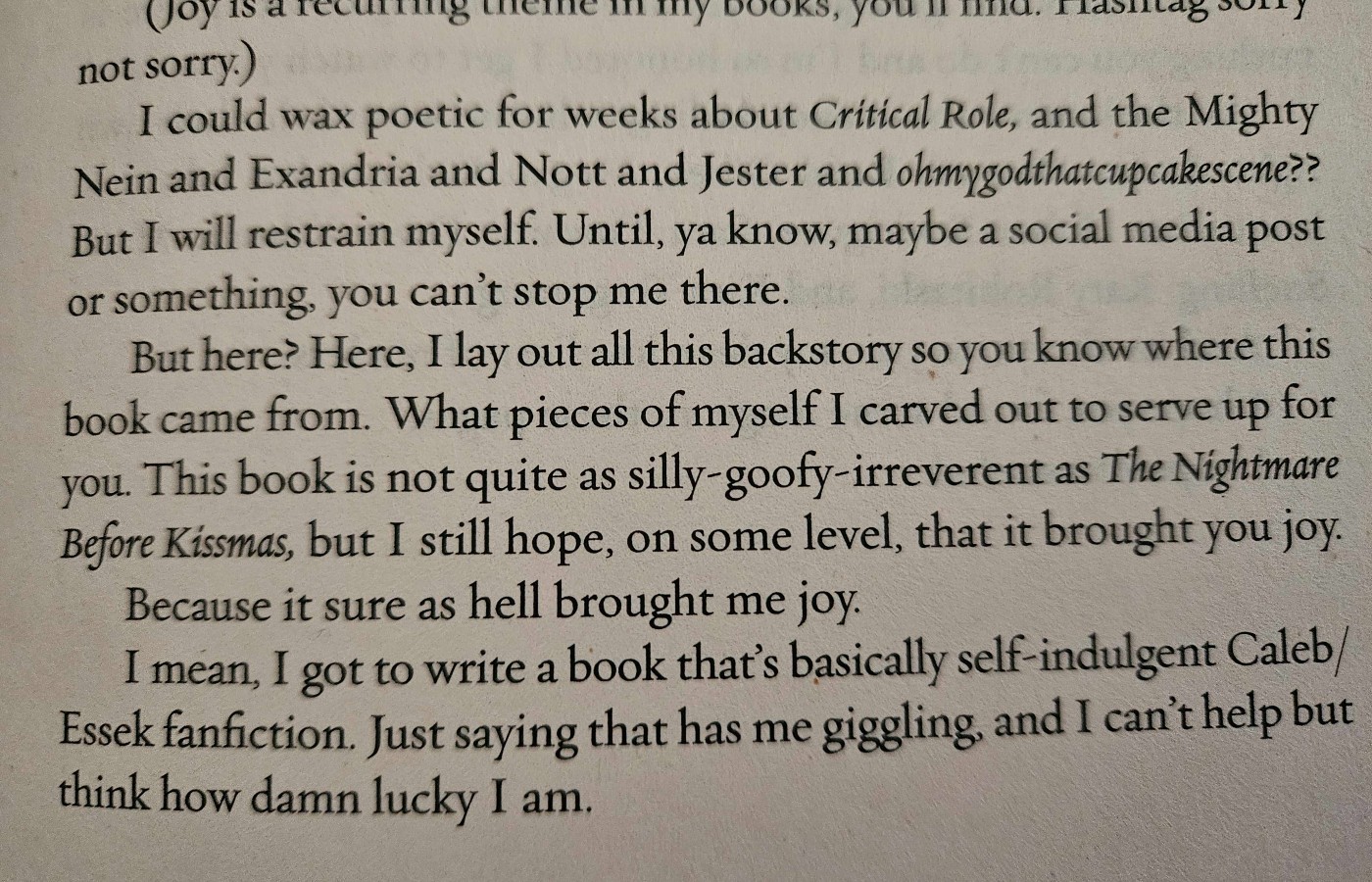
I was disgusted. I’d paid full price for a book that was basically an unreadable feverdream better suited for Ao3 with the actual character names attached than a bookstore shelf. This paperback cost me $20, and it was genuinely unreadable. However, it was the audacity of the admission that was truly confusing; after all, there is the big “P” word to talk about.
Is Published Fanfiction Plagiarism?
The short answer is, yes and no. Yes, publishing work and claiming it as your own original content when it was ripped from other work is plagiarism. I am sure you remember your high school or college instructors drilling that into your head.
There are situations where this is less of a problem. For example, works that exist in the Public Domain can be used as inspiration without an issue. The reason so many versions of Pride and Prejudice exist is that it has entered the Public Domain, and can be used by anyone or adapted in any way.
However, Harry Potter, Star Wars, Star Trek, and many other franchises are definitely not in this category and won’t be for an exceptionally long time.
To get around this, writers must remove any and all references to existing material, and the copy must be, primarily, “of their own design.” Unfortunately, that line has become very thin in the past decade, as internet media blurrs what is and isn’t plagiarism.
By general standards, if you create a piece of work that is largely inspired by or about existing materials and attempt to pass it off as an original work, it is plagiarism, and it is particularly problematic when you are making money off the stolen content.
Writers should strive to create their own worlds and build their own ideas. By ripping ideas from existing works and claiming them as original, you are, effectively, stealing.
So What Do We Do?
The solution to this problem is straightforward. Don’t buy books from authors who openly state that their work is plagiarized. Even if you love the ship they are writing. Do your research on authors before supporting them to make sure the work is original. Call out publishing houses that are normalizing and enabling the publication of stolen work.
We, as a writing community, need to strive to do better, and original works are what inspired the fanfiction and fandoms that encouraged us to write. If we want to see fandom keep growing, and if we want the next generation of young readers to have something to connect to, we have to build worlds that are worthy of that attention.
It’s up to us, and the publishers of modern literature, to fight for original content. Fanfiction has a snuggly home on Ao3 or Fanfiction.net, but that is where it should stay.
About the Author

Discover more from Bonus Action
Subscribe to get the latest posts sent to your email.


I’ve been writing on and off since I was a kid and only recently started getting into the world of fanfiction. My fandom is of a music group – Stray Kids – so the works there have their own issues and complexities as it deals with real people rather than established IP. Found this article to be really interesting as I hadn’t realised re-skinning fanfic for mass publication was really a thing (other than the biggest example you mentioned of 50 Shades).
It’s really crazy! I got my start writing Harry Potter and Fruits Basket fanfiction back in 2003-2010. I try to imagine reskinning and pubbing those pieces and I literally can’t. Too much of the story is rooted in a world I didn’t make and can’t claim any actual right over. I think that’s what makes the situation so troubling.