
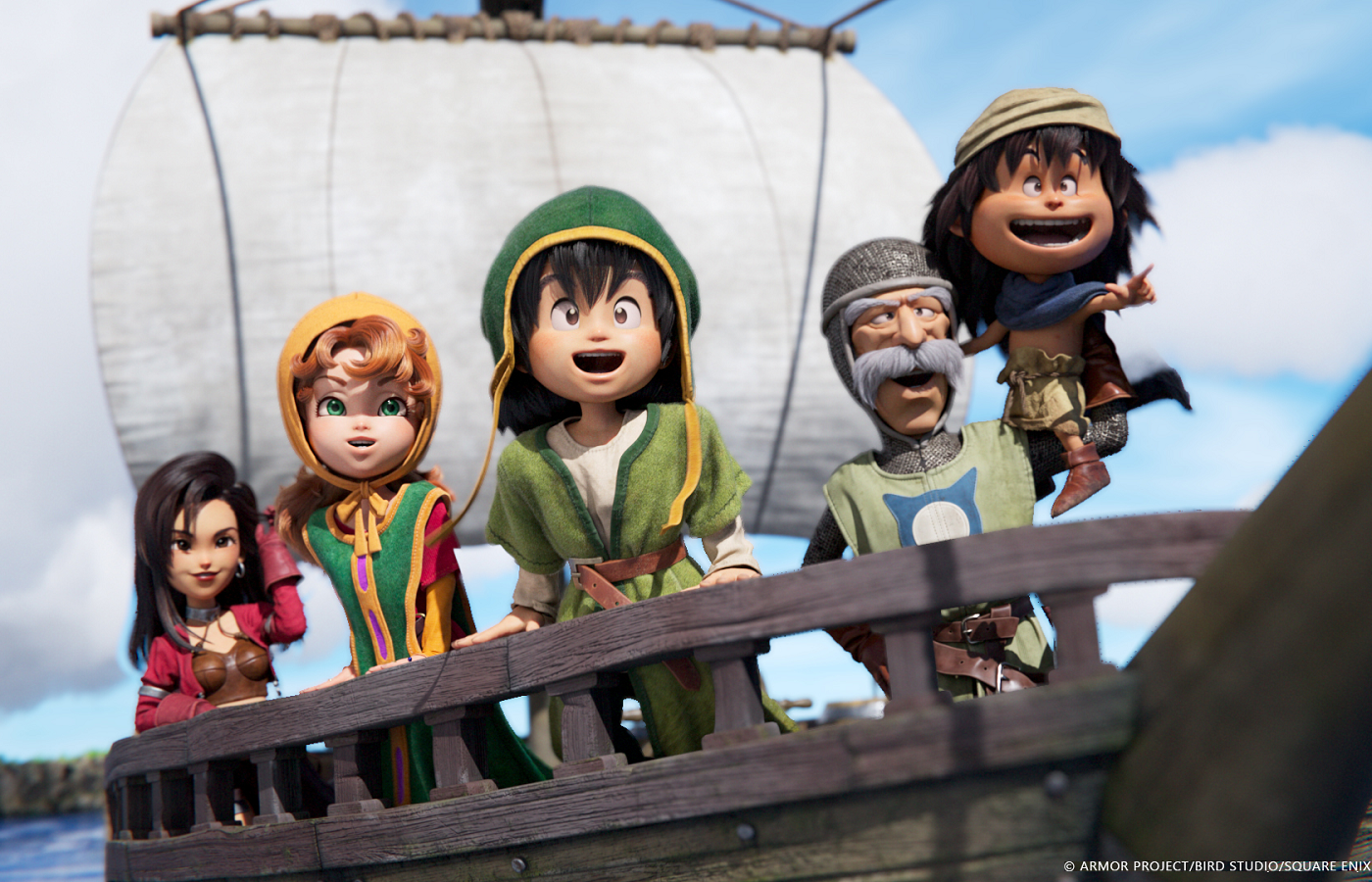
Dragon Quest VII Reimagined marks my first real step into a series I had long admired from a distance. The series itself is one I’ve always been subconsciously aware of; I knew the slime, I knew the art style, I knew the music. I knew the name carried weight. What I did not know was where to start, and for a long time, that was enough to keep me on the outside looking in.
Although I had never played a Dragon Quest game before, I am no stranger to JRPGs. Over the years, I’ve spent plenty of time with games like Shining Force, Chrono Trigger, Final Fantasy, and, more recently, Yakuza: Like a Dragon, which made my unfamiliarity with the series feel more like a knowledge gap than a barrier.
Ironically, it was Yakuza: Like a Dragon and its protagonist Ichiban’s almost childlike devotion to Dragon Quest that finally nudged me in the right direction. That game’s turn-based combat, tone, and inspired job system gave me a sense of what Dragon Quest represented to so many players, and it made me curious whether I had been missing out all this time.
After spending a considerable amount of time with Dragon Quest VII Reimagined, I feel comfortable saying that curiosity was well placed. As someone completely new to the series, this remake made me want to keep playing and see more of what the Dragon Quest series has to offer.
Key Details:
- Release Date: February 5, 2026
- Developer: Square Enix
- Price: $59.99
- Platforms: Nintendo Switch, Nintendo Switch 2, PlayStation 5, Xbox Series X|S, PC
- Review Code Provided: Yes, For Nintendo Switch
A Classic Made for Modern Hardware

Dragon Quest VII Reimagined stays true to the structure of the original PlayStation release, but it feels completely at home on modern hardware. That sense of modernity comes through most clearly in its presentation.
As a longtime fan of Akira Toriyama’s work, especially Dragon Ball, the doll-like aesthetic immediately clicked for me. Characters and enemies feel like a natural extension of his designs, with expressive proportions and a handcrafted quality that gives the world a storybook charm. It reminded me of Blue Dragon on the Xbox 360, though here the look is far more refined, with richer colors, stronger contrast, and much higher resolution.
The environments are consistently impressive. Humble hovels and grandiose ruins in various states of decadence and decay stand amongst crystal blue waters, sandy dunes, craggy mountains and lush forests, helping each island stand out visually. This variety reinforces the episodic structure of the game and makes each new location feel distinct rather than interchangeable.

Playing on Nintendo Switch, the game ran incredibly smoothly throughout my time with it. Load times were quick, performance was stable, and I never encountered a crash or noticeable technical issue. That level of polish goes a long way in a lengthy JRPG, especially one built around frequent travel between locations.
Combat visuals are flashy and satisfying, particularly when spells start filling the screen. Some attacks could benefit from more visual variety; for example, elemental slash abilities are often distinguished only by weapon glow color, making martial vocations less visually impressive. It is a minor issue, but one that becomes noticeable as more impressive skills are unlocked for other vocations over time.
I appreciated seeing weapons and shields reflected in battle, but armor and vocations do not change character outfits, and party members lack any real customization. Even if this mirrors the original game’s approach, it stands out as a missed opportunity in an otherwise thoughtfully modernized remake.
Combat That Encourages Experimentation

Combat was immediately approachable, even without prior Dragon Quest experience. The basics are easy to understand, and the game does a good job of easing you into its systems.
Where things really open up is with the Vocation system. Experimenting with different vocations was consistently fun, and once Moonlighting became available, allowing characters to hold two vocations at once, I found myself constantly testing new combinations.
Weapon choice plays an important role as well. There is a solid variety of gear available, and different weapon classes come with distinct strengths that meaningfully affect how battles play out. Swords and axes tend to excel at dealing heavy damage to single targets, while boomerangs and whips trade raw power for the ability to hit multiple enemies at once. Deciding who equips what often comes down to the kinds of encounters you are facing and how you want your party to function in a given fight.
Some party members are also restricted from equipping certain weapons and armor altogether, which gives party composition a bit more weight. These limitations never felt overly restrictive, but they do encourage you to think about who you bring along and how their strengths complement one another. Combined with the Vocation system, gear choices add another layer of strategy that rewards experimentation without becoming overwhelming.

The “Worked Up” mechanic adds a satisfying layer of strategy, rewarding smart play with unique perks tied to specific vocations. These moments feel earned rather than random, and they help keep battles engaging well into the game.
I also appreciated how flexible the game is when it comes to accessibility and difficulty. You can adjust enemy behavior, experience gain, and damage values, or lean on the battle strategy system to let party members act autonomously. Whether you want tight control or a more relaxed pace, the game supports both.
A Party That Slowly Wins You Over

The party lineup mirrors the original game, but what surprised me was how much my opinions of these characters changed over time.
Maribel, who I initially found quite irritating, became one of my most reliable party members thanks to her magic-focused vocations and strong damage output. Kiefer felt like he might dominate the spotlight early on, but his role in the story carried more emotional weight than I expected.
Ruff ended up being my favorite by a wide margin. His cheerful, naive outlook and distinct design brought a sense of warmth to the party that never wore thin. Aishe stood out visually with a strong and confident presence, while Sir Mervyn added a seasoned, almost mythic quality to the group.

Each character also has access to unique vocations exclusive to them, giving party composition real mechanical implications. That said, the default difficulty never forces you to optimize. You can build your party around favorites, strategy, or a mix of both, and the game accommodates all approaches.
A small but welcome feature lets party members comment on your current objective at the press of a button. It is a subtle reminder system that feels helpful without breaking immersion, although some companions are more helpful or vocal than others
Fixing the Past to Restore the Present

A central pillar of Dragon Quest VII Reimagined is restoring islands that have mysteriously vanished from the world. Progress often involves uncovering fragments of lost lands, traveling to those locations in the past, and resolving whatever crisis caused them to disappear.
These problems vary widely, from confronting great evils to lifting curses or helping communities overcome long-standing conflicts. Once resolved in the past, these islands reappear in the present day, often changed by the actions you took earlier.
This structure gives the game a strong sense of cause and effect. When an island’s story resonated, I felt genuinely invested in returning to see what had become of its people and their home. Helping shape those outcomes became one of the most rewarding aspects of the experience.
The island-based design also supports the game’s pacing remarkably well. Each island functions as a self-contained chapter, which made it easy to settle in for long sessions or step away after an hour feeling like real progress had been made. On days when I had the time, I could move through several islands without losing momentum. On busier days, completing just one still felt satisfying.
Where It Stumbles a Bit

Not every island’s story lands with the same impact. Some feature emotionally grounded characters and conflicts that made me eager to revisit them in the present day. Others were less engaging, and it is during these chapters that certain legacy design quirks become more noticeable.
Progression can occasionally hinge on speaking to a specific NPC without much indication that doing so is required. Missing these interactions leads to unnecessary backtracking, especially when it feels like you were already moving forward.
The game’s length also plays a role here. For completionists, Dragon Quest VII Reimagined is a long journey, and while its structure generally supports that scope, weaker islands can make the experience feel slower than it needs to be.
Dungeons have been reimagined and include additional puzzles, but these remain relatively sparse. Players who prefer steady momentum may not mind this, while those hoping for more puzzle-heavy dungeon design may feel underwhelmed.
Final Score – 8.5/10

I had a fantastic time with Dragon Quest VII Reimagined and would give it a strong 8.5 out of 10.
Some uneven writing and occasional pacing issues keep it from reaching a higher score, but the overall experience left a strong impression. Combat is consistently enjoyable, the party grows on you in meaningful ways, and the world feels inviting to explore. While the protagonist is a traditional silent blank slate, the bonds formed with the rest of the party delivered exactly the kind of connection I look for in a JRPG.
Most importantly, as a new player, this remake made me want to explore more of the Dragon Quest catalog. With its accessibility, replay value, and smooth performance on Switch, Dragon Quest VII Reimagined feels like a thoughtful and welcoming way to take a first step into a legendary series.
**Bonus Action was provided with a Nintendo Switch copy of Dragon Quest VII Reimagined for the purpose of this review**



Leave a Reply